
How to read tide charts for surfing
Low vs high tide, optimal tide windows by spot, push and drop dynamics and how to plan a session around the tide.
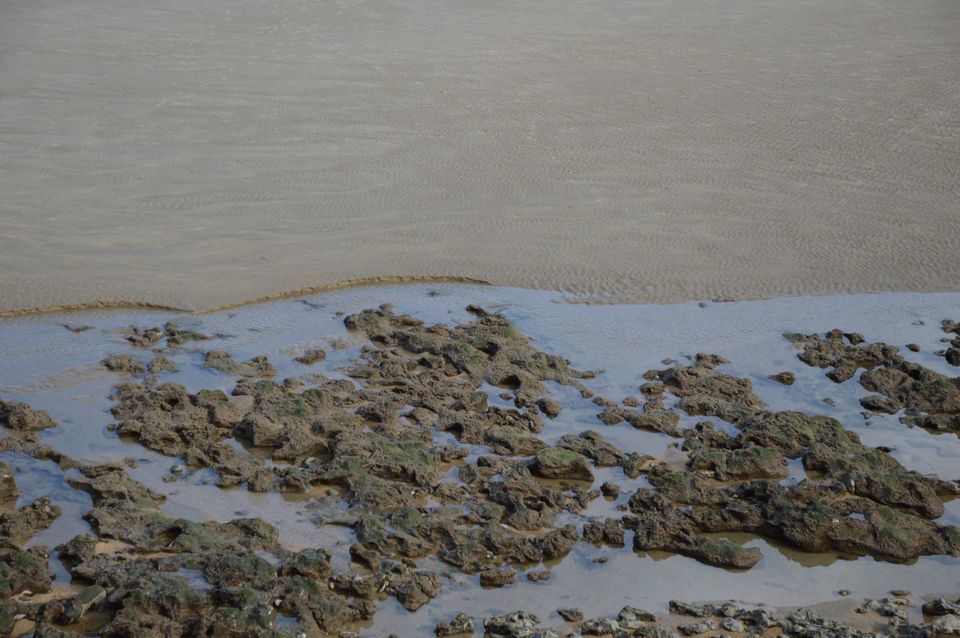
Tide is the variable that decides whether a known surf spot fires or stays flat on a swell day. Two surfers can check the same wave height, the same period, the same wind, drive to the same beach and have completely different sessions, simply because one arrived on a pushing tide and the other on a draining one. Most beach breaks have a one- to three-hour tide window when they work best, and outside that window they close out, back off or simply do not break.
Reading a tide chart is not difficult, but reading it for surf is a slightly different skill from reading it for fishing or sailing. The numbers are the same, the interpretation is different. This guide walks through how tide actually works, what the four phases mean for surf, how to find the right tide for a given spot and how to build a session plan that catches the window rather than missing it by an hour.
- Tide changes water depth and shape over a sandbar or reef, which changes how the wave breaks.
- Most beach breaks have a one- to three-hour optimal tide window; outside it the wave deteriorates.
- Pushing tide (rising) often delivers cleaner, fuller waves than draining tide (falling) at the same height.
- Springs (full and new moon) produce bigger tides; neaps produce smaller ones; both affect window length.
How tide works in plain language
Tide is the rhythmic rise and fall of sea level caused by the gravitational pull of the moon and the sun on the oceans. Most coasts have two high tides and two low tides per day (semi-diurnal), with about 6 hours and 12 minutes between each phase. The Mediterranean has very small tides (often 20 to 40 cm). The Atlantic has moderate to large tides (1 to 8 meters depending on the coast). The Bristol Channel and parts of Brittany have some of the largest tidal ranges in the world (10 to 14 meters).
The tidal range matters because it decides how much water depth changes over a fixed sandbar or reef. A 4-meter tide range in southwest France can transform a beach from waist-deep at low to chest-high at high tide, changing every wave on the same sandbar. A 30 cm tide range in the Mediterranean barely affects most surf spots. The first thing to know about your local spot is whether tide matters there at all.
- Two high and two low tides per day in most regions (semi-diurnal).
- Mediterranean tides are small (under 50 cm); often negligible for surf.
- Atlantic tides are large (1 to 8 m); critical for most beach breaks.
- Springs (full / new moon): biggest range. Neaps: smallest range.
The four tide phases and what they do to waves
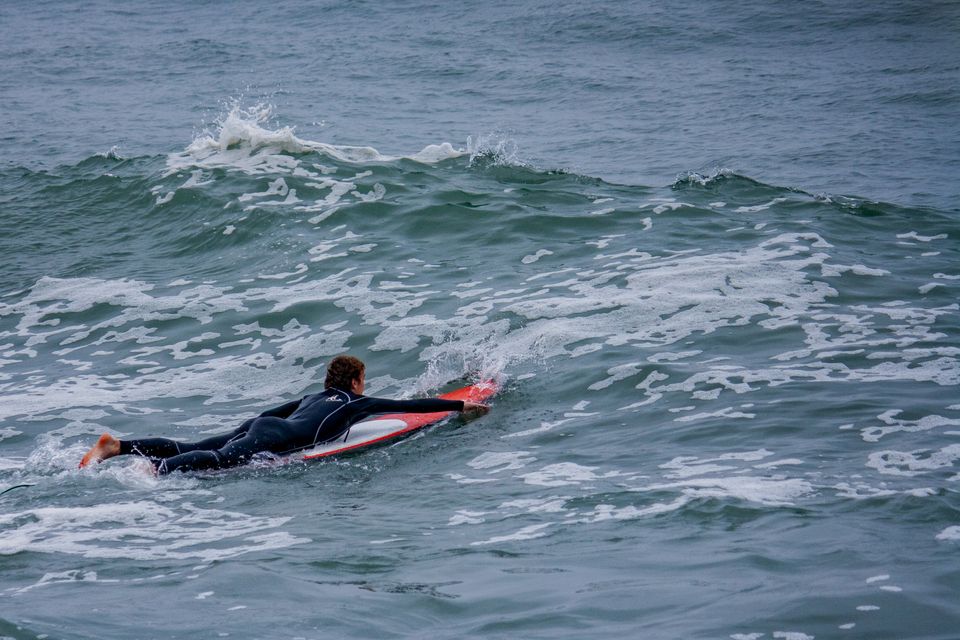
Low tide pulls water away from the beach and exposes the inner sandbar. Some spots break perfectly at low because the wave hits a steep sandbar and stands up cleanly; others close out because there is not enough water to support a peeling wave. Pushing tide (low to high) refills the bar slowly, often producing cleaner shoulder shapes and longer rides. High tide reaches the back of the beach; some spots disappear into shorebreak, others get long mellow walls on the outside bar. Draining tide (high to low) sometimes pulls energy out of the wave and makes it back off.
Every spot has its own optimal phase. Some are pure low-tide spots (Beaches around Hossegor often work better on low to mid). Some are high-tide spots (some reef breaks need water to cover the bottom). Many work best on mid-tide pushing, which is why surf forums obsess about 'mid-tide push' as a magic phrase.

Finding the right tide for a specific spot
Three sources work well to learn a spot's optimal tide. Local surf forecasts (Surfline, Magicseaweed, regional surf school blogs) usually note the best tide for each spot. Local surf forums and reddit threads describe it in detail with photos. Asking at a local surf shop or school is the fastest way to learn what a beach actually does: they live with the same beach every day and will tell you the right phase in thirty seconds.
Once you know the optimal phase, build a session plan around it. The chart tells you what time low and high tide are. If your spot prefers mid-tide pushing, that gives you roughly a 90-minute window starting about 90 minutes before high tide. Plan to arrive 30 minutes early to wax the board, check the wind and warm up.
- Check Surfline / Magicseaweed for the spot's stated best tide.
- Cross-check with local surf school or reddit thread descriptions.
- Use the tide chart (SHOM, NOAA, UKHO) to time the window.
- Arrive 30 minutes early; warm up; do not miss the start of the push.
Springs, neaps and how the moon affects sessions
Spring tides happen around full and new moon. The sun and moon align, gravitational forces add up, and the tide range is bigger than average. A spot that works well at mid-tide may have a shorter window because water moves through that mid-tide level faster. Neap tides happen at first and last quarter moon. The sun and moon work against each other, the tide range is smaller and the window can be longer at the optimal phase but less dramatic at the extremes.
Long-period swell and spring tide together is sometimes the perfect combination for big-wave spots that need deep water to come alive (Nazare, Mavericks, Mullaghmore). For everyday recreational surf, neap tides are often kinder because they leave longer surf windows and less powerful current. Check the moon calendar with the tide chart for any multi-day trip.
- Springs: bigger range, faster water movement, shorter windows.
- Neaps: smaller range, longer windows, often gentler current.
- Big-wave spots: springs often deliver, neaps often back off.
- Family beaches: neaps usually safer for swimming and kids.
Building a session plan around the tide
A solid session plan stacks tide, wind and swell. Pick the spot, find the optimal tide window, check that wind during that window will be light or offshore, confirm the swell is forecast to be in the right direction and size. If three of the four line up, you have a session. If only two align, save the day for something else or pick a different spot in the same cluster.
The single biggest planning mistake is fixating on swell and ignoring tide. A 1.5 m / 13 second swell at the wrong tide on a windy day is usually a worse session than 0.8 m / 11 second on the perfect tide window with clean wind. Build the plan around tide and wind first, then layer swell on top.
Before you go
- Check your local spot's optimal tide phase from a forecast or school.
- Use SHOM, NOAA or UKHO tide charts for exact high and low times.
- Plan to arrive 30 minutes before the optimal window starts.
- Cross-check wind and swell direction inside the same window.
- Note moon phase: springs shorten windows, neaps lengthen them.
FAQ
Is low tide or high tide better for surfing?
It depends entirely on the spot. Some beach breaks fire at low because the sandbar stands up cleanly with less water above it. Others work best at high because water depth covers a rocky bottom or reef. Most beach breaks have a sweet spot somewhere on the pushing mid-tide. The honest answer is to check the specific spot rather than apply a universal rule.
How long does the optimal tide window last for surfing?
Most beach breaks have a one- to three-hour window of best conditions around their optimal tide phase. Outside that window the wave loses shape, closes out or backs off. The window is shorter during spring tides (around full or new moon) because water moves faster, and slightly longer during neap tides. Plan to be in the water at the start of the window, not the end.
Where can I find a reliable tide chart?
For France, SHOM publishes the official tide tables. For the UK, the UKHO and Admiralty Easytide are standard. For the US, NOAA Tides and Currents covers the entire coast. Surfline, Magicseaweed and most surf apps include tide charts overlaid on the surf forecast, which is convenient. Local surf school websites often publish the day's tides with their daily forecast.
Use BeachFinder to check today's spot.
Use your location, search any city worldwide or explore the map to compare the 20 most relevant beaches and swimming spots around you.
Download BeachFinder
Find beach conditions, sea temperature, wind, UV, water quality, and nearby swimming spots before you go.
These beach pages connect the guide advice with real spot details: sea temperature, wind, UV index, waves, access and photos when available.
Praia de Quarteira
PT
Playa de la Mata Negra
PT
Praia do Carvalho
PT
Plage Rive Gauche
FR
Plage de la Dalle
FR
Plage de Saint-Jean
FR
Praia dos Alemães
PT
Praia da Barra
PT
Plage du Lividic
FR
Lagoa de Albufeira
PT
Plage de Notre-Dame
FR
David
FR
Plage du Moulin Brûlé
FR
Praia dos Castelos
PT
Plage de La Folie Calette
FR