
Surf trip checklist: equipment, boards, swell windows and backups
A practical surf trip checklist covering board choice, packing, swell prediction windows, accommodation timing and how to plan backup spots.
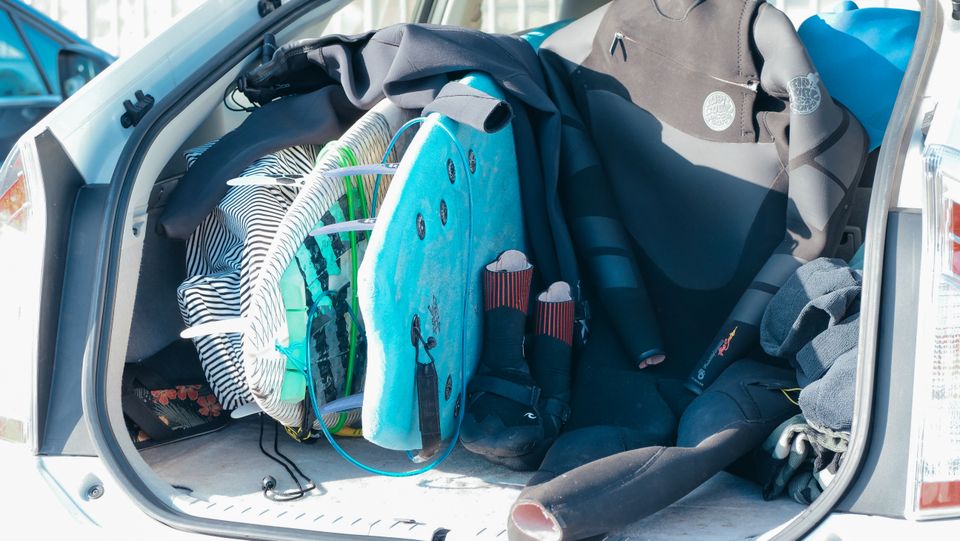
A good surf trip is mostly about timing and matching. Timing means choosing a forecast window where the swell is workable for your level, not the biggest day of the year. Matching means bringing the right board for what is likely to happen, not what would be perfect on one specific day.
BeachFinder is most useful for surf trips when it is treated as a logistics tool: spot photos for the orientation, weather and wind for the surface, waves and swell period for energy, plus amenities, stays and nearby activities so the non-surf hours are also planned. The checklist below is the part you do before you leave.
- Your board quiver should match the realistic forecast range, not a single best day.
- A swell prediction window is most reliable around 5 to 7 days out, getting more confident closer to the trip.
- Accommodation timing is part of the surf decision: arrive a day early, leave a day later than the peak.
- A short list of backup spots in the same coastal cluster turns a wrong-direction swell into a good day instead of a wasted one.
Match boards to the realistic forecast, not the dream day
The biggest surf-trip mistake is packing for the perfect day instead of the average day. Most trips deliver a mix of clean small days, a couple of solid sessions and at least one wind or swell day where the main spot is unsurfable. Bringing only a high-performance shortboard for a long trip turns those average days into beach days, which can be fine, but is not what most surfers traveled for.
A useful approach is to build a small two or three board quiver: a forgiving daily driver, a step-up if the forecast shows real swell, and either a fish, mid-length or longboard for small or messy days. For most intermediate surfers, the daily driver and the small-day board are far more important than the step-up. If you are renting boards on arrival, the same logic applies to what you ask for at the surf shop.
- Daily driver: covers the largest share of average days at your level.
- Step-up: only if the forecast genuinely shows it, otherwise leave it home.
- Small-day board: fish, mid-length or longboard, the difference between surfing and watching on flat days.
Read the swell window, not the headline
Modern forecasts give a useful picture about a week out, but the confidence is much higher inside three to five days. Beyond that horizon, model spread is large. The headline number for one day is less informative than the trend across the trip: is the swell building, peaking, dropping, or coming from several conflicting directions?
When choosing a trip date, look for a window where the swell direction matches your destination, the period is workable and the wind has some chance of cooperating. A forecast of ten-foot waves is not automatically good if the period is short and onshore wind is strong every morning. A modest forecast with clean wind and a long period can produce a better trip.
Plan accommodation around the wave, not the brochure
Surf trips are won and lost on logistics. A house ten minutes from the spot but with no wifi, no kitchen and no morning supplies is harder than it sounds when the swell is on. A hotel forty-five minutes away is fine until the wind starts switching at 9 am and you arrive after the window. Buy the location first, then the comfort.
Arrive at least a day before the swell window, because long travel days followed by a sunrise dawn patrol with jet lag and rented boards is rarely the session anyone remembers fondly. Leaving the day after the swell drops also turns the last day into a calm reset session instead of another panic-pack morning.
- Stay close to the main spot, even if the room is simpler.
- Add at least one buffer day before the swell peak.
- Add at least one calm day after the peak so the trip ends well, not exhausted.
Build a backup spot list in the same cluster
Every surf coast has two or three secondary spots that work when the main one does not. Those spots are not always smaller. Sometimes they handle a different wind, a different swell direction or a more south-facing exposure, and they can save days where the main beach is closed out or empty.
Before the trip, make a short list of two to four backup options within driving distance. Note their orientation, the wind they prefer and the swell direction that activates them. BeachFinder is useful here because the spot photo and orientation help even before you arrive, and the map shows access, parking and amenities for those backups so you do not lose time on a wrong drive.
- Pick backups with a different wind window from the main spot.
- Note swell direction and orientation, not just distance.
- Save BeachFinder spot links so you can navigate without searching from scratch.
Pack for the trip, not for the dream session
Surf packing lists should match the climate and the type of trip. A cold-water mission needs a thicker suit, hood, boots and gloves, and the wax should be cold-water wax, not the leftover summer block. A tropical trip is the opposite: rashguard or zinc against sun, light wax, simple repair kit, and ear plugs if the surf days are long.
Use BeachFinder to compare the photo, map, weather, UV, water temperature, wind, waves, currents, water quality where available, amenities, stays and activities before committing to the trip.
- Wetsuit thickness for the actual water temperature, plus a backup if cold.
- Wax matched to water temperature, plus a basic ding repair kit.
- Sun protection, ear plugs and a small first aid pouch with reef cuts in mind.
- Travel-friendly board bag with extra padding for the fins and tail.
Before you go
- Match the board quiver to the realistic forecast, not the best-case day.
- Pick a swell window with workable wind, not the biggest headline.
- Book accommodation close to the main spot with buffer days before and after.
- Save two to four backup spots in the same coastal cluster.
- Pack wax, repair kit, sun protection and a basic first aid pouch matched to the climate.
FAQ
How far ahead should I book a surf trip?
Booking three to six weeks ahead is a reasonable balance for most destinations. Forecasts are not reliable at that horizon, but you can pick a season and region where conditions are statistically good. For a chase trip targeting a specific swell, booking inside ten days gives you better forecast confidence, but accommodation will be more limited.
What if the forecast turns bad after I book?
Most trips have at least one or two surfable days even in poor windows, especially when you have backup spots. Use the down days for non-surf parts of the destination: hikes, cooking, exploring, recovery, rest. Treat the trip as a coastal trip with surf, not as a single forecast bet, and the satisfaction usually goes up.
Do I really need to bring multiple boards?
It depends on the destination. If reliable rentals are available locally, one travel board plus a rental can cover the range. If rentals are scarce or low-quality, bringing two boards is worth the extra airline fee. The key is honest matching: a quiver that fits your level and the realistic forecast, not the magazine cover.
Use BeachFinder to check today's spot.
Use your location, search any city worldwide or explore the map to compare the 20 most relevant beaches and swimming spots around you.
Download BeachFinder
Find beach conditions, sea temperature, wind, UV, water quality, and nearby swimming spots before you go.
These beach pages connect the guide advice with real spot details: sea temperature, wind, UV index, waves, access and photos when available.
Praia de Quarteira
PT
Playa de la Mata Negra
PT
Praia do Carvalho
PT
Plage Rive Gauche
FR
Plage de la Dalle
FR
Plage de Saint-Jean
FR
Praia dos Alemães
PT
Praia da Barra
PT
Plage du Lividic
FR
Lagoa de Albufeira
PT
Plage de Notre-Dame
FR
David
FR
Plage du Moulin Brûlé
FR
Praia dos Castelos
PT
Plage de La Folie Calette
FR