
Onshore vs offshore wind: how it shapes the surf
Wind direction and wave shape, why offshore is gold, and how to choose a beach for kids when wind goes wrong.

Wind direction at the coast is the variable that decides whether a wave looks like a postcard or a washing machine. Two days with the same swell can produce completely different surf depending on which way the wind blows. The vocabulary is simple (onshore, offshore, cross-shore, side-shore) but the practical consequences shape every session, from beginner lessons in waist-deep water to dawn patrols on big point breaks.
This guide explains what each wind direction does to wave shape, why offshore wind is the universal favorite, when onshore is actually fine for kids, and how to read a forecast for the right beach. The goal is to give you a way to look at the wind arrow on a forecast and know, in five seconds, whether the planned beach will work or whether you should swap to a sheltered alternative.
- Offshore wind blows from land to sea, holds up the wave face and produces clean breaks.
- Onshore wind blows from sea to land, breaks down the wave shape and creates chop.
- Cross-shore (side-shore) wind is workable and often fine on long beach breaks.
- Onshore is actually friendlier for kids learning whitewater because it pushes them toward the beach.
What each wind direction actually does to a wave
Offshore wind (blowing from the land out to sea) hits the back of the wave as it rolls toward shore. Because the wind is pushing against the falling crest, it holds the wave face up longer, slows the break, and grooms the surface into glassy walls. This is what most surf photos look like. It is the universal favorite for shortboards, longboards and bodyboards alike.
Onshore wind (blowing from sea to land) pushes the back of the wave forward, makes the wave break earlier and softer, and roughs up the surface into chop. The wave loses shape; the face becomes harder to read; tricks and turns become unreliable. Strong onshore wind can turn a beautiful 1.5 m swell into a mushy uncoordinated mess. Cross-shore wind blows along the beach and has a smaller effect on wave shape but adds surface texture.
- Offshore: clean, hollow, holds up; ideal for surf photos and serious sessions.
- Onshore: choppy, soft, breaks early; deteriorates wave shape.
- Cross-shore (side-shore): workable, some texture, depends on speed.
- Light wind under 5 knots is glassy regardless of direction.
Why offshore is the universal favorite
Offshore wind does three things at once. It holds up the wave face so the lip falls clean rather than pitching out early. It blows away the loose surface chop, leaving glassy water that responds predictably to a board. And it creates spray off the top of the wave that gives the postcard 'feather' look surfers love. All of this means waves that hold longer, surf cleaner and read more accurately.
The trade-off is that strong offshore can be hard to paddle through. The wind pushes back as you try to get out, can knock you off the board on a duck-dive, and slows your return to the lineup. Beginners often misread strong offshore as a bad day because of the paddling effort, when the wave shape is actually optimal. Light offshore (5 to 10 knots) is the sweet spot.

When onshore is actually fine
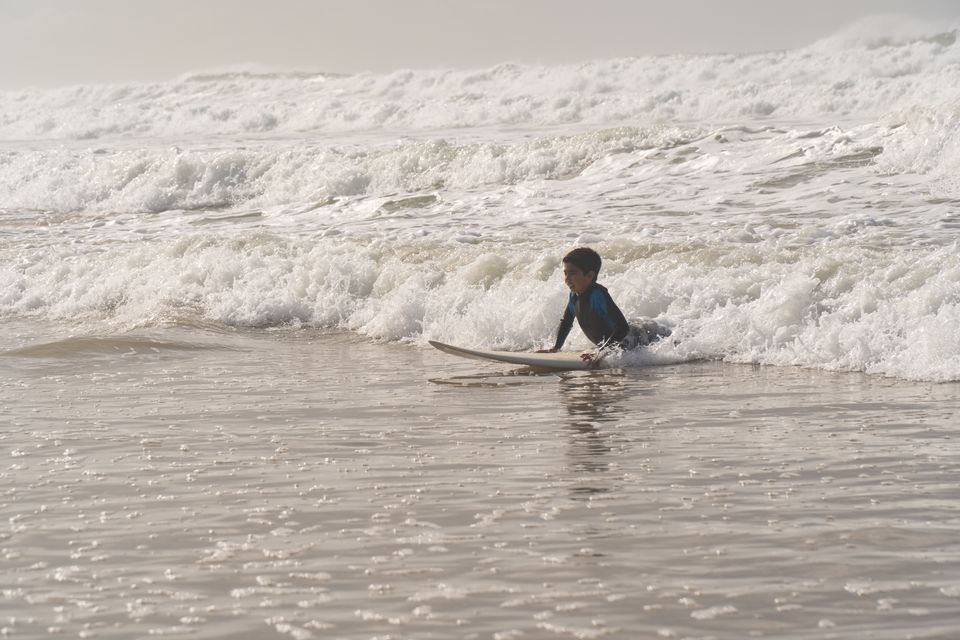
Onshore wind is not always the enemy. For beginner whitewater sessions, onshore wind is actually friendlier. It pushes broken waves toward the beach, gives the student a reliable ride toward shore, and prevents the worry of drifting offshore. Many surf schools teach exclusively on light onshore mornings for exactly this reason. The lesson does not require a clean wave face; it requires push and forward direction.
For kids and complete beginners on foam-top boards, light to moderate onshore is often the safer choice. The wave is soft, the push is generous and the drift is toward shore. The conditions that look bad on a surf cam are exactly what the school wants for a 6-year-old's first stand-up.
- Beginner whitewater: onshore is often preferred over offshore.
- Kids on foam boards: light onshore = safer, more enjoyable.
- Strong offshore can be dangerous for kids (paddling difficulty, drift offshore).
- Light wind or glassy is best for everyone but rarest in summer afternoons.
Cross-shore wind and the in-between days
Cross-shore (or side-shore) wind blows along the beach rather than directly onshore or offshore. It usually has a smaller effect on wave shape than onshore but more than offshore. Some beach breaks tolerate cross-shore well, especially those with wide-open sandbars. Others lose shape quickly because the wind pushes chop along the wave face.
Side-shore wind from the right direction can also clean up an onshore-marked beach by aligning the chop in a way the eye reads as cleaner. The Cote Basque often has this effect: a south wind that looks onshore on a forecast actually behaves more like cross-shore at most beaches and produces decent surf. Always check the actual beach orientation, not just the wind arrow on a forecast.
- Cross-shore is workable but adds surface texture.
- Beach orientation matters: a 'south wind' is different at a south-facing vs east-facing beach.
- Some side-shore wind can clean up a beach that the forecast labels onshore.
Reading the wind forecast like a surfer
Wind forecasts split into hourly slots. The classic European pattern in summer is calm or light offshore at sunrise, gentle onshore sea breeze building from late morning, peaking 2 to 4 PM and dropping again at sunset. This is the reason dawn patrols exist. The same beach is glassy at 7 AM and choppy at 2 PM, even when wave height and swell direction stay constant.
Use a wind model (Windy with ECMWF or ICON, MeteoBlue, Windguru) with the surfer's eye: read direction first, then speed, then time of day. If the forecast shows light offshore for the 8 to 10 AM window and onshore building after 11, plan a dawn patrol. If the forecast shows offshore all morning, you can sleep in. If onshore is forecast all day, switch beaches or accept a foam-top session.
Before you go
- Identify whether the wind is offshore, onshore or cross-shore at your beach.
- Prioritize light offshore (5 to 10 knots) over strong offshore for paddling ease.
- Plan dawn patrols when summer afternoon onshore is forecast.
- For kids and beginner whitewater, light onshore is often preferred.
- Cross-check wind direction against beach orientation, not just the forecast arrow.
FAQ
Why is offshore wind good for surfing?
Offshore wind holds up the wave face, blows away surface chop and creates clean wave shape that breaks predictably. The wind is pushing against the falling crest, slowing the break and giving the wave time to peel cleanly. Strong offshore (over 15 knots) can be harder to paddle through, but light to moderate offshore (5 to 12 knots) is universally considered the best wind for surfing.
Should I cancel a surf trip if forecast shows onshore wind?
Not necessarily. Light onshore (under 10 knots) is workable on most beach breaks and is actually preferred for beginner whitewater sessions and kids on foam tops. Strong onshore (over 15 knots) is what destroys wave shape. Check the forecast for hourly variation: dawn patrols often catch offshore or glassy conditions even on onshore-marked days.
Is onshore wind dangerous?
Onshore wind itself is not dangerous; it just makes for messier waves. The hidden risk is that strong onshore can stack swell into closeout shorebreak, which is harder to navigate for beginners. Strong offshore can be more dangerous because it can push surfers and floating gear out to sea quickly. Always check wind speed alongside direction and pick a beach matched to the day.
Use BeachFinder to check today's spot.
Use your location, search any city worldwide or explore the map to compare the 20 most relevant beaches and swimming spots around you.
Download BeachFinder
Find beach conditions, sea temperature, wind, UV, water quality, and nearby swimming spots before you go.
These beach pages connect the guide advice with real spot details: sea temperature, wind, UV index, waves, access and photos when available.
Praia de Quarteira
PT
Playa de la Mata Negra
PT
Praia do Carvalho
PT
Ondarreta
ES
Plage Rive Gauche
FR
Plage de la Dalle
FR
Plage de Saint-Jean
FR
Playa del Regatón
ES
Praia dos Alemães
PT
Praia da Barra
PT
Platja gossos
ES
Playazo de Villaricos
ES
Playa Fluvial del Huerva
ES
Playa de Guadalmar
ES
la Caleta
ES