
Where to find the best longboard waves in Europe
Soft, rolling, long-period waves vs aggressive beach breaks: how to read European coasts for cruisy longboard sessions.
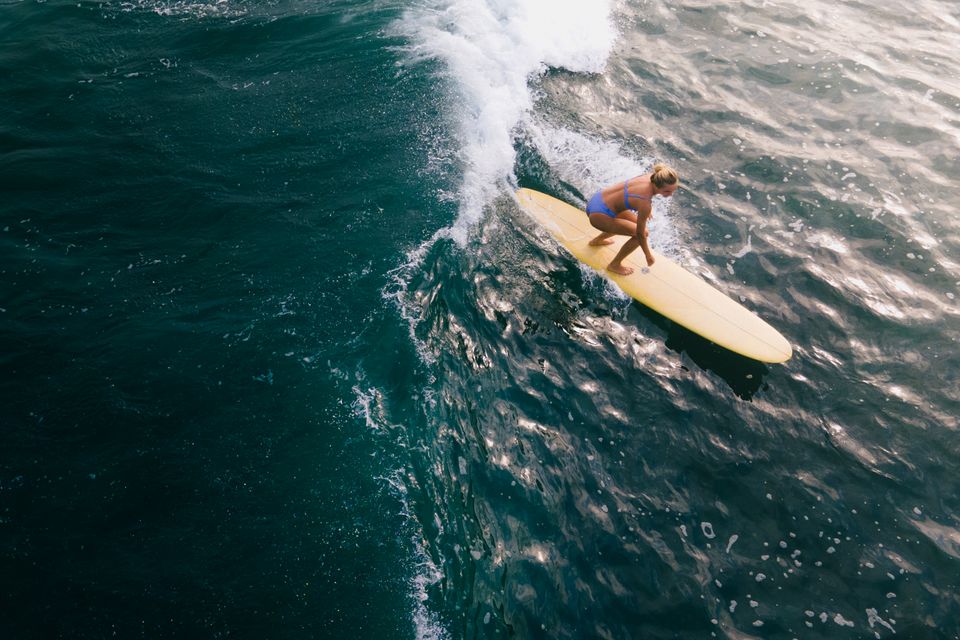
Longboard surfing rewards patience over power. The wave you want is rolling, fairly long, fairly slow and breaking onto a forgiving section that lets you walk the board, hang five and recover from the inevitable wobble. Most of Europe's reputation is built on punchy beach breaks that suit shortboards. The good longboard sessions are quieter and harder to find on a forecast page.
The honest answer is that Europe does not have an endless supply of perfect logging points like California, but there are real longboard windows when you read the coast correctly. The trick is to recognize the conditions and the geography that produce mellow walls, then time the trip around them.
- Long-period swell with moderate height usually outperforms big short-period swell for longboarding.
- Point breaks, sheltered beach breaks and outside reef shoulders tend to give longer, slower walls.
- Wind direction is decisive: light side-shore or offshore keeps the surface readable for cross-stepping.
- Crowd management matters more on a longboard because you take more space in the lineup.
What 'longboard wave' actually means
A longboard wave is not just a small wave. A small, weak chop dies before you can do anything with it. A good longboard wave has enough energy to push a heavy board down the line, breaks at a moderate angle and offers a shoulder you can ride for several seconds rather than a quick close-out. That usually requires either a long-period groundswell or a coast that bends the wave along a point.
Wave height is less important than length. A clean three-foot wall that breaks for fifteen seconds is far more useful than a five-foot wave that closes out in three. Surfline and Magicseaweed both list 'wave length' as a quality criterion for that reason, even though the public number focused on is height.
- Knee to head-high is the sweet zone for most logging.
- Period of 10 to 15 seconds is often ideal for European coasts.
- A wave that 'walls up' early and stays open is more valuable than a steep peak.
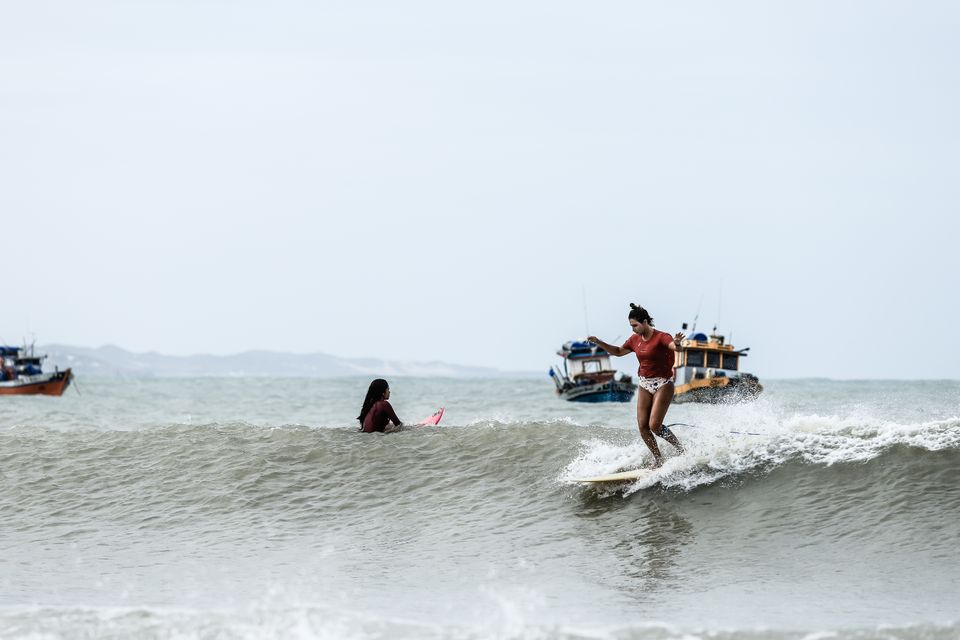
Coastlines that consistently produce mellow walls
France's southwest coast is famous for short-period beach breaks but has hidden longboard windows when the swell drops to chest-high and the period climbs. The Cote Basque between Biarritz and Saint-Jean-de-Luz holds rolling sections at La Cote des Basques and Erromardie when conditions soften. In Portugal, sheltered beaches around Lisbon (Carcavelos on the right swell) and the protected coves north of Peniche can produce surprisingly long walls.
Spain's Cantabrian coast, especially around Somo and Mundaka's outside section on small days, has an old logging tradition. The UK has Croyde and Saunton in north Devon for soft, full-length walls, plus the slow Welsh points around the Gower. Italy's Tyrrhenian coast around Banzai and Capalbio offers genuine glassy windows when the Mediterranean lines up.
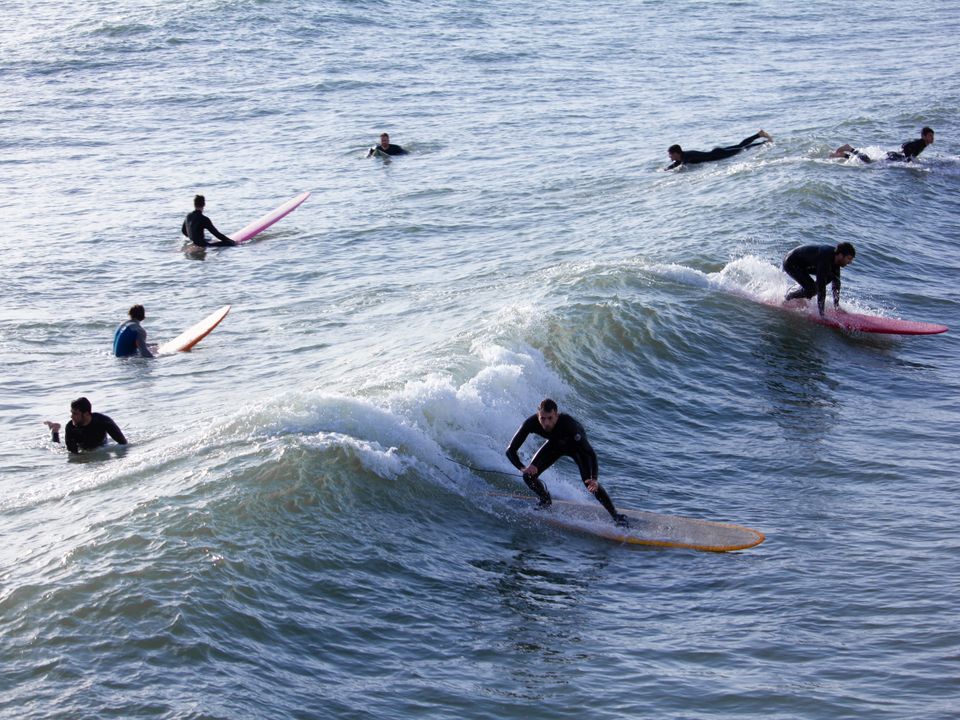
Use period and wind, not just height
European forecasts often show two swells stacked on top of each other: the dominant groundswell and a local windswell. For longboard purposes, the groundswell is what you want. A 1 meter / 13 second swell will almost always produce better logging than a 1.5 meter / 7 second windswell, even though the height looks bigger on paper.
Wind is the second filter. Offshore wind keeps the wave face clean and lets you walk the deck without the surface chop knocking your feet off. Light cross-shore can still work. Strong onshore destroys the section before you can step forward. Ocean buoys (NDBC, Puertos del Estado, the UK Met Office wave buoys) are reliable when the surf cam is misleading.
- Look for period 10s+ and height under 1.5 m for relaxed sessions.
- Light offshore is gold; light side-shore is workable.
- Strong onshore is a sign to move to a more protected beach.
Crowd, etiquette and the longboard lineup
A longboard catches more waves than a shortboard at the same spot, which is why some lineups are tense when loggers turn up. The safer plan is to pick beaches where the crowd is light or where there is enough room for both shapes. Mid-morning weekdays at secondary beaches usually give a better experience than a Saturday at a famous point.
BeachFinder helps because it shows exposure, parking and amenities together. A longboard session does not have to be the only goal of the trip. A quiet stretch of coast with one good window in the morning, a coffee stop and a backup beach for later in the day is often the more enjoyable choice than fighting for one crowded peak.
- Avoid the local hot peak unless you know the etiquette and rotation.
- Sandy bottom and beach breaks usually offer more space than a single point.
- Travel with a backup: a sheltered cove or longer-walled secondary beach saves the day.
Trip planning for a longboard week
If you are planning a dedicated longboard trip, target shoulder seasons. Late spring and early autumn often produce moderate, clean swell with manageable wind and water that is still warm enough for a 3/2 wetsuit. France's Cote Basque, Portugal's Lisbon coast, north Devon and Cornwall, and parts of the Cantabrian coast all hit reliable longboard windows in May, June, September and October.
Avoid peak-summer beach breaks if you want quieter lineups: holiday crowds and short summer swell rarely match. And keep a flexible itinerary: longboard surf is often a one-tide window, so a region with several spots of different exposure beats a single famous beach.
Before you go
- Filter forecasts by period (10s+) before height.
- Pick a coastal cluster with at least two exposures, not a single beach.
- Aim for offshore or light side-shore wind windows.
- Plan for shoulder seasons rather than peak summer crowds.
- Save a backup beach for the second tide or a wind shift.
FAQ
Is Europe really good for longboarding?
Europe does not have a long ribbon of perfect points like parts of California or Mexico, but it has several reliable longboard windows. The Cote Basque, north Devon, parts of Lisbon and the Cantabrian coast all produce slow, walled waves several days per month outside winter. The trick is timing and choosing sheltered or angled beaches rather than the famous power spots.
What size wave is best for longboarding?
Most loggers prefer waves between knee-high and head-high, with period of 10 to 15 seconds. Smaller waves can be too weak to push a heavy board, while bigger short-period swell makes the wave close out before you can walk the deck. The quality target is length and shoulder, not height.
Should beginners start on a longboard?
For a first season, a long, soft beginner board (often 8 to 9 feet) is usually the easiest tool because it paddles fast, catches small waves and forgives mistakes. True logging on a classic single-fin longboard is a different skill that comes after the basics, and it works best in cleaner, slower waves than a beginner usually picks.
Use BeachFinder to check today's spot.
Use your location, search any city worldwide or explore the map to compare the 20 most relevant beaches and swimming spots around you.
Download BeachFinder
Find beach conditions, sea temperature, wind, UV, water quality, and nearby swimming spots before you go.
These beach pages connect the guide advice with real spot details: sea temperature, wind, UV index, waves, access and photos when available.
Praia de Quarteira
PT
Playa de la Mata Negra
PT
Praia do Carvalho
PT
Plage Rive Gauche
FR
Plage de la Dalle
FR
Plage de Saint-Jean
FR
Plage naturiste de la Pointe d'Arçay
FR
Praia dos Alemães
PT
Praia da Barra
PT
Plage du Lividic
FR
Lagoa de Albufeira
PT
Plage de Notre-Dame
FR
David
FR
Plage du Moulin Brûlé
FR
Praia dos Castelos
PT