Swimming in winter in Europe: cold shock, wetsuits, hypothermia
Practical safety for European winter swims: cold shock response, the right wetsuit thickness by sea temperature, and how to recognize early hypothermia.

Winter swimming has gone from a niche habit to a mainstream wellness trend across Europe. From Brighton to Biarritz to the Baltic, more people are entering 8 to 12 C water in December, January and February. The benefits are real, but so are the risks, and the medical literature backed by NOAA and the RNLI is unambiguous: cold water kills faster than cold air, and most fatalities happen in the first minute, not from hypothermia hours later.
This guide is the practical layer between curiosity and a safe winter swim. It explains what cold shock actually is, how to pick a wetsuit thickness from the local sea temperature rather than a marketing chart, and what early hypothermia looks like in yourself or a swim partner. None of this replaces a guided dip with a club or a lifeguard. It is the minimum understanding before you decide to get in.
- Cold shock starts at water temperatures below roughly 15 C and peaks in the first 60 to 90 seconds of immersion.
- Match wetsuit thickness to the actual local SST, not the air temperature or a generic season.
- Float-to-live: if you fall in unprotected, lie back and breathe for 60 seconds before swimming.
- Hypothermia rarely strikes during a planned short swim; it strikes during the slow rewarm if it is mismanaged.
Cold shock: the real first-minute danger
Cold shock response is an involuntary reaction to sudden immersion in water below about 15 C. The skin sensors trigger a gasp reflex, an uncontrolled increase in breathing rate and a spike in heart rate and blood pressure. NOAA and the RNLI both flag this as the largest cause of cold water drowning: the swimmer inhales water during the gasp, panics and cannot regulate breathing, and the lungs fill before the body has a chance to do anything purposeful.
The reflex is strongest in the first 60 to 90 seconds, and then your breathing usually stabilizes if you can stay calm and afloat. That is why every UK and Nordic winter swimming guide repeats the same rule: do not jump in, do not put your head under, and do not start trying to swim immediately. Enter slowly, exhale deliberately and let the breathing settle before you do anything else.
- Cold shock is highest in water below 15 C, especially below 10 C.
- Most cold water drownings happen in the first minute, not from hypothermia.
- Float-to-live: lie back, breathe slowly for 60 seconds before swimming.
- Never dive in head-first to cold water from a boat, jetty or rock.
Match wetsuit thickness to actual local SST
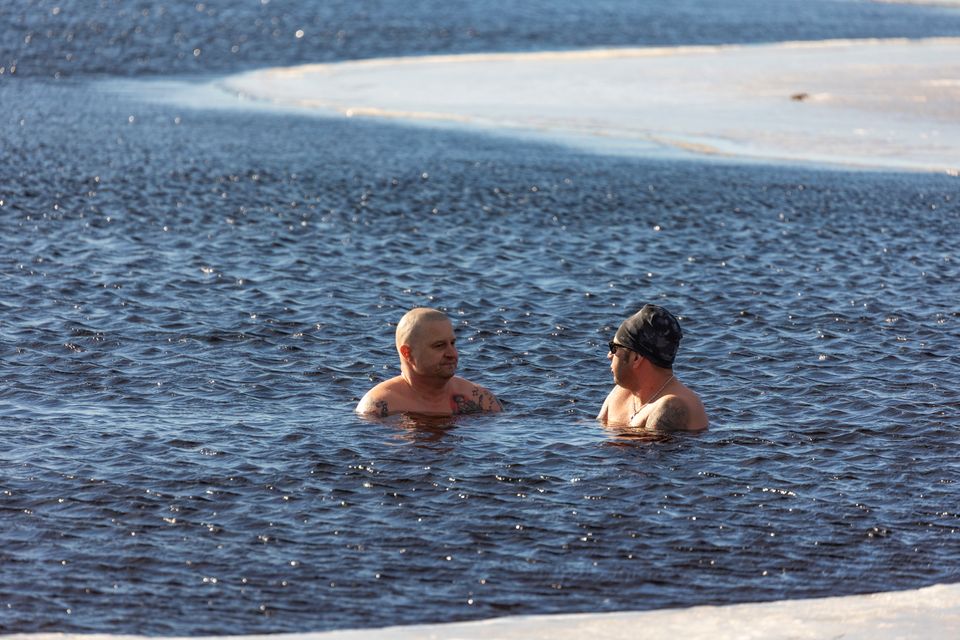
Generic wetsuit charts say things like 'use 4/3 in winter'. That is fine as a starting point but useless without the actual sea temperature where you swim. Brittany, Cornwall and the Baltic spend December to March in the 6 to 11 C range, where a 5/4 with hood, gloves and boots is standard. The western Mediterranean (Cote d'Azur, Costa Brava) sits at 12 to 14 C, where a 4/3 with neoprene cap is comfortable for most adults. The eastern Mediterranean (Cyprus, southern Crete) drops only to about 15 to 17 C, where a 3/2 or even shorts plus rashguard works for short swims.
The RNLI publishes a usable rule of thumb: below 10 C, never swim unprotected for more than a few minutes; from 10 to 14 C, 4/3 plus accessories; 14 to 18 C, 3/2; above 18 C, swimwear for most adults. The exact thickness still depends on body composition, exposure time, wind chill on the exit and whether you are moving (swimming) or static (sitting near the shore). Plan for the worst leg of the swim, not the best.
Reading early hypothermia in yourself and partners
Hypothermia is a slower process than cold shock. Mild hypothermia begins when your core temperature falls below about 35 C. The early signs are subtle, easy to miss while you are still in the water and proud of your tolerance: uncontrolled shivering, slurred speech, slow reaction time, a feeling of mental dullness sometimes called the 'umbles' (stumbles, mumbles, fumbles, grumbles). At this stage the swimmer is still conscious and chatty, but their motor control is degrading fast.
Watch your swim partner more than yourself. Hypothermia impairs judgment, which means the affected person rarely recognizes their own condition. If their lips are blue, their hands are clumsy, or they suddenly stop talking, end the swim. Get them out, dry, into warm dry clothes (not a hot shower), and have a warm sweet drink ready. Sudden rewarm with hot water dilates blood vessels and can cause 'afterdrop', where cold blood from the limbs reaches the core and drops temperature further.
- Watch for uncontrolled shivering, blue lips, slow speech and clumsy hands.
- Rewarm slowly: dry clothes, warm room, warm sweet drinks. Avoid hot showers in the first minutes.
- If shivering stops in someone who is cold, that is severe hypothermia, not improvement. Call emergency services.
The exit and the rewarm matter as much as the swim
Many winter swimmers do the dip correctly and get hurt in the next 20 minutes. The body keeps cooling for 10 to 20 minutes after you leave the water because the blood pulled into the core during the swim now mixes with cold blood from the limbs. This is the afterdrop, and it is when most non-fatal incidents actually happen: dizziness, fainting on the beach, slipping on wet steps, hypothermia at the car.
Plan the exit the way you plan the entry. Have warm dry clothes laid out before you get in. Layer from feet up. Get out of the wind. Move gently, not vigorously: vigorous exercise during afterdrop accelerates the heat loss rather than slowing it. The classic Nordic pattern is: dip, dry, warm drink, sit indoors for 30 minutes. Skip any one of those steps and the risk profile changes.
When to skip the winter swim entirely
A swim is not worth the risk under any of these conditions: SST below 6 C without specific cold-acclimatization training, a known cardiac or arrhythmia history, after alcohol, alone with no observer, on a strong offshore wind, with a recent heavy rain on a polluted coast, or with any chest pain or unusual breathing in the previous 24 hours. Cold shock can trigger cardiac arrhythmias even in healthy people; the combination with an unrecognized heart condition is the deadliest scenario in the medical literature.
Solo winter swims are the single biggest risk factor across all the European rescue statistics. Even experienced winter swimmers swim with at least one observer on the shore. Many clubs require a buddy plus a third person watching from dry land with a phone and a thermos.
- Never swim alone in water below 12 C, even if you are experienced.
- Never swim cold after alcohol or within 24 hours of any chest pain or breathing oddity.
- Skip the swim if the wind is strong offshore or the rain has been heavy.
Use the spot page to plan the day
BeachFinder shows the local sea temperature, air temperature, wind direction and recent precipitation on the spot page. For winter swims those four signals together decide whether the day is sensible. A 12 C sea with 5 C air and a 30 km/h offshore wind is a fundamentally different swim than the same 12 C sea with 10 C air and a calm light onshore. Plan for the exit conditions, not just the entry.
Use BeachFinder to compare the photo, map, weather, UV, water temperature, wind, waves, currents, water quality where available, amenities, stays and activities before committing to the trip.
Before you go
- Check the local SST on BeachFinder, not just the air forecast.
- Match wetsuit thickness and accessories to the actual water temperature.
- Enter slowly, control your breathing for 60 to 90 seconds before swimming.
- Bring warm dry layers, a windbreak and a warm drink ready at the exit.
- Always swim with at least one observer; skip the swim if you cannot.
FAQ
What is the coldest water I can swim in without a wetsuit?
There is no universal floor, but most national lifesaving bodies treat water below 10 C as a 'wetsuit-only' zone for anyone not specifically cold-acclimatized. Some experienced winter swimmers dip for one to three minutes in 4 to 8 C water, but they do it with observers, dry clothes and a controlled rewarm. Casual visitors should not.
Why do I gasp uncontrollably when I enter cold water?
That is cold shock response, an involuntary reaction triggered by skin receptors when you hit water under about 15 C. The reflex peaks in the first 60 to 90 seconds and then fades. Enter slowly, exhale deliberately, do not put your head under straight away, and stay calm. The reflex is the leading cause of cold-water drowning according to NOAA and the RNLI.
How long should a winter swim last?
Rule of thumb used by Nordic and UK swim clubs: roughly one minute per degree of water temperature for unprotected swimming, with a hard ceiling of 10 to 15 minutes. So at 8 C, plan a maximum of 8 minutes. In a 5/4 wetsuit with accessories, you can comfortably extend that to 30 to 45 minutes at the same temperature, but the rewarm afterwards still matters.
Use BeachFinder to check today's spot.
Use your location, search any city worldwide or explore the map to compare the 20 most relevant beaches and swimming spots around you.
Download BeachFinder
Find beach conditions, sea temperature, wind, UV, water quality, and nearby swimming spots before you go.