That beach doesn't exist: spotting AI-faked beach photos before you book
AI-generated and heavily-edited beach photos are everywhere, luring bookings to places that don't match. Here's how to spot fake or misleading beach images and verify a beach is real before you travel.
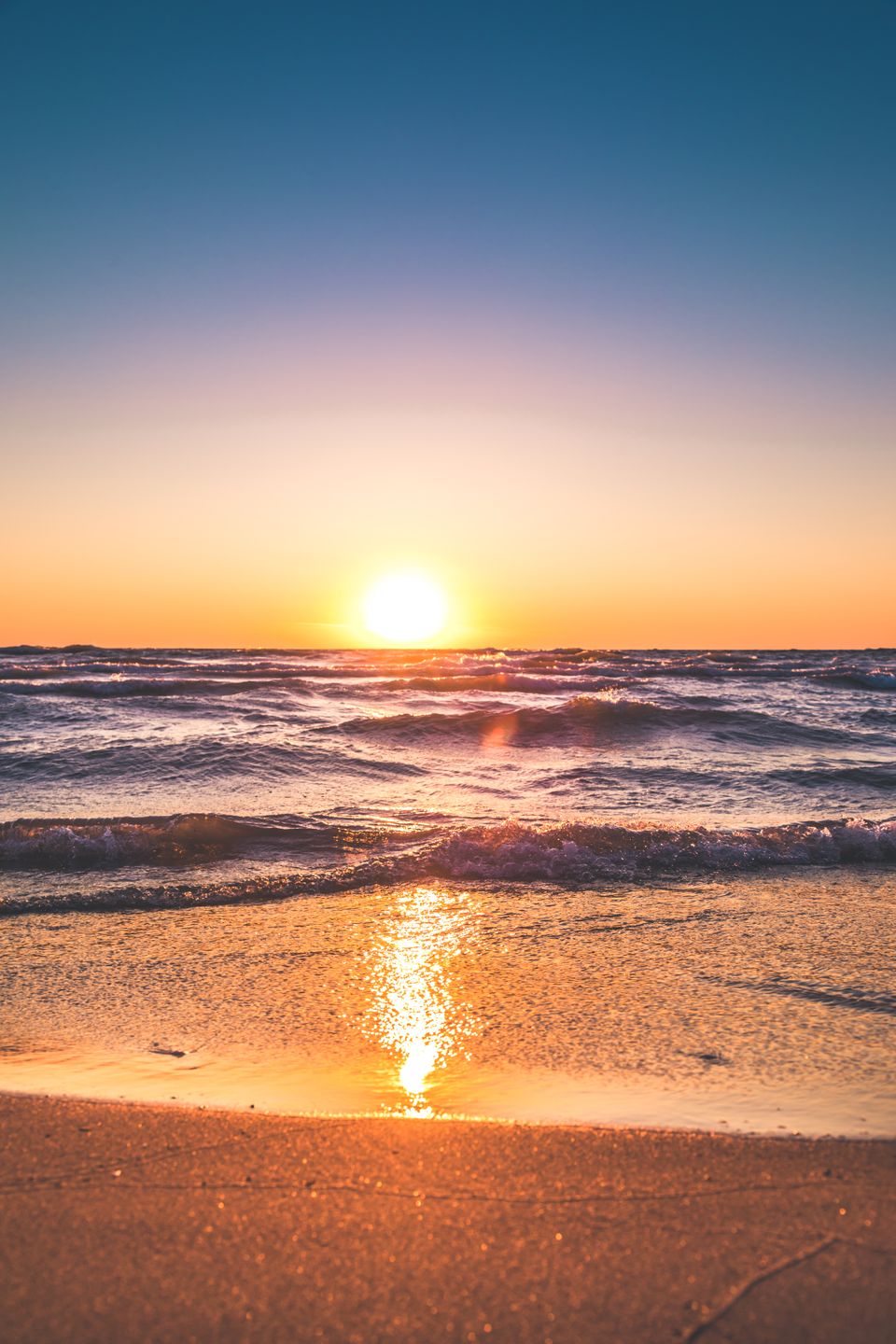
AI-generated and heavily-edited beach photos are now everywhere in travel marketing and social media — impossibly turquoise water, flawless empty sand, surreal scenery — and they lure bookings to beaches that don't match, or don't exist at all. As AI image generation improves, spotting fakes gets harder, but there are reliable tells and verification methods. Learning to spot AI-faked or misleading beach photos, and to verify a beach before booking, protects you from disappointment and scams.
This guide explains how to spot AI-generated and misleadingly-edited beach photos, the tells to look for, and how to verify that a beach is real and matches the images before you travel.
- AI-generated and over-edited beach photos are common in travel marketing and social media.
- Tells of AI images: impossible details, distorted features, too-perfect scenes, odd textures and inconsistencies.
- Over-editing (extreme colour, removed crowds) misleads even with real photos.
- Verify with reverse image search, multiple independent sources, maps/satellite and reviews.
- Cross-check official and user photos (which are more honest) against marketing images.
- Real beach data and live webcams beat any single marketing photo.
Quick answer: how do you spot a fake beach photo?
Look for tells and verify independently. AI-generated images often have giveaways: impossible or nonsensical details (weird architecture, distorted horizons, warped objects), too-perfect or surreal scenes (unrealistically flawless water, sand and sky), odd textures, inconsistent lighting or shadows, and strange errors in fine detail (mangled text, extra limbs, illogical geography). Over-edited real photos mislead differently — extreme colour saturation, removed crowds, or misleading angles. To verify: do a reverse image search (to find the image's origin and other uses), cross-check against multiple independent sources (official site, maps, satellite view, and especially honest user reviews and photos), and look at recent user-generated images (which show the real, un-idealised beach). If a beach only appears in glossy marketing shots and can't be verified through maps, reviews and user photos, be suspicious.
So spot fakes by watching for AI tells (impossible details, too-perfect scenes, inconsistencies) and over-editing, then verify with reverse image search, maps/satellite, and honest user photos and reviews. Cross-checking independent, user-generated sources against the marketing image is the reliable way to catch fakes and exaggerations.
Spotting AI-generated images
AI-generated beach images, while increasingly convincing, often still have tells. Look for: impossible or illogical details (buildings that make no architectural sense, geography that couldn't exist, objects that merge or warp); too-perfect, surreal or 'dreamlike' quality (unnaturally flawless water, symmetry, or an idealised look beyond reality); inconsistencies in lighting, shadows and reflections (that don't match a single real scene); strange textures or 'plastic' surfaces; and errors in fine detail (garbled text on signs, distorted people or hands, repeated patterns). Zooming in often reveals these flaws. As AI improves these tells diminish, so they're not foolproof, but many AI beach images still betray themselves under scrutiny, especially in the details and in scenes that look too perfect to be real.
So scrutinise beach images for AI tells: impossible details, surreal perfection, lighting inconsistencies, odd textures, and fine-detail errors, especially when zoomed in. While AI is improving, these giveaways still catch many fakes — a too-perfect, subtly-wrong image warrants suspicion and verification.
- Impossible/illogical details: warped architecture, nonsensical geography, merging objects.
- Too-perfect, surreal quality; lighting, shadow and reflection inconsistencies.
- Fine-detail errors (garbled text, distorted people) — zoom in to check.
The over-editing problem
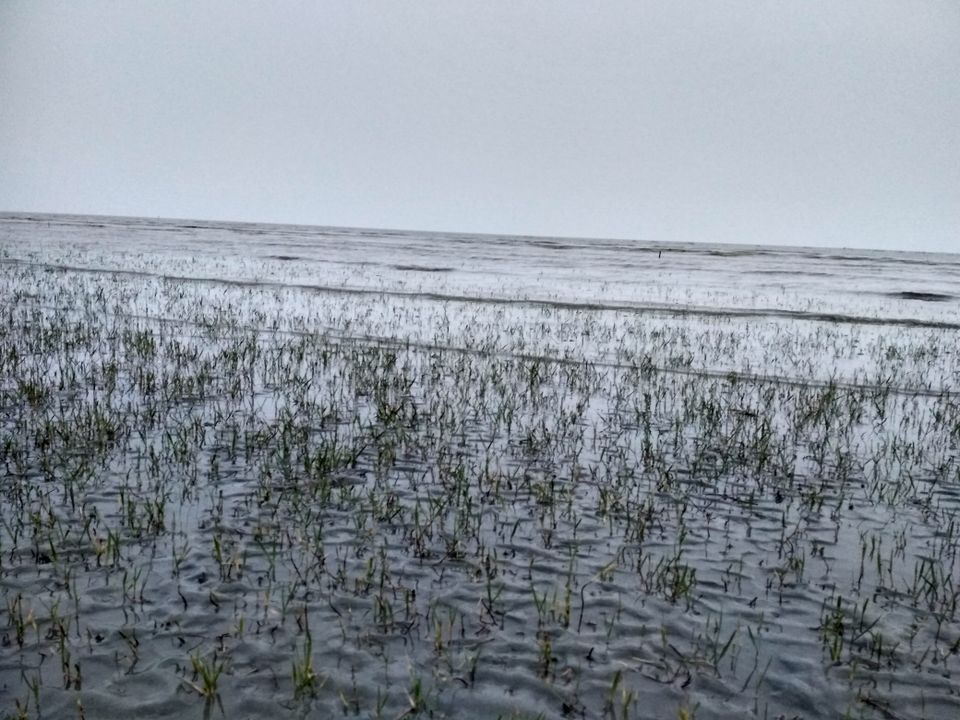
Even real photos can badly mislead through editing. Common manipulations: extreme colour and saturation boosts (making dull water impossibly turquoise, skies unnaturally blue); removing crowds, litter or unattractive features (showing an empty, flawless beach that's actually packed or developed); misleading angles and framing (excluding the busy resort, the road, or the ugly view just out of frame); and using the best-ever conditions (a perfect day) to represent a typically different reality. These aren't AI, but they create expectations the real beach won't meet — the notorious 'expectation vs reality' of over-edited travel photos. So a real photo can be as misleading as a fake one, and the same verification (cross-checking honest user photos and reviews) is needed to see past the editing to the actual beach.
So over-editing misleads even with real photos — through extreme colour, removed crowds, cheating angles and cherry-picked conditions. Recognising that a real image can be as deceptive as an AI one, and verifying against honest user photos and reviews, is essential to seeing the genuine beach behind the marketing.
How to verify a beach is real
Verification is the reliable defence, combining several methods. Reverse image search (upload the image to a search engine) to find where it came from, whether it's stock or AI, and where else it appears — a mismatch is a red flag. Check maps and satellite view to confirm the beach exists where claimed and see its real, un-idealised surroundings (the road, development, actual size and setting). Read reviews and look at user-generated photos (on review sites, maps, social media) — these honest, un-retouched images show the real beach far better than marketing shots. Cross-check multiple independent sources: if official photos, maps, reviews and user photos all agree, it's likely genuine; if only glossy marketing images exist, be wary. Live webcams (where available) show the beach right now, the ultimate reality check.
So verify with reverse image search, maps/satellite, reviews, user photos, and (where available) live webcams — cross-checking independent sources against the marketing images. This multi-source verification reliably reveals whether a beach is real and matches its photos, cutting through both AI fakery and over-editing.
Trusting data and real sources over photos
Ultimately, the best defence is trusting verifiable data and honest sources over any single seductive photo. Real beach databases and information (with actual conditions, amenities, location and multiple/user photos), map and satellite views, genuine user reviews and photos, and live webcams provide grounded reality that a curated or generated marketing image can't fake. So base decisions on this verifiable information rather than one gorgeous photo — especially if that photo can't be corroborated. As AI images improve, this shift from 'trusting the picture' to 'verifying via multiple real sources and data' becomes essential. A beach backed by consistent maps, reviews, user photos and data is trustworthy; a beach existing only in un-verifiable perfect images is a warning sign, whether it's AI-faked, over-edited, or simply not as shown.
So trust verifiable data and honest sources — databases, maps, reviews, user photos, webcams — over any single marketing image. In an era of AI and heavy editing, verifying a beach through multiple real sources, rather than believing one perfect photo, is the reliable way to book the beach you'll actually get.
Booking with confidence
With these skills, you can book beach travel confidently in the AI era. Before booking based on an appealing beach image: scrutinise it for AI and editing tells; reverse-image-search it; check maps and satellite view for the real setting; read reviews and study user-generated photos for the honest picture; and, if possible, check a live webcam. If the beach verifies across these independent sources, book with confidence; if it only exists in un-corroborated perfect images, treat it as a red flag and look deeper or elsewhere. This verification habit protects you from disappointment (a beach unlike its photos), and from scams (places that don't exist as shown), letting you travel to beaches that genuinely match your expectations.
So book with confidence by verifying beach images before you commit: check for fakery and editing, corroborate through maps, reviews, user photos and webcams, and trust only what cross-checks. This habit ensures the beach you book is the beach you get, protecting your trip from AI fakes and misleading edits alike.
Before you go
- Scrutinise beach images for AI tells: impossible details, surreal perfection, inconsistencies, fine-detail errors.
- Watch for over-editing: extreme colour, removed crowds, misleading angles.
- Reverse-image-search appealing photos to find their origin and other uses.
- Check maps and satellite view for the beach's real existence and surroundings.
- Read reviews and study user-generated photos for the honest picture.
- Check a live webcam where available for the beach right now.
- Trust cross-checked data and real sources over any single perfect photo.
FAQ
How can you tell if a beach photo is AI-generated?
Look for tells: impossible or illogical details (warped architecture, nonsensical geography), too-perfect or surreal quality, inconsistent lighting and shadows, odd textures, and fine-detail errors (garbled text, distorted people). Zooming in often reveals flaws, though AI is improving, so verify independently too.
Why do beaches look different from their photos?
Often because of over-editing — extreme colour and saturation, removed crowds and litter, misleading angles that exclude development or the busy reality, and cherry-picked perfect conditions. Even real photos can badly mislead, creating the 'expectation vs reality' gap. Verify with honest user photos.
How do I verify a beach is real before booking?
Use reverse image search on the photos, check maps and satellite view for the real setting, read reviews and study user-generated photos, cross-check multiple independent sources, and check a live webcam where available. If a beach only appears in un-corroborated glossy images, be suspicious.
Are AI-generated travel photos common now?
Yes — AI-generated and heavily-edited beach and travel images are increasingly common in marketing and social media, and improving in quality. This makes verification (reverse search, maps, reviews, user photos, webcams) more important than ever before booking based on an image.
What's the best way to see what a beach really looks like?
User-generated photos and reviews (honest, un-retouched), map and satellite views (for the real setting), verifiable beach data, and live webcams (showing the beach right now). These grounded sources reveal the real beach far better than any curated or AI-generated marketing image.
Can reverse image search detect fake beach photos?
It helps — reverse image search can reveal an image's origin, whether it's stock or reused elsewhere, and inconsistencies (like a 'local' beach photo appearing as a stock image or from a different location). It's one useful verification tool among several to cross-check a beach's images.
Use BeachFinder to check today's spot.
Use your location, search any city worldwide or explore the map to compare the 20 most relevant beaches and swimming spots around you.
Download BeachFinder
Find beach conditions, sea temperature, wind, UV, water quality, and nearby swimming spots before you go.