
Why is one beach turquoise and the next one grey? Sea colour, decoded
Two beaches near each other can have wildly different sea colours. Here's the science of why — depth, sand, sediment, plankton and light — so you can read (and predict) the colour of the sea.

Why is one beach a brilliant turquoise while the next one along is grey-green or murky brown? The colour of the sea isn't random — it's determined by a mix of depth, the seabed and sand, suspended sediment, plankton, and the light and sky. Reading these factors lets you understand, and even predict, why a given beach's water looks the way it does. The turquoise-vs-grey difference is pure physics and biology, and it's genuinely explainable.
This guide decodes sea colour — why beaches range from turquoise to grey — explaining the roles of depth, sand, sediment, plankton and light, so you can read the colour of any sea.
- Sea colour depends on depth, the seabed/sand, suspended sediment, plankton, and light/sky.
- Turquoise comes from shallow water over pale (white) sand, clear of sediment and plankton.
- Deep water looks deep blue (it absorbs and scatters light differently).
- Sediment (from rivers, waves, storms) makes water green, brown or grey.
- Plankton (algae) tints water green; blooms can make it very green or discoloured.
- Light and sky matter too — the same sea looks different under sun vs cloud.
Quick answer: what makes the sea turquoise or grey?
A combination of five factors. Depth: shallow water looks pale and bright, deep water looks dark blue. Seabed and sand: pale white sand reflects light up through the water, creating turquoise, while dark or muddy bottoms make water look darker. Suspended sediment: clear water is blue/turquoise, while water carrying sand, silt or mud (stirred by waves, storms or rivers) turns green, brown or grey. Plankton: microscopic algae tint water green, and blooms can make it very green or discoloured. Light and sky: the sea reflects the sky and looks different under bright sun versus cloud. So a turquoise beach typically has shallow, clear water over white sand under sun, while a grey beach has deeper or sediment-laden water, a darker bottom, or cloud overhead. The colour is the sum of these.
So sea colour comes from depth, sand/seabed, sediment, plankton and light together: turquoise = shallow, clear water over pale sand in sun; grey/brown/green = deeper, sediment-rich or plankton-rich water, darker bottoms, or cloud. Reading these factors explains any beach's colour.
Depth and the seabed: the foundation
The base of sea colour is depth and what's on the bottom. In shallow water over pale sand, sunlight passes down, reflects off the white sand, and comes back up through the water — and because water absorbs longer (red) wavelengths first, the returning light is filtered toward blue-green, producing the bright turquoise of tropical and white-sand beaches. In deeper water, less light returns from the bottom and the water itself absorbs and scatters light, giving a deep, dark blue. Over dark seabeds (rock, dark sand, seagrass, mud), less light reflects, so the water looks darker and less turquoise. So the turquoise 'paradise' look specifically needs shallow, clear water over pale sand — deep water or a dark bottom won't produce it.
So depth and the seabed set the base colour: shallow-over-white-sand gives turquoise, deep water gives dark blue, and dark bottoms give darker water. This is why the same sea can be turquoise in a shallow white-sand bay and deep blue just offshore — the depth and bottom changed.
- Shallow water over pale white sand = bright turquoise (reflected filtered light).
- Deep water = dark blue (little bottom reflection, water absorbs light).
- Dark bottoms (rock, mud, seagrass) = darker water.
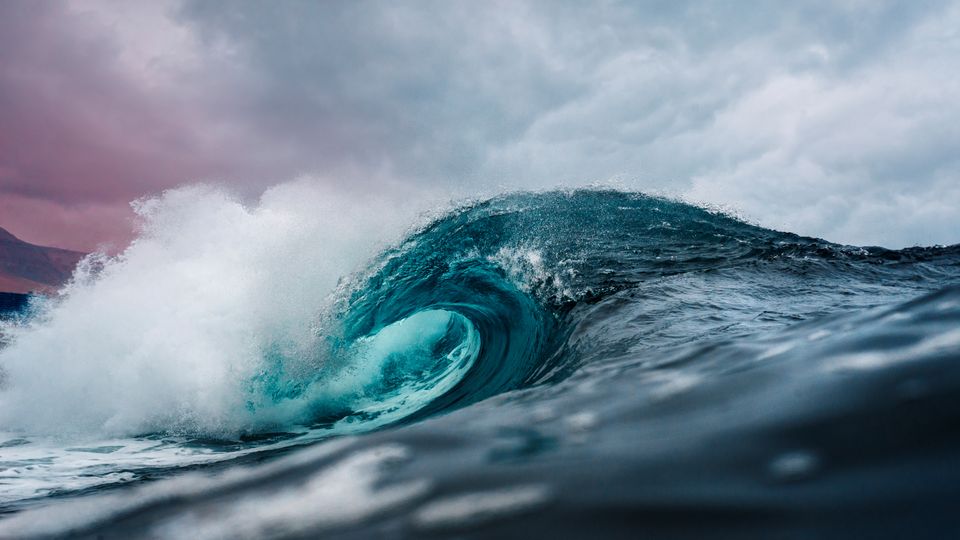
Sediment: the green, brown and grey
The biggest cause of non-blue, murky water is suspended sediment — particles of sand, silt, mud and organic matter floating in the water. Clear water (little sediment) is blue or turquoise; water carrying sediment scatters and absorbs light differently, turning it green, brown or grey. Sediment comes from waves and storms stirring up the bottom (why water goes murky after rough weather), from rivers and runoff carrying silt into the sea (river-mouth water is often brown/green), and from currents and tides. So a beach that's grey or brown often has sediment-laden water — from an energetic shore, a nearby river, or recent storms. This is why the same beach can be turquoise on a calm clear day and grey-green after a storm: the sediment load changed.
So sediment turns the sea green, brown or grey by clouding the water — from waves, storms, rivers and currents. A murky beach usually has a lot of suspended sediment, and its colour will clear toward blue when the water settles, explaining why sea colour changes with conditions.
Plankton and life: the green tint
Living organisms also colour the sea, mainly plankton. Microscopic algae (phytoplankton) contain chlorophyll and other pigments that tint water green, so productive, plankton-rich waters (like the cooler, nutrient-rich Atlantic and upwelling coasts) often look greener than clear, nutrient-poor tropical waters (which look intensely blue precisely because they have little plankton). Algal blooms can make water vividly green, or other colours (red tides, brown blooms) when certain algae proliferate. So a greenish sea often reflects a productive, life-rich water, while a deep clear blue often means nutrient-poor water with little plankton. The green-vs-blue difference between, say, the plankton-rich Atlantic and the clear Mediterranean or tropics is partly a plankton story.
So plankton tints the sea green: productive, nutrient-rich waters look greener, clear nutrient-poor waters look bluer, and blooms can strongly colour the water. A green sea often means a living, productive one, adding a biological dimension to sea colour alongside the physical factors.
Light and sky: the finishing touch
Finally, light and sky shape the colour we see. The sea reflects the sky, so it looks bluer and brighter under a clear sunny sky and greyer under cloud — the same water can appear turquoise in sunshine and grey-green under overcast skies. The sun's angle matters too: sea colour looks most vivid with the sun high and behind you, and flatter when low or ahead. So the light conditions strongly affect the apparent colour, which is why photos of turquoise beaches are taken in bright sun, and why a beach can look disappointingly grey on a cloudy day even if the water itself is clear. The underlying water properties set the potential colour; the light determines how it actually appears.
So light and sky finish the picture: bright sun brings out turquoise and blue, cloud mutes the sea to grey. The same water looks different under different skies, so the light is part of why sea colour varies — and why the turquoise look needs sunshine as well as clear, shallow, pale-bottomed water.
Reading and predicting sea colour
With these factors, you can read and even predict a beach's sea colour. For turquoise, look for shallow, sheltered, clear water over white or pale sand, on a calm, clear, sunny day (tropical and white-sand-Gulf beaches, calm Mediterranean bays). Expect green where water is plankton-rich or over mixed bottoms (Atlantic, cooler productive seas). Expect grey/brown where there's sediment — energetic surf beaches, river mouths, after storms — or under cloud. And know that the same beach changes colour with conditions: calm and sunny brings out the blue, rough or cloudy brings out the grey. So the sea's colour is a readable signal of its depth, bottom, clarity, life and the light — not a fixed property but a changing result of all of them.
So you can decode any sea's colour from its depth, sand, sediment, plankton and the light, and predict when a beach will look turquoise (shallow, clear, pale sand, sunny) versus grey (deep, sediment-laden, or cloudy). Sea colour becomes a legible story of the water's conditions rather than a mystery.
Before you go
- For turquoise, look for shallow, clear water over pale white sand in bright sun.
- Expect deep clear water to look dark blue.
- Read green water as plankton-rich or over mixed/shallow bottoms.
- Read brown/grey water as sediment-laden (surf, rivers, storms) or under cloud.
- Remember rough weather stirs sediment and dulls the colour.
- Note the sky and sun — bright sun brings out blue, cloud brings grey.
- Expect the same beach to change colour with conditions.
FAQ
Why is the sea turquoise at some beaches?
Turquoise comes from shallow, clear water over pale white sand in bright sun — sunlight reflects off the white sand and returns filtered toward blue-green. It needs shallow depth, a pale bottom, clear (low-sediment) water, and sunshine; deep water or dark bottoms won't produce it.
Why is the sea grey or brown at some beaches?
Usually because of suspended sediment — sand, silt and mud stirred up by waves, storms, rivers or currents — which clouds the water green, brown or grey. Deeper water, dark seabeds, and cloudy skies also make the sea look greyer. It often clears to blue when conditions settle.
What determines the colour of the sea?
Five main factors: depth (shallow = pale/bright, deep = dark blue), the seabed/sand (pale sand = turquoise, dark = darker water), suspended sediment (clouds it green/brown/grey), plankton (tints it green), and the light and sky (sun brightens, cloud greys). The colour is the sum of these.
Why is some sea green instead of blue?
Often because of plankton — microscopic algae with chlorophyll tint productive, nutrient-rich waters green, while clear nutrient-poor tropical water looks intensely blue. Shallow water over mixed bottoms and some sediment also contribute to a green appearance.
Why does the same beach change colour on different days?
Because conditions change: rough weather stirs up sediment (dulling the colour to grey/brown), while calm settles it (bringing out blue/turquoise), and the sky matters — bright sun brings out the colour, cloud mutes it to grey. The water's colour reflects its current clarity and the light.
Does deep water look a different colour?
Yes — deep water looks dark blue, because little light reflects back from the distant bottom and the water itself absorbs and scatters light toward deep blue. Shallow water over pale sand looks turquoise, so depth is a key driver of the colour difference.
Use BeachFinder to check today's spot.
Use your location, search any city worldwide or explore the map to compare the 20 most relevant beaches and swimming spots around you.
Download BeachFinder
Find beach conditions, sea temperature, wind, UV, water quality, and nearby swimming spots before you go.