
French Riviera vs Italian Riviera: prices, beach mix and culture
The Cote d'Azur and the Italian Riviera compared on prices, beach types, food culture and accessibility, with concrete recommendations.
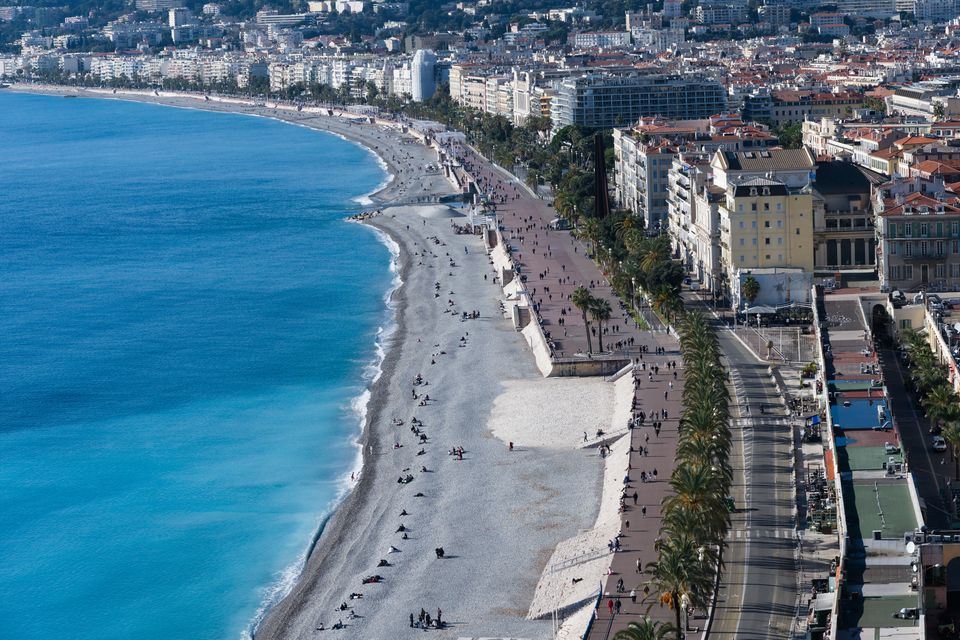
The French Riviera and the Italian Riviera face the same Ligurian Sea and share much of the same climate, but they organize themselves around different cities and different aesthetics. The French Riviera stretches from Cassis to Menton and is dominated by Nice, Cannes, Monaco and Saint-Tropez. The Italian Riviera runs from Ventimiglia at the French border to La Spezia and is dominated by Portofino, Santa Margherita Ligure, the Cinque Terre, Genoa and the Levante coast.
Use this guide to decide which Riviera fits your trip. Prices favor the Italian side outside of premium pockets. Food culture leans Italian for variety and depth. Beach style differs: the French side has more open sand and pebble beaches with classic resort infrastructure, while the Italian side has dramatic cliff villages with smaller beaches and harder access. Both deliver excellent water, mild climate and a rich cultural surface.
- French Riviera: Belle Epoque towns, larger beaches, more polished resort infrastructure, higher prices outside Saint-Tropez/Cap d'Antibes.
- Italian Riviera: cliff villages, smaller beaches, dramatic landscapes, generally cheaper outside Portofino.
- Both share Mediterranean climate; summer sea 23-26 degrees C (Copernicus).
- Choose French side for famous towns and beach scale; Italian side for villages and food.
Beach style: open vs dramatic
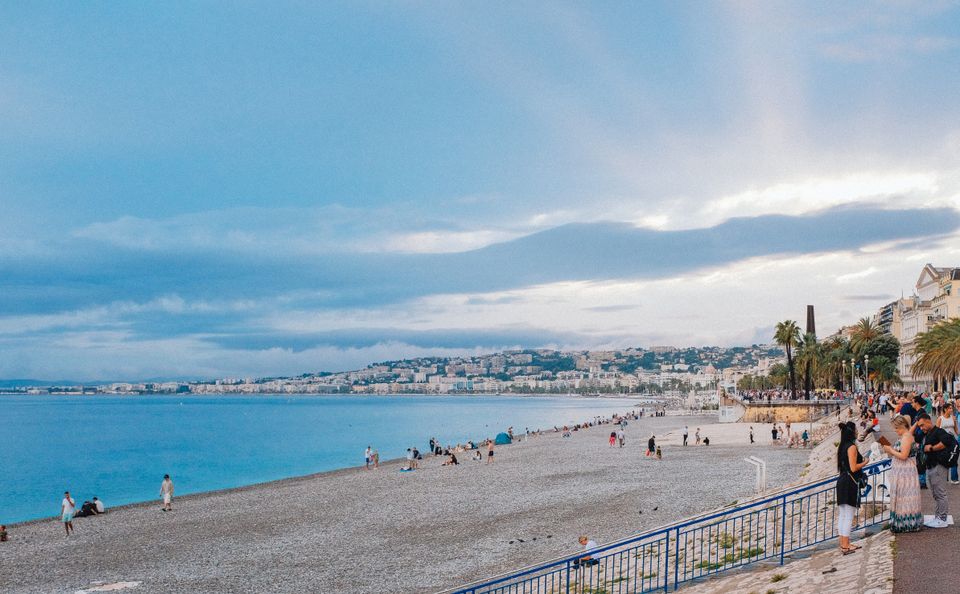
The French Riviera offers more conventional beach geography. Long pebble or sand stretches in Nice, Cannes, Antibes, Frejus and Saint-Raphael accommodate large beach clubs and city promenades. The pebble texture is real but the scale is generous. Cap d'Antibes adds rocky coves with clear water. Saint-Tropez delivers the long Pampelonne sand beach. The infrastructure is mature and the pattern of free public beach alongside paid beach clubs is well-established.
The Italian Riviera squeezes its beaches into small pockets between cliff villages. The Cinque Terre has tiny coves accessed by stairs or by boat; Portofino's small bay is mostly rocky; Santa Margherita Ligure has a real beach but small; the larger sandy beaches sit further south in Lerici and Tellaro on the Gulf of Poets or further west in the Riviera di Ponente around Albenga, Alassio and Loano. The drama is greater per square meter; the convenience is less.
- French Riviera: Pampelonne, Plage de la Garoupe, Promenade des Anglais, Plage du Larvotto Monaco.
- Italian Riviera Levante: Cinque Terre coves, Portofino bay, Sestri Levante Bay of Silence, Lerici.
- Italian Riviera Ponente: Alassio long sand, Finale Ligure, Loano family stretches.
- French side: open sand/pebble at scale; Italian side: small cove + village combinations.

Prices: French premium pockets vs broader Italian value
The French Riviera runs more expensive on average and concentrates extreme prices in Saint-Tropez, Cap d'Antibes and parts of Cannes. A summer double in Nice or Antibes typically starts at 200 to 350 euros for decent mid-range; in Saint-Tropez and Cap d'Antibes, mid-range is 400 to 700 euros and premium reaches four figures. Restaurants on the seafront run 30 to 50 percent above equivalent menus inland.
The Italian Riviera concentrates premium prices in Portofino (one of the most expensive small towns in Italy) and parts of the Cinque Terre. Outside those pockets, the Italian Riviera runs cheaper than the French at equivalent quality. Levanto, Lerici, Bonassola, Sestri Levante and most of the Ponente coast (Alassio, Finale Ligure, Loano) deliver summer mid-range doubles at 120 to 220 euros. Italian seafront food prices stay closer to inland prices than on the French side.
Food and culture
Italian Riviera food culture is one of the best in Italy. Liguria gave the world pesto, focaccia, farinata, trofie pasta, anchovies in lemon and pine-nut sweets. Trattorias in Camogli, Monterosso, Levanto and Genoa deliver this at honest prices. The food alone justifies many trips, and the variety per kilometer of coast is exceptional. French Riviera food is good and Nicoise specialties (socca, pissaladiere, salade nicoise, bouillabaisse in Marseille) are excellent, but the depth and the variety per coast kilometer favor the Italian side.
French Riviera culture sits in galleries, Belle Epoque architecture, the Nice Carnival, the Cannes film festival and Saint-Tropez's Brigitte Bardot legacy. Italian Riviera culture sits in fishing villages, the medieval-and-baroque centers of Genoa and Sanremo, and the historic fishing tradition of the Cinque Terre. Both produce excellent days; the French side is more famous, the Italian side feels more lived-in.
Accessibility and getting around
The French Riviera has Nice's international airport with direct flights from most of Europe and many transatlantic routes. The coastal train from Marseille to Ventimiglia stops at all major towns and is one of the most useful rail services in Europe. Renting a car is helpful for Saint-Tropez and the back-country villages but not essential along the main coast.
The Italian Riviera works on the Genoa-La Spezia coastal train for the Levante side and the Ventimiglia-Genoa train for the Ponente side. The Cinque Terre has dedicated park trains and a hiking trail network. Portofino is reachable by bus or boat from Santa Margherita Ligure (cars are restricted in Portofino). Genoa and Pisa are the main airports for the Italian side; both are smaller than Nice but well-connected to European hubs.
- French Riviera: Nice airport (intl), Marseille-Ventimiglia coastal train.
- Italian Riviera: Genoa and Pisa airports, Levante and Ponente coastal trains.
- Cinque Terre: dedicated park train, hiking trail network, restricted cars.
- Portofino: bus or boat from Santa Margherita; car-restricted center.
Which fits which trip
Choose the French Riviera for: famous towns and a backdrop the rest of the world recognizes, galleries (Matisse, Picasso, Chagall, Maeght, Fondation Maeght), Belle Epoque architecture, larger and more open beaches with mature infrastructure, easier direct flights from intercontinental routes via Nice. Strong choice for honeymoons in established premium spots, for art-and-beach combinations, and for travelers who value the cultural fame.
Choose the Italian Riviera for: cliff villages and small dramatic coves, Ligurian food culture at depth, better value outside Portofino, the Cinque Terre hiking-and-beach combination, the Gulf of Poets literary heritage near Lerici and Portovenere. Strong choice for couples who like walking, for food-focused trips, and for travelers who want a Mediterranean coast that feels more lived-in than packaged.
Before you go
- Decide by priority: famous towns and beach scale (French) vs villages and food (Italian).
- Book Saint-Tropez and Portofino 6+ months ahead for summer.
- Use coastal trains on both sides to skip parking pressure.
- Combine: TGV Nice to Genoa via Ventimiglia gives both Rivieras in one trip.
- Reserve restaurants in famous Italian Riviera spots (Camogli, Monterosso) in summer.
FAQ
Which Riviera is cheaper?
The Italian Riviera, on average and outside Portofino. A summer mid-range double in Levanto, Lerici, Sestri Levante or the Ponente coast (Alassio, Finale Ligure) typically runs 120 to 220 euros, while Nice and Antibes equivalents start at 200 to 350. Saint-Tropez and Cap d'Antibes are in a different bracket entirely (400 to 700+ euros mid-range), and Portofino on the Italian side is the equivalent premium pocket. Italian restaurant prices on the seafront also stay closer to inland prices than the French equivalent.
Which has better beaches?
Different. The French Riviera has larger and more open beaches with mature infrastructure: long pebble or sand stretches in Nice, Cannes, Antibes, Saint-Raphael and Pampelonne, plus the rocky coves of Cap d'Antibes. The Italian Riviera squeezes smaller beaches between cliff villages in the Cinque Terre and Portofino area, with bigger sandy stretches further south (Lerici, Tellaro) and west (Alassio, Finale Ligure, Loano). Choose French for beach scale and resort polish, Italian for cove drama and village combinations.
Can you combine both Rivieras in one trip?
Yes, easily by train. The TGV connects Nice to Ventimiglia in about 50 minutes, and from Ventimiglia the Italian coastal train runs through Sanremo, Imperia, Savona and Genoa. A one-week trip can comfortably cover Nice (2-3 nights), Genoa or Cinque Terre (3 nights), and return. Renting a car for Saint-Tropez or Portofino is optional. The cultural and visual contrast between the two Rivieras justifies the combined trip and works particularly well in late May, June or September outside peak crowds.
Use BeachFinder to check today's spot.
Use your location, search any city worldwide or explore the map to compare the 20 most relevant beaches and swimming spots around you.
Download BeachFinder
Find beach conditions, sea temperature, wind, UV, water quality, and nearby swimming spots before you go.
These beach pages connect the guide advice with real spot details: sea temperature, wind, UV index, waves, access and photos when available.
Plage Gazagnaire
IT
Plage Rive Gauche
FR
Plage de la Dalle
FR
Plage de Saint-Jean
FR
Spiaggia grande di Tordigliano
IT
Baia dei Mergoli o delle Zagare - Nord
IT
Plage du Lividic
FR
Plage de Notre-Dame
FR
David
FR
Plage du Moulin Brûlé
FR
Spiaggia di Marina d'Albori
IT
Plage de La Folie Calette
FR
Spiagga Licina
IT
Plage du Tertre Pelé
FR
Spiaggia della vela
IT