
Cote d'Azur vs Cote Vermeille: which French Mediterranean coast for your trip
Climate, crowd density, prices and water clarity compared between the famous Cote d'Azur and the quieter Cote Vermeille near the Spanish border.
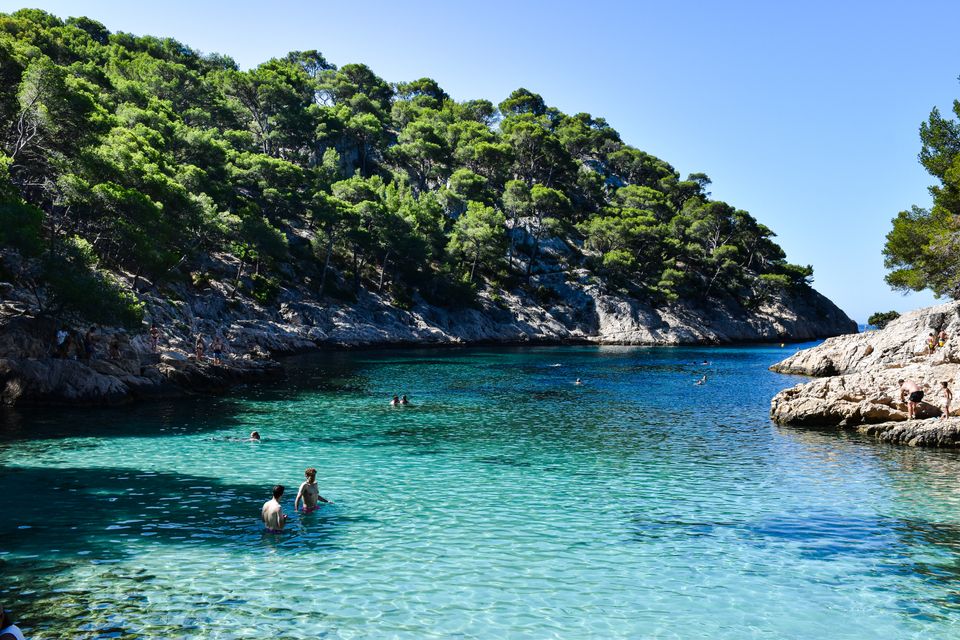
France has two very different Mediterranean coasts and most travelers only consider one of them. The Cote d'Azur stretches from Cassis to Menton and carries every cliche the region has earned: yachts, palm trees, Belle Epoque hotels and prices that match. The Cote Vermeille, three hours west by motorway against the Spanish border, is shorter, less famous and noticeably cheaper, with steep schist cliffs that drop straight into the Mediterranean.
Use this guide to decide which one fits your trip. The two coasts share a sea but very little else: water temperature curves differ, sand is structurally different, the crowd density is in another league entirely, and the cultural pull of the towns is not comparable. Neither is better in the abstract; each is better for a specific kind of day.
- Cote d'Azur: more famous, more crowded, more expensive; warmer water by 1 to 2 degrees C in summer.
- Cote Vermeille: shorter coastline, smaller crowds, schist cliffs and clearer water in sheltered coves.
- Cote d'Azur peak August sea temperature averages 24 to 26 degrees C; Cote Vermeille 22 to 24 degrees C (Copernicus Marine).
- Choose Cote Vermeille for clear water and budget; choose Cote d'Azur for nightlife, art and Belle Epoque towns.
Climate and water temperature: similar curves, different peaks
Both coasts sit on the western Mediterranean, but the Cote d'Azur is more sheltered and runs warmer through summer. Copernicus Marine sea surface temperature climatology shows August averages of 24 to 26 degrees Celsius between Nice and Saint-Tropez, with shallow bays touching 27. The Cote Vermeille, exposed to the Tramontane wind funneling down from the Pyrenees, averages 22 to 24 degrees in the same window and cools faster when the wind kicks in.
Air temperature differs less than water. Both coasts deliver 28 to 32 degrees Celsius highs in July and August, with the Vermeille slightly drier and breezier. The shoulder seasons matter for the choice: by late September, the Cote d'Azur retains useful swim temperature into mid-October while the Vermeille drops below 20 degrees a week or two earlier, especially after a Tramontane episode.
- Cote d'Azur sea (Aug): 24-26 degrees C average, occasionally warmer in bays like Villefranche.
- Cote Vermeille sea (Aug): 22-24 degrees C average, Tramontane wind drops felt temperature.
- Cote d'Azur shoulder (Oct): still swimmable for many, 19-21 degrees C typical.
- Cote Vermeille shoulder (Oct): cooler and windier; wetsuit-friendly territory by late October.
Crowd density and what it actually feels like
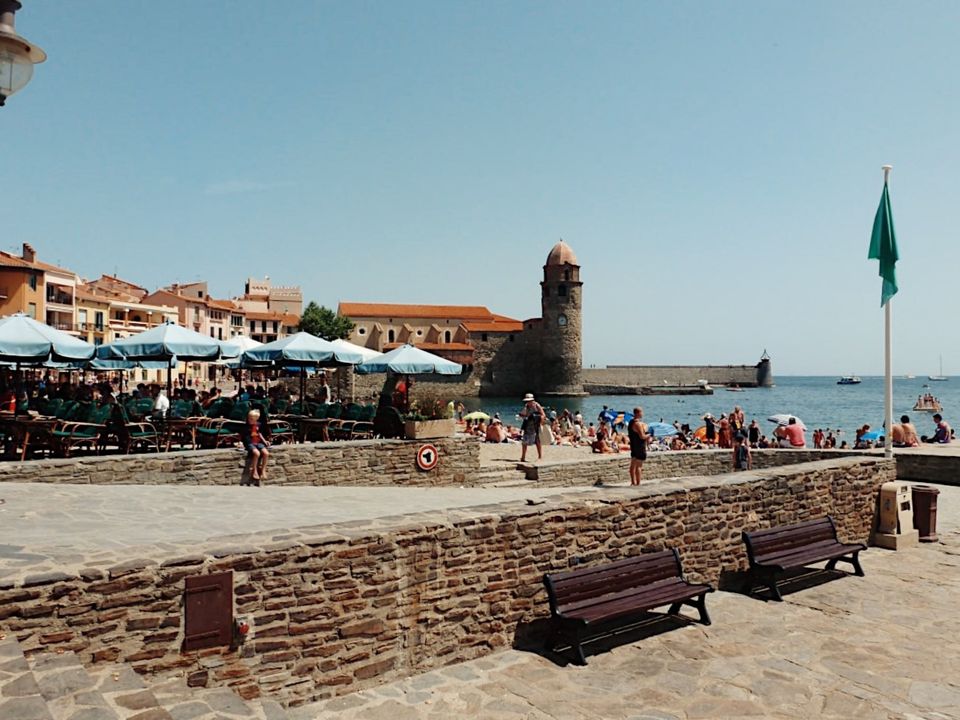
The Cote d'Azur in July and August is dense. Cannes, Saint-Tropez, Nice and the small village beaches around Cap d'Antibes fill from morning, parking is hostile, and a quiet swim before 09:00 is the only realistic way to find space. Public beaches like Plage de la Garoupe or Plage de Pampelonne are popular and well-known, which means they behave accordingly. Beach clubs absorb part of the demand but at significant cost.
The Cote Vermeille is a different scale. Argeles-sur-Mer is the busy resort end of the coastline and is comparable in crowd to a mid-tier Cote d'Azur town. Collioure, the postcard village halfway down, fills up daily but its small beach absorbs people because most arrive for the art and food. Banyuls-sur-Mer, Cerbere and the small coves between them stay calmer than almost anything west of Saint-Tropez on the Cote d'Azur.
Prices: hotels, food and the beach club math
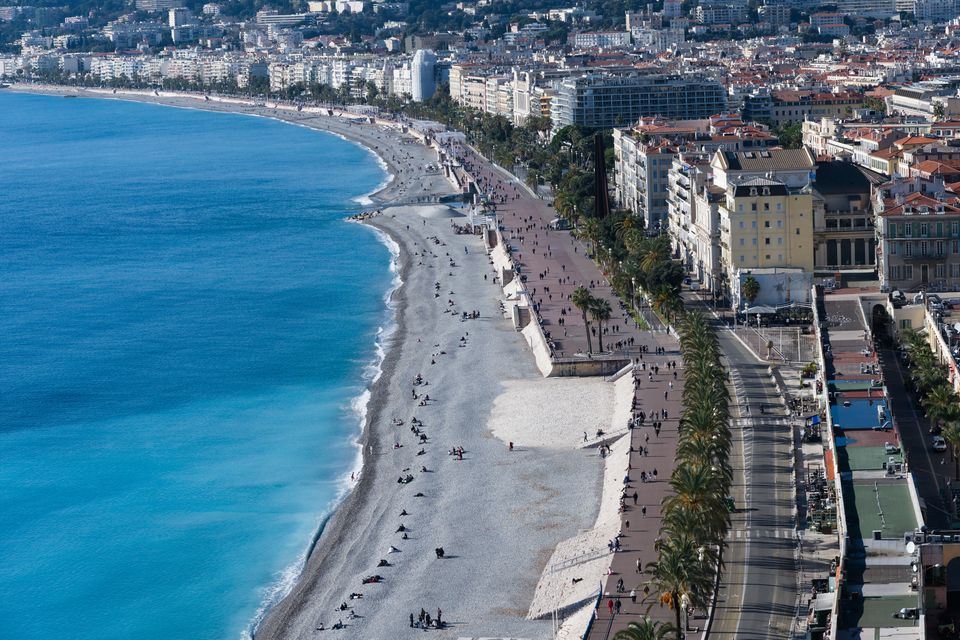
Cote d'Azur prices are well documented and high. A peak-summer double room in Nice, Cannes or Saint-Tropez often starts at 200 to 300 euros, with Saint-Tropez and Cap d'Antibes pushing into a different bracket entirely. Restaurant prices on the seafront in Nice and Antibes are 30 to 50 percent higher than equivalent menus a few streets inland. Beach club loungers in Pampelonne or Antibes routinely cost 30 to 60 euros per day.
The Cote Vermeille runs noticeably cheaper. Collioure double rooms in August generally sit between 100 and 180 euros, Argeles is cheaper still in family-oriented apart-hotels, and Banyuls is quietly the best value of the three. Public beaches are free and the paid sun-lounger model is much less developed than on the Cote d'Azur. Local restaurants stay closer to mainland French rural prices than to Mediterranean resort markups.
- Cote d'Azur summer double: 200-400+ euros typical, much higher in Saint-Tropez and Cap d'Antibes.
- Cote Vermeille summer double: 100-180 euros typical in Collioure, often lower in Argeles and Banyuls.
- Cote d'Azur beach club lounger: 30-60 euros per day in mid-tier spots, higher in Pampelonne.
- Cote Vermeille: paid lounger model less developed; public beaches dominate.
Water clarity, sand and what you actually swim in
The Cote d'Azur is famous for clear water around Cap d'Antibes, the Lerins islands and pockets of the Esterel coast between Saint-Raphael and Theoule. Most of the coast is pebbled rather than sandy, especially east of Cannes; Pampelonne is the well-known sandy exception. Visibility on a calm day in the Lerins or off Cap Ferrat is regularly 10 to 20 meters and snorkeling is rewarding.
The Cote Vermeille is structurally rocky with schist cliffs falling into the sea. Beaches are a mix of small sandy pockets and pebble coves. The water is notably clear in the smaller coves because the bottom drops quickly and tourism pressure is lower. Banyuls and Cerbere have nature reserves with snorkeling trails that rival or exceed the best of the Cote d'Azur for marine life encounters, with less competition for space.
Which coast wins for which kind of trip
The Cote d'Azur wins if you want a coast that is also a cultural destination. Galleries (Matisse, Picasso, Chagall, Maeght), Belle Epoque towns, nightlife, Michelin restaurants and a famous backdrop are not replicated on the Vermeille. The trade-off is paying for it and accepting the crowds. Choose the Cote d'Azur for a honeymoon, a film-festival pilgrimage, or a beach-and-art holiday that justifies the budget.
The Cote Vermeille wins if you want clear water, walking trails, a smaller scale and a Catalan flavor. Collioure is a working art town with anchovy salt-houses, Banyuls has terraced vineyards reaching the sea, and the coastline links to the Spanish Costa Brava if you want to extend. Choose the Vermeille for a quieter family week, a hiking-and-swim holiday, or a budget-conscious Mediterranean trip with real character.
- Cote d'Azur strengths: famous towns, art, nightlife, warmer water, longer swim season.
- Cote d'Azur weaknesses: prices, crowds, parking pressure, less hiking pull.
- Cote Vermeille strengths: clear coves, walking trails, lower prices, Catalan character.
- Cote Vermeille weaknesses: Tramontane wind, shorter coastline, fewer big-name towns.
Before you go
- Pick by priority: nightlife and art (Cote d'Azur) vs clear coves and budget (Cote Vermeille).
- Book Cote d'Azur accommodation months ahead in July and August; Vermeille has more flexibility.
- Check the Tramontane forecast before a Cote Vermeille day; strong wind moves the plan inland.
- Pack water shoes for both coasts; pebbles and schist dominate over sand.
- Consider combining: TGV from Nice to Perpignan in around 8 hours makes a two-coast trip realistic.
FAQ
Which coast has warmer water in summer?
The Cote d'Azur, by 1 to 2 degrees Celsius on average in July and August. Copernicus Marine climatology shows 24 to 26 degrees on the Riviera against 22 to 24 on the Vermeille, with the difference widening when the Tramontane wind drives cooler water along the Vermeille coast. The Cote d'Azur also retains useful swim temperatures one to two weeks longer into October, which matters for shoulder-season travelers planning a late-September or October trip.
Is the Cote Vermeille really much cheaper?
Yes, in the 30 to 50 percent range for accommodation and 20 to 30 percent for restaurants. A summer double in Collioure typically runs 100 to 180 euros against 200 to 400+ for equivalent quality in Nice, Cannes or Cassis. The Cote Vermeille also has fewer paid beach clubs, which removes a recurring cost that the Cote d'Azur normalizes. Saint-Tropez and Cap d'Antibes are in a different bracket entirely and not comparable on price.
Which coast is better for snorkeling and clear water?
Both have excellent pockets, but the Cote Vermeille delivers more reliable clarity per kilometer of coast because tourism pressure is lower. The Banyuls-Cerbere marine reserve has marked snorkeling trails and consistent marine life encounters. On the Cote d'Azur, the Lerins islands off Cannes, the Cap Ferrat headlands and parts of the Esterel coast match or exceed the Vermeille on the best days, but require a boat trip or a careful choice of cove away from the busiest beaches.
Use BeachFinder to check today's spot.
Use your location, search any city worldwide or explore the map to compare the 20 most relevant beaches and swimming spots around you.
Download BeachFinder
Find beach conditions, sea temperature, wind, UV, water quality, and nearby swimming spots before you go.