Balearic vs Canary Islands: water temperature and season length
Year-round sea temperatures, swim-season length, wind patterns and climate compared between Spain's Balearic and Canary Islands.
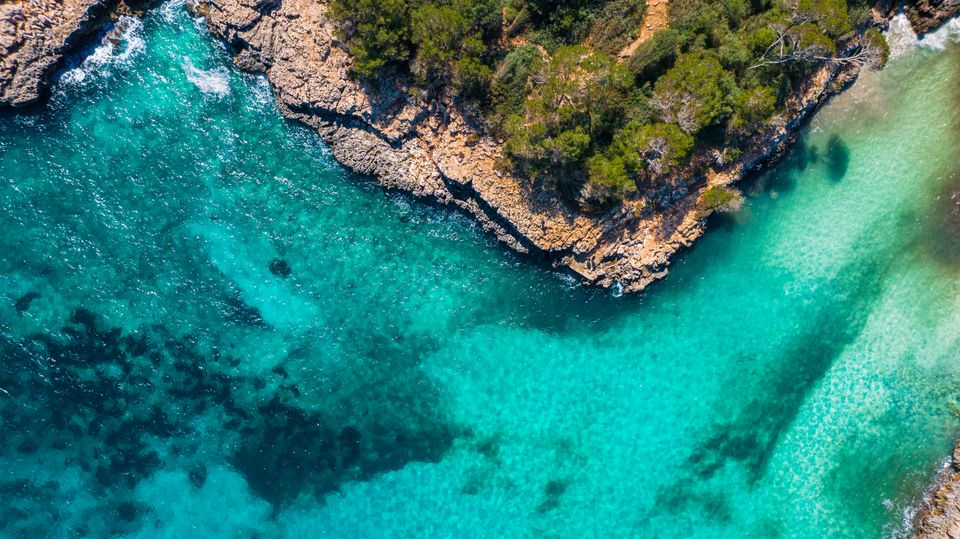
Spain offers two completely different island swimming worlds. The Balearic Islands (Mallorca, Menorca, Ibiza, Formentera) sit in the western Mediterranean and follow a classic Mediterranean curve: warm summer, mild winter, swim season concentrated from May through October. The Canary Islands sit off the African coast, in the eastern Atlantic, and benefit from the cold Canary Current modulated by year-round sunshine, producing the most stable swim temperatures in Europe.
Use this guide to choose by season. A July or August trip is broadly equivalent in water temperature, with the Balearics slightly warmer. A November to March trip is a different story entirely: the Canaries remain swimmable while the Balearics are cold. Wind patterns, wave exposure and the trade-off between Mediterranean polish and Atlantic ruggedness complete the picture.
- Balearics summer sea: 24-27 degrees C; Canaries summer sea: 21-23 degrees C (Copernicus, AEMET).
- Balearics winter sea: 13-15 degrees C; Canaries winter sea: 18-20 degrees C — year-round swimming.
- Canaries: trade winds and Atlantic swell drive a longer wave season, especially on north shores.
- Choose Balearics for summer Mediterranean polish; choose Canaries for year-round swims.
Summer temperatures: closer than people expect
In July and August, the Balearics run warmer than the Canaries by 3 to 4 degrees Celsius. AEMET and Copernicus climatology show Balearics summer averages of 24 to 27 degrees, with shallow Formentera bays touching 28. Canaries summer averages sit at 21 to 23 degrees, the result of the cold Canary Current pulling colder water down from higher latitudes even at the height of summer.
For casual swimmers, the gap matters but it does not disqualify either. 22 degrees Canary water is genuinely swimmable; it just feels brisker than 26-degree Balearic water. Sheltered south coasts in the Canaries (Maspalomas, the south of Tenerife) sit at the warmer end of the range, while exposed north coasts run cooler and rougher. Most people who swim in both rate Balearic water as more comfortable in absolute terms during peak summer.
- Balearics Jul-Aug: 24-27 degrees C average, sheltered bays can reach 28.
- Canaries Jul-Aug: 21-23 degrees C average, south coasts warmer than north coasts.
- Both deliver swimmable summer water; Balearics feel notably warmer.
- Air temperature is similar: 28-32 degrees C peak, slightly drier in the Canaries.
Winter: the Canaries open a completely different door
Winter is where the comparison ends and the Canaries pull away. AEMET data shows Canaries sea temperatures of 18 to 20 degrees Celsius from December through March, which is uncomfortable for prolonged swimming but realistic for short dips and water sports. Air temperatures stay between 18 and 24 degrees in the same months. That combination keeps the islands genuinely usable for beach holidays across the whole year.
The Balearics in winter behave like the rest of the Mediterranean. Sea temperatures fall to 13 to 15 degrees Celsius, air temperatures hover between 8 and 16 degrees, and the swim season is effectively closed for most travelers. Locals and committed swimmers continue year-round but no tourist plan revolves around it. Hotels reduce capacity, beach clubs close, and the islands shift toward a quieter off-season character.
Wind, waves and Atlantic exposure
The Canaries sit in the path of north-easterly trade winds for most of the year. North-facing coasts in Tenerife, Gran Canaria, Fuerteventura and Lanzarote can be windy and wave-prone almost any month, which is why surf and windsurf cultures thrive on those islands. South-facing coasts shelter behind the islands themselves and stay calm. The choice between north and south coast is therefore the central variable on each Canary island.
The Balearics sit in calmer waters with limited swell exposure outside of winter storm episodes. Summer chop is wind-driven and usually short-lived. Mallorca and Menorca have north and south coasts with different feels but the difference is less dramatic than on the Canaries. Ibiza and Formentera are largely sheltered, with summer swimming reliably calm in the absence of a tramontane episode.
- Canaries trade winds: reliable on north coasts, often calm on south coasts.
- Canaries swell: real Atlantic swell hits north coasts year-round, makes them rough.
- Balearics: limited swell, summer winds short-lived, generally calm bays.
- Pick south coasts in the Canaries for calm swimming; either coast in the Balearics.
Cultural and aesthetic differences
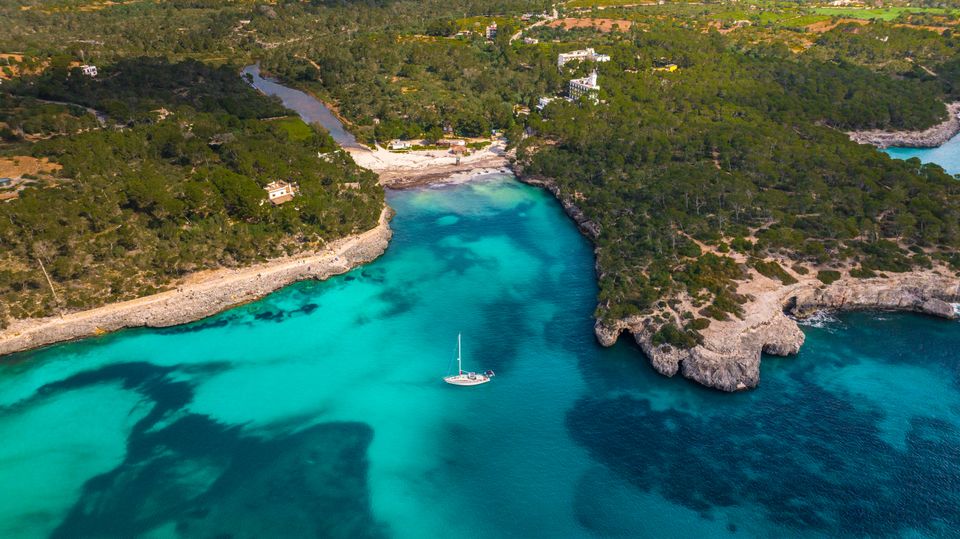
The Balearics deliver classic Mediterranean polish. Whitewashed villages, marina towns, olive trees, pine-clad cliffs and a developed restaurant scene. Ibiza adds nightlife at the top of its bracket; Formentera adds a slower turquoise-cove feel; Mallorca adds scale and mountains; Menorca adds the quietest, most traditional flavor. The aesthetic is Mediterranean European.
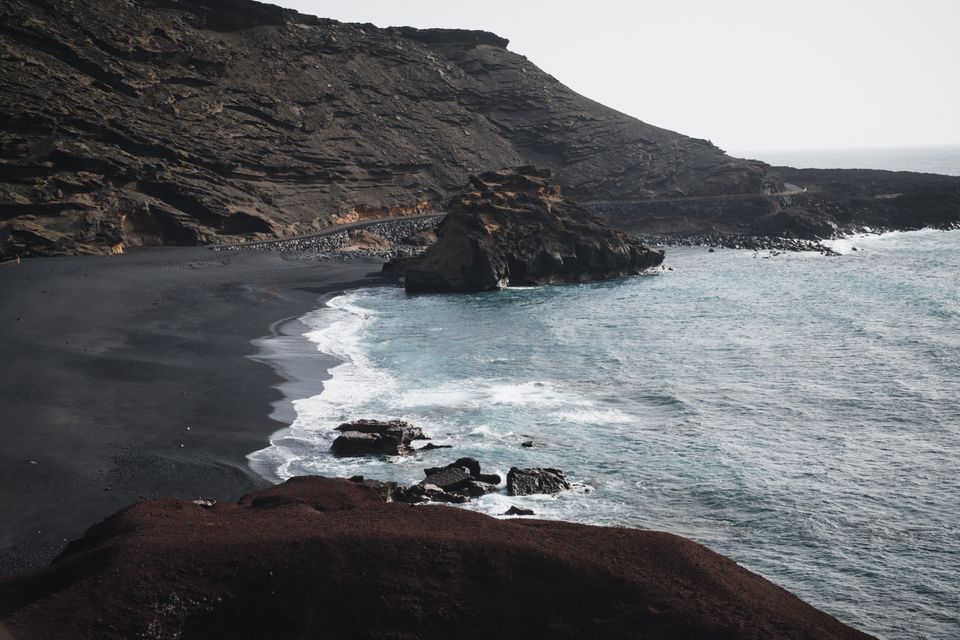
The Canaries deliver volcanic, semi-desert landscapes with green-blue Atlantic water. Black sand beaches sit alongside pale sand on Fuerteventura. Volcanic terrain dominates the inland of Tenerife, Lanzarote and La Palma. The aesthetic is closer to Madeira and the Atlantic island world than to mainland Spain. Some travelers love it; others find it less photogenic than the Mediterranean. It is a question of taste and not of quality.
Which islands win for which trip
Choose the Balearics if you want a classic summer Mediterranean island experience with warm calm water, polished food and accommodation, and a familiar European feel. Mallorca for variety, Menorca for quiet, Ibiza for energy, Formentera for turquoise water and small scale. The summer water is among the warmest in Europe outside of dedicated heat-trap bays.
Choose the Canaries if you want year-round swimming, dramatic volcanic landscapes, reliable winds for sailing or surf, and an Atlantic feel that differs from mainland Spain. Tenerife and Gran Canaria for variety, Fuerteventura for beaches and wind, Lanzarote for landscape, La Palma and El Hierro for quiet. Winter swimming is the unique selling point of these islands within Spain.
Before you go
- Pick by season: summer (either), winter (Canaries only).
- On the Canaries, choose south coasts for calm swimming and north coasts for waves.
- Pack a light wetsuit or thermal top for Canary winter swims; not needed in Balearic summer.
- Book Balearic accommodation 6+ months ahead for July and August.
- Check AEMET and Copernicus sea temperature climatology before shoulder-season trips.
FAQ
Can you swim year-round in the Canary Islands?
Yes for short to medium swims. AEMET sea temperature data shows winter averages of 18 to 20 degrees Celsius, which is uncomfortable for long swims but realistic for daily dips. South coasts of Tenerife, Gran Canaria and Fuerteventura stay calmer and slightly warmer than north coasts. Air temperatures of 18 to 24 degrees support beach holidays through the winter. Many travelers add a thin wetsuit top for longer water time. The Balearics close down for swimming from December through April.
Which is warmer in summer, the Balearics or the Canaries?
The Balearics, by 3 to 4 degrees Celsius on average. Copernicus Marine and AEMET climatology shows July and August Balearic sea temperatures of 24 to 27 degrees against Canary temperatures of 21 to 23. Both are swimmable, but the gap is noticeable on consecutive long swims. The cold Canary Current keeps Canary water relatively cool even in summer, which is the structural reason for the difference. Sheltered Formentera bays can reach 28 degrees on calm days, the warmest in the comparison.
Why are the Canaries windy and the Balearics calmer?
Geography. The Canaries sit in the steady path of north-easterly trade winds that blow year-round off Africa, while the Balearics sit in the western Mediterranean where wind is variable and often light. Trade winds on the Canaries hit north and east coasts hardest, which is why surf and windsurf culture thrive on Fuerteventura, north Tenerife and east Lanzarote. The Balearics have summer chop and occasional tramontane episodes from the Gulf of Lion but no equivalent of the constant Atlantic exposure.
Use BeachFinder to check today's spot.
Use your location, search any city worldwide or explore the map to compare the 20 most relevant beaches and swimming spots around you.
Download BeachFinder
Find beach conditions, sea temperature, wind, UV, water quality, and nearby swimming spots before you go.
These beach pages connect the guide advice with real spot details: sea temperature, wind, UV index, waves, access and photos when available.
Ondarreta
ES
Playa del Regatón
ES
Platja gossos
ES
Playazo de Villaricos
ES
Playa Fluvial del Huerva
ES
Playa de Guadalmar
ES
la Caleta
ES
Praia das Furnas
ES
Praia de Rochas Brancas
ES
Platja de la Platera
ES
Platja dels Tres Micos
ES
Playa de Permenande
ES
Playa del Tranqueru
ES
Playa de Bolnuevo
ES
Sablera Rebolleres
ES
Hotels and rentals near Canary Islands
Compare accommodation around this beach after checking current swimming conditions and local access. Prices and availability come from the accommodation partner.