Crete vs Rhodes: mountains, archaeological sites and beaches compared
Two large Greek islands compared on mountains, archaeological depth, beach styles and accessibility, with concrete recommendations for each kind of trip.
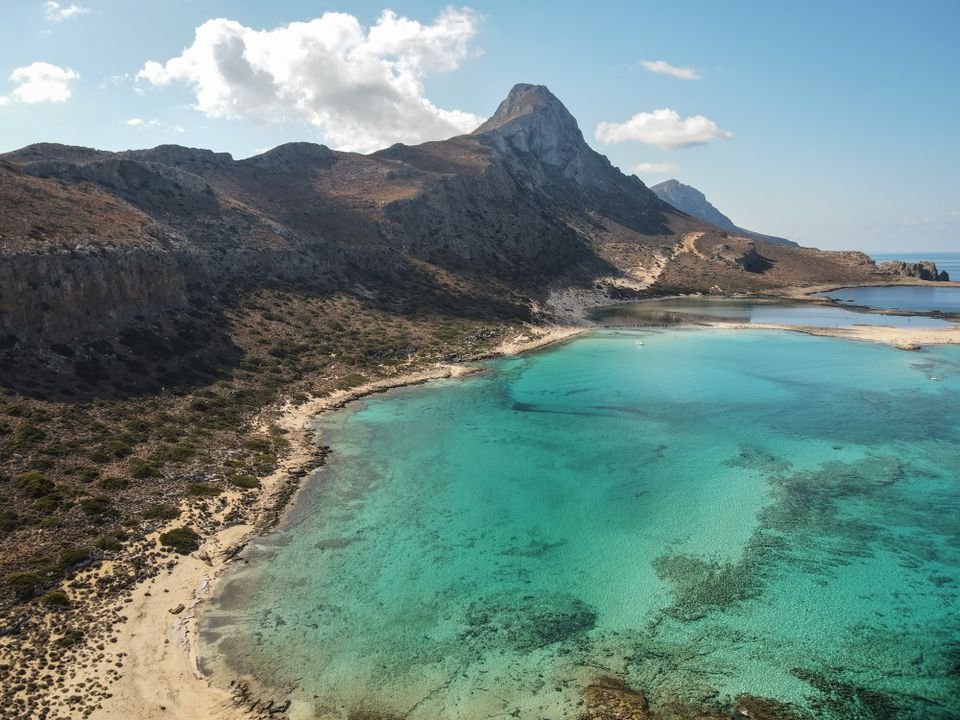
Crete and Rhodes are the two largest Greek islands and the two that absorb the most international travelers in a typical year. They share a similar Aegean climate, comparable summer sea temperatures and a long beach season, but the underlying personality of each island differs sharply. Crete is mountainous, autonomous-feeling, with a strong food culture and dramatic gorges. Rhodes is smaller, more medieval, with a denser archaeological surface and gentler interior.
Use this guide to decide which large Greek island fits your trip. Travelers prioritizing mountains, gorges and a sense of distance from the rest of Greece tend to choose Crete. Travelers prioritizing a compact island with a famous medieval old town and one of the great Greek archaeological sites at Lindos tend to choose Rhodes. The beaches differ in character on each island in ways that matter.
- Crete: mountainous, gorge-walking culture, palace of Knossos, larger surface, more drives.
- Rhodes: medieval old town, Lindos acropolis, gentler interior, easier short trips between spots.
- Both deliver Aegean summer sea 22-25 degrees C and excellent water clarity.
- Choose Crete for variety and mountains; choose Rhodes for compact medieval-archaeological focus.
Mountains and the shape of the island
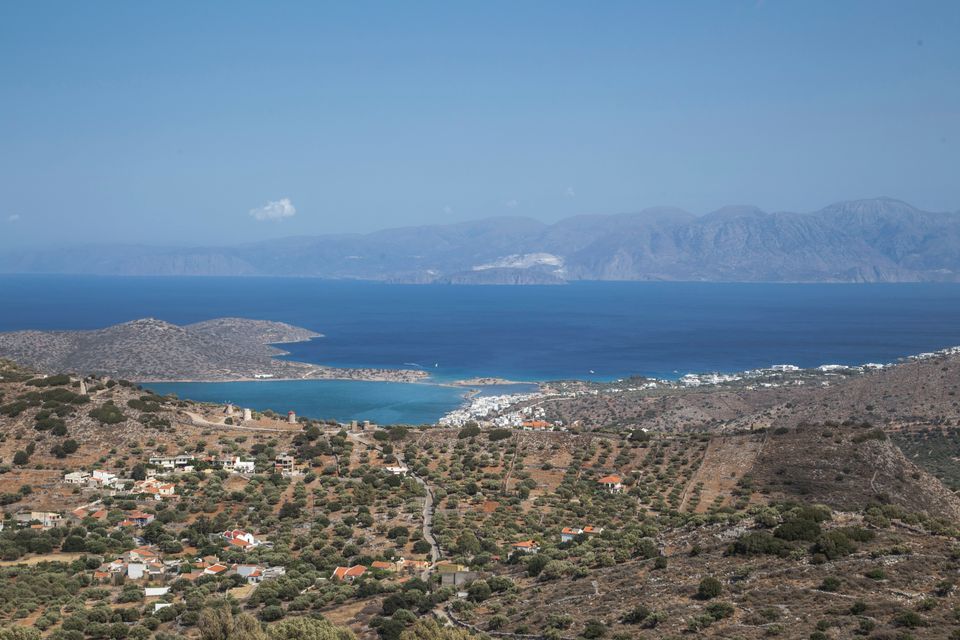
Crete is mountainous in a way that no other Greek island is. The White Mountains, Mount Ida and the Dikti range run east-west across the island, splitting north from south coast and offering the Samaria Gorge (16 km, the most famous of multiple gorges) as a day-long walking pull. The drive from the north coast to the south coast over the mountains takes hours and feels like a passage between two countries. The interior offers villages, monasteries, hiking and a sense of remoteness rare in the Aegean.
Rhodes is hilly rather than mountainous. The interior peaks around Mount Attavyros (1,215 m) but most of the island sits at gentler elevations, with rolling hills, pine forests and small inland villages. Drives between north and south are quicker and easier. Rhodes lacks the gorge-walking culture of Crete and does not produce the same drama of mountain-to-sea transitions, but it makes up for it in the density of archaeological surface in a smaller area.
- Crete: 3 major mountain ranges, Samaria Gorge, hiking culture, 4-6 hour cross-island drives.
- Rhodes: rolling hills, pine forests, 1-2 hour cross-island drives.
- Crete south coast vs north coast: noticeably different feels.
- Rhodes: more uniform island feel, easier short trip planning.

Archaeological depth and famous sites
Crete carries Knossos, the most important Minoan palace and one of the great archaeological sites of the Mediterranean. The whole island is dense with smaller Minoan sites (Phaistos, Malia, Zakros), Venetian fortifications in the coastal towns (Chania, Rethymno, Heraklion) and ottoman-era layers. The depth of the cultural offer matches the scale of the island.
Rhodes concentrates extraordinary medieval and ancient surface into a smaller area. The medieval old town of Rhodes (a UNESCO World Heritage Site) is the best-preserved fortified medieval town in the eastern Mediterranean, walkable and atmospheric. The acropolis of Lindos, perched above a turquoise bay, is one of the iconic combinations of archaeology and beach in Greece. Kamiros and Ialysos add classical sites. The Rhodian density-per-kilometer is higher than Crete's.
Beach styles and water
Crete's beaches range from the famous turquoise lagoons of the west (Elafonissi, Falassarna, Balos) to the long sandy beaches of the north (Chrissi Akti, Stalida) to the wilder south coast (Preveli, Triopetra). The variety mirrors the island's scale. The south coast is the more dramatic, less developed side; the north coast is more developed and easier for resort holidays. Water temperature averages 23 to 25 degrees Celsius in July-August.
Rhodes delivers a smaller but well-rounded set: Tsambika and Lindos on the east coast for the photogenic combination of acropolis and bay, Anthony Quinn Bay near Faliraki for clear water, Prasonisi at the southern tip for kitesurfing where Aegean and Mediterranean meet. The Greek-Italian Knights heritage adds character. Water averages match Crete at 22 to 25 degrees Celsius.
- Crete west: Elafonissi, Falassarna, Balos — pale sand and turquoise lagoons.
- Crete south: Preveli, Triopetra — wilder, more dramatic, less developed.
- Rhodes east: Lindos, Tsambika, Anthony Quinn Bay — clear water and photogenic.
- Rhodes south tip: Prasonisi — meeting of two seas, kitesurfing.
Food, culture and the feel of a meal
Cretan food culture is one of the deepest in Greece. The Cretan diet is recognized as one of the healthiest in the world, the local wine and tsikoudia traditions are alive, and village tavernas in the mountains run on different rhythms than coastal resorts. The food is part of the trip; specialty dishes (dakos, gamopilafo, antikristo) define meals beyond the standard Greek menu.
Rhodes has good food and excellent seafood near the coast, but its culinary identity is less distinctive than Crete's. The blend of Greek, Italian (from the Italian occupation 1912-1943) and Eastern Mediterranean influences produces interesting combinations, especially in the medieval old town. For travelers who treat food as a main reason to choose an island, Crete is the more rewarding choice.
Logistics: drives, ferries and trip shape
Crete has three airports (Heraklion, Chania, Sitia), multiple ports and a road network that connects all of them, but distances are real. Heraklion to Chania is 140 km of often slow road. South coast destinations from any northern base are 1.5 to 2 hours of mountain road. Plan 2 to 3 bases for a one-week trip rather than trying to drive from a single point. Ferries from Athens (Piraeus) run overnight to Chania and Heraklion.
Rhodes has one main airport and a small one at Kastellorizo (for the islet), and the island's size makes single-base travel realistic. From Rhodes town, day trips to Lindos, Prasonisi or Symi (a beautiful smaller island reachable by ferry) are easy. Ferries from Athens are long (15-18 hours overnight); most travelers fly. Compact size makes Rhodes the easier short-trip destination.
Before you go
- Plan Crete around 2-3 bases (e.g., Chania west, Heraklion center, Sitia east).
- Plan Rhodes around 1 base (Rhodes town) with day trips.
- Hike the Samaria Gorge in Crete with an early start; book transfers ahead.
- Visit Knossos early morning or late afternoon to avoid heat and crowds.
- Add a Symi ferry day trip from Rhodes for a smaller-island contrast.
FAQ
Which is better for a first Greek island holiday: Crete or Rhodes?
Both work, but for different reasons. Rhodes is the easier first Greek island because its scale is manageable: one main base in Rhodes town, easy day trips to Lindos and beach destinations, a famous medieval old town and one direct flight from much of Europe. Crete is more rewarding for travelers who want variety and mountains but requires more planning, multiple bases and longer drives. Choose Rhodes for a one-week first-time trip with limited logistics; choose Crete for 10 days or more with road-trip readiness.
Which has better beaches?
Crete delivers more variety across a larger island, from the famous turquoise lagoons of Elafonissi, Falassarna and Balos in the west to the wilder Preveli on the south coast. Rhodes delivers a smaller but well-rounded set with the iconic Lindos beach below the acropolis, Tsambika, Anthony Quinn Bay and Prasonisi at the southern tip. Both islands have Aegean summer water at 22 to 25 degrees Celsius and excellent clarity. Crete wins on variety; Rhodes wins on iconic single-beach combinations like Lindos.
Which is better for an archaeology-focused trip?
Both are world-class. Crete carries the Minoan civilization and Knossos, plus extensive smaller Minoan sites and dense Venetian heritage. Rhodes carries the best-preserved medieval old town in the eastern Mediterranean (UNESCO-listed), the acropolis of Lindos, classical sites at Kamiros and Ialysos, and a blend of Greek, Italian and Knights heritage. Choose Crete for ancient Minoan focus and depth; choose Rhodes for medieval intensity and the iconic Lindos combination. A two-week trip can comfortably cover both.
Use BeachFinder to check today's spot.
Use your location, search any city worldwide or explore the map to compare the 20 most relevant beaches and swimming spots around you.
Download BeachFinder
Find beach conditions, sea temperature, wind, UV, water quality, and nearby swimming spots before you go.
These beach pages connect the guide advice with real spot details: sea temperature, wind, UV index, waves, access and photos when available.
Kondyli beach
GR
Petani Beach
GR
Myrtos Beach
GR
Potamos
GR
Kedrodasos
GR
Apella
GR
Episkopi beach
GR
Plage Gazagnaire
IT
Praia de Quarteira
PT
Grande Blue Beach
TR
Playa de la Mata Negra
PT
Praia do Carvalho
PT
Ondarreta
ES
Plage Rive Gauche
FR
Plage de la Dalle
FR
Hotels and rentals near Crete
Compare accommodation around this beach after checking current swimming conditions and local access. Prices and availability come from the accommodation partner.