Swimming with fins: snorkeling tips for clean water and currents
How to choose fins, manage drift current, plan a snorkel route and stay safe in unfamiliar coves.
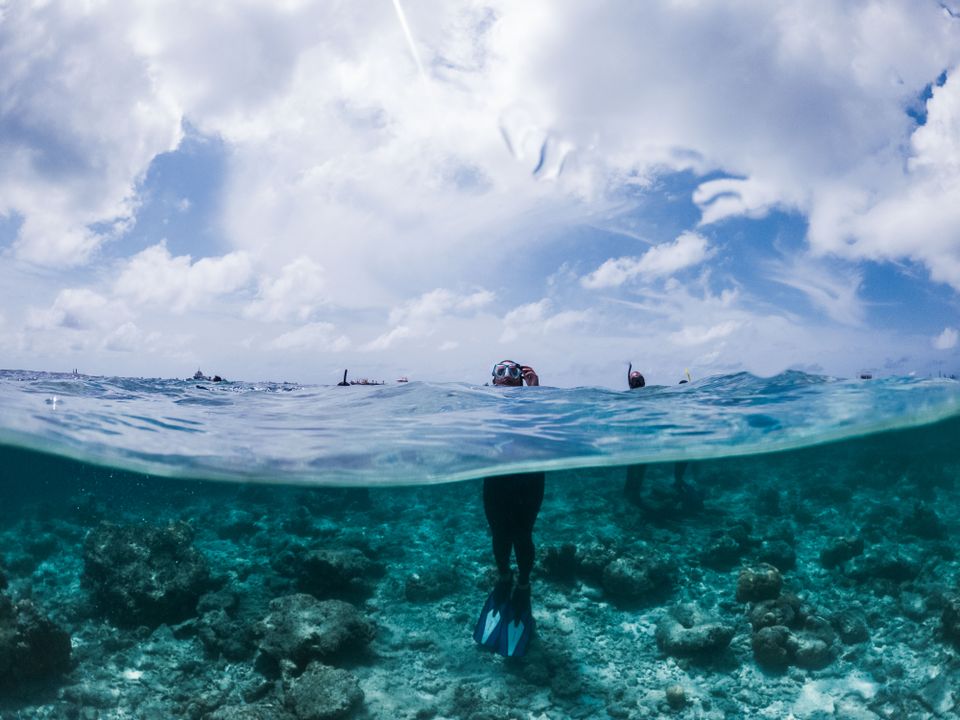
Snorkeling looks like the most casual swim activity at the beach. You float, you look down, you breathe through a tube. The reality is more interesting. Fins change your relationship to current and distance. A snorkel mask narrows your situational awareness. A drift you do not notice can quietly carry you 300 meters from your towel. None of this is dangerous if you understand what is happening; all of it is preventable with five minutes of planning.
This guide walks through how to choose fins for the kind of snorkeling you actually do, how to read drift current and plan a route that does not turn into an unexpected open-water swim, and what gear and habits keep snorkel sessions enjoyable rather than tense. The goal is not to make snorkeling complicated. It is to give you a way to look at any cove for two minutes and have a confident plan.
- Short stiff fins suit shallow rocky snorkeling; long flexible fins suit open-water cruising.
- Drift current is the most common snorkeling hazard; plan the route into the current first.
- A surface marker buoy and a buddy are the two cheapest safety upgrades that change everything.
- Cold sea below 18 C burns calories fast; a long rashguard or shorty extends comfortable session time.
Fin types and what they are good at
Snorkel fins fall into two main families. Short stiff fins (Cressi Agua, Mares Avanti) are designed for power and maneuverability in shallow rocky terrain, where you want to turn quickly, hover and avoid kicking rocks or coral. Long flexible fins (Cressi Pro Light, Scubapro Twin Jet) are designed for distance and efficiency, where you want to cover several hundred meters with low effort.
Most casual snorkelers use closed-heel travel fins because they pack small and do not require booties. Adjustable open-heel fins with neoprene booties are warmer and protect feet on rocks but are bulkier in a suitcase. Full-foot fins should fit snug without pinching toes. A loose fin slows your kick and chafes; a tight fin causes cramps after twenty minutes.
- Short stiff fins: rocky coves, photography, hovering.
- Long flexible fins: open-water distance, current management.
- Closed-heel travel fins: easy packing, no booties needed.
- Open-heel with booties: warmer, more foot protection.

Reading drift current before you swim out
Drift current is the slow horizontal movement of surface water along the coast. It is rarely strong enough to feel while standing in the shallows but can move a floating snorkeler 50 to 200 meters in twenty minutes without any sensation of effort. The classic mistake is to swim out for ten minutes feeling great, then turn around and realize the towel is now 300 meters upwind.
Read the current before entering: throw a leaf or a small floating debris into the water near your entry point and watch where it drifts in one minute. If it drifts left, the current is moving left. Plan your swim into the current first, so the easier return is downstream. This single rule prevents the majority of unexpected long swims back to shore.

Planning a snorkel route that makes sense
A good snorkel route has a defined start and end, both on shore, with the deepest or most exposed point in the middle. Loops along a rocky headland that return to the same beach are ideal. Linear routes from one beach to another require kit transport or a long walk back. Avoid open-water routes that put you in front of busy boat lanes, marina entrances or ferry routes unless you have a surface marker buoy and a clear escape plan.
Time-budget the session. A typical recreational snorkel lasts 30 to 60 minutes before cold or fatigue starts to affect judgment. Plan a route that fits within that window with a comfortable margin. The classic temptation, especially on a beautiful clear day, is to extend further and longer than planned. Most rescue interventions happen on those extended sessions, not on the original plan.
- Loop routes along a headland are safer than linear ones.
- Avoid open boat lanes without a surface marker buoy.
- Time-budget 30 to 60 minutes, with margin for return.
- Tell someone on the beach your route and expected return time.
Cold, calories and session length
Sea water below 18 C drains body heat faster than most snorkelers expect. The combination of low effort (floating, kicking gently), cool water and wet skin can quietly trigger early-stage hypothermia after 45 to 60 minutes of continuous immersion, even on a sunny day. A long rashguard adds significant comfort. A 2 mm shorty extends usable session time to 90 minutes or more in 16 to 19 C water.
Calorie burn during snorkeling is higher than people assume because you are constantly working against drag and slight current. A snack before getting in and water on hand at the towel prevents the post-session shake that often gets misread as just being cold. For longer sessions or cooler water, plan a real meal before the swim, not a quick coffee.
- Long rashguard for 19 to 23 C water.
- 2 mm shorty or full suit for 14 to 19 C water.
- Eat a real meal before sessions over 60 minutes.
- Bring water and a hat for the towel-side recovery.
Gear that pays for itself
Three small items make a disproportionate difference. A surface marker buoy (SMB) attached to a wrist or weight belt makes you visible to boats and gives you something to grab if a leg cramps. A defogger spray (or simple saliva on the inside of the mask) prevents the slow fog that ruins half the photos. A neoprene mask strap reduces the hair-pulling and shifting that plague rubber straps.
Beyond gear, the buddy system is the cheapest upgrade. Snorkeling with a partner who can see your bubbles and respond to a hand signal is safer than any single piece of kit. AIDA International and most lifesaving federations recommend never freediving or breath-hold snorkeling alone. Even surface snorkeling improves with a buddy who keeps eyes on the route and a second pair of fins available if something goes wrong.
- Surface marker buoy (SMB): visibility, cramp recovery, signaling.
- Defogger or saliva on the inside of the mask before entering.
- Neoprene mask strap to reduce shifting and hair pulling.
- Always snorkel with a buddy; never solo in unfamiliar coves.
Before you go
- Match fin type to terrain: short stiff for rocks, long flexible for distance.
- Check drift current with a floating leaf before entering the water.
- Plan a loop route, swim into the current first, return with the current.
- Time-budget 30 to 60 minutes and tell someone on the beach.
- Use a surface marker buoy and swim with a buddy.
FAQ
Do I need fins to snorkel?
Not strictly. In very calm shallow water you can snorkel without fins, as long as you stay close to shore and use a swimming costume that limits drag. But fins give you several advantages: speed against current, range, and a margin of safety if you need to swim back against drift. For any snorkel session beyond knee-deep water and 50 meters from shore, fins are strongly recommended.
What is drift current and how do I avoid it?
Drift current is the slow horizontal flow of surface water along the coast, usually driven by tide, wind or local currents. It can carry a floating snorkeler hundreds of meters without any feeling of effort. Always test the current with a small floating object before getting in, swim into the current first and return downstream, and stay close to shore or carry a surface marker buoy if you swim further out.
How cold can the water be for snorkeling without a wetsuit?
Above 22 C is comfortable for most people in a rashguard for an hour. Between 18 and 22 C a long rashguard or a thin top extends comfort. Below 18 C, a 2 mm shorty or a 3/2 full wetsuit becomes necessary for sessions over 30 minutes. Cold-water shock and progressive hypothermia are real risks below 14 C, especially with low effort activities like snorkeling.
Use BeachFinder to check today's spot.
Use your location, search any city worldwide or explore the map to compare the 20 most relevant beaches and swimming spots around you.
Download BeachFinder
Find beach conditions, sea temperature, wind, UV, water quality, and nearby swimming spots before you go.
These beach pages connect the guide advice with real spot details: sea temperature, wind, UV index, waves, access and photos when available.
Ondarreta
ES
Plage Rive Gauche
FR
Plage de la Dalle
FR
Plage de Saint-Jean
FR
Plage Calanque du Petit Mugel
FR
Kondyli beach
GR
Petani Beach
GR
Myrtos Beach
GR
La Luna-Royale Beach
ES
Episkopi beach
GR
Playa del Regatón
ES
Platja gossos
ES
Playazo de Villaricos
ES
Playa Fluvial del Huerva
ES
Playa de Guadalmar
ES