
Neon hour: where Miami's sunsets actually go pink-purple, and when
Miami's pink-purple 'neon' sunsets are real, seasonal and location-dependent. Here is why they happen, where to shoot them (bay side vs beach side), and how to time the blue hour that follows.
Rockstar screenshots only. No leaks, no fake map claims.
BeachFinder reads the coast like players do: beaches, boats, surf questions, Vice City and Leonida clues.

Miami's saturated pink-purple sunsets — the ones that look like the game's colour grading — are real, but they are not guaranteed every night, and where you stand changes everything. Because Miami Beach faces east, the sun sets behind you over the mainland, so the best colour is often on the bay side, not the ocean side, and the richest palette comes in the 'blue hour' just after the sun is gone.
This guide explains why Miami's sunsets go neon, where to shoot them depending on the effect you want, and how to work the short blue-hour window that follows for the full pink-purple look.
- Miami Beach faces east, so the sun sets over the mainland behind it — the best colour is often bay-side.
- The richest pink-purple comes in the 'blue hour,' the 20–30 minutes after the sun sets, not at the sun itself.
- Some cloud helps: high, scattered cloud catches and scatters the light into deep colour.
- Gulf-coast beaches (Naples, Siesta Key) give a sun-into-the-water sunset the Atlantic side cannot.
- Humidity and particles in the warm months can intensify the colour.
- The window is short — under 40 minutes — so scout your spot and be ready before the sun drops.
Quick answer: why are Miami's sunsets so pink and purple?
Because of atmospheric scattering, timing and location. As the sun drops, its light passes through more atmosphere, scattering away blue and leaving reds, oranges, pinks and — in the minutes after sunset — deep purples, especially when high, scattered cloud catches the light. Miami's warm, humid air and coastal particles can intensify this. The catch is geography: Miami Beach faces east, so the sun sets behind it over the mainland; the strongest colour is frequently on the bay (west) side or overhead in the blue hour, not out over the Atlantic.
So the short answer: the pink-purple is real physics, best seen in the blue hour after sunset, and — on Miami Beach — often better looking west toward the mainland than east over the ocean.

Bay side vs beach side: where to stand
This is the key Miami sunset decision. Because the sun sets to the west over the mainland, the direct sunset colour is on the bay side — from the causeways, the west-facing shores of Miami Beach, or a rooftop looking toward downtown. The ocean (east) side of Miami Beach does not get the sun setting over the water, but it does get a beautiful effect: the sky behind you lights up and the colour reflects onto the sand and the pastel buildings, and the blue hour overhead turns the whole beach violet.
So choose by effect: bay side or a causeway for the direct, sun-in-frame sunset over the city; beach side for the reflected glow on the deco strip and the violet blue hour over the sand. Both are 'Miami sunset,' just different shots.
- Bay side / causeways — the direct sunset over the mainland and downtown skyline.
- Ocean (east) side of Miami Beach — reflected glow on the sand and deco, violet blue hour.
- Rooftop bars — a wide view that catches colour in every direction.
The Gulf coast alternative: sun into the sea
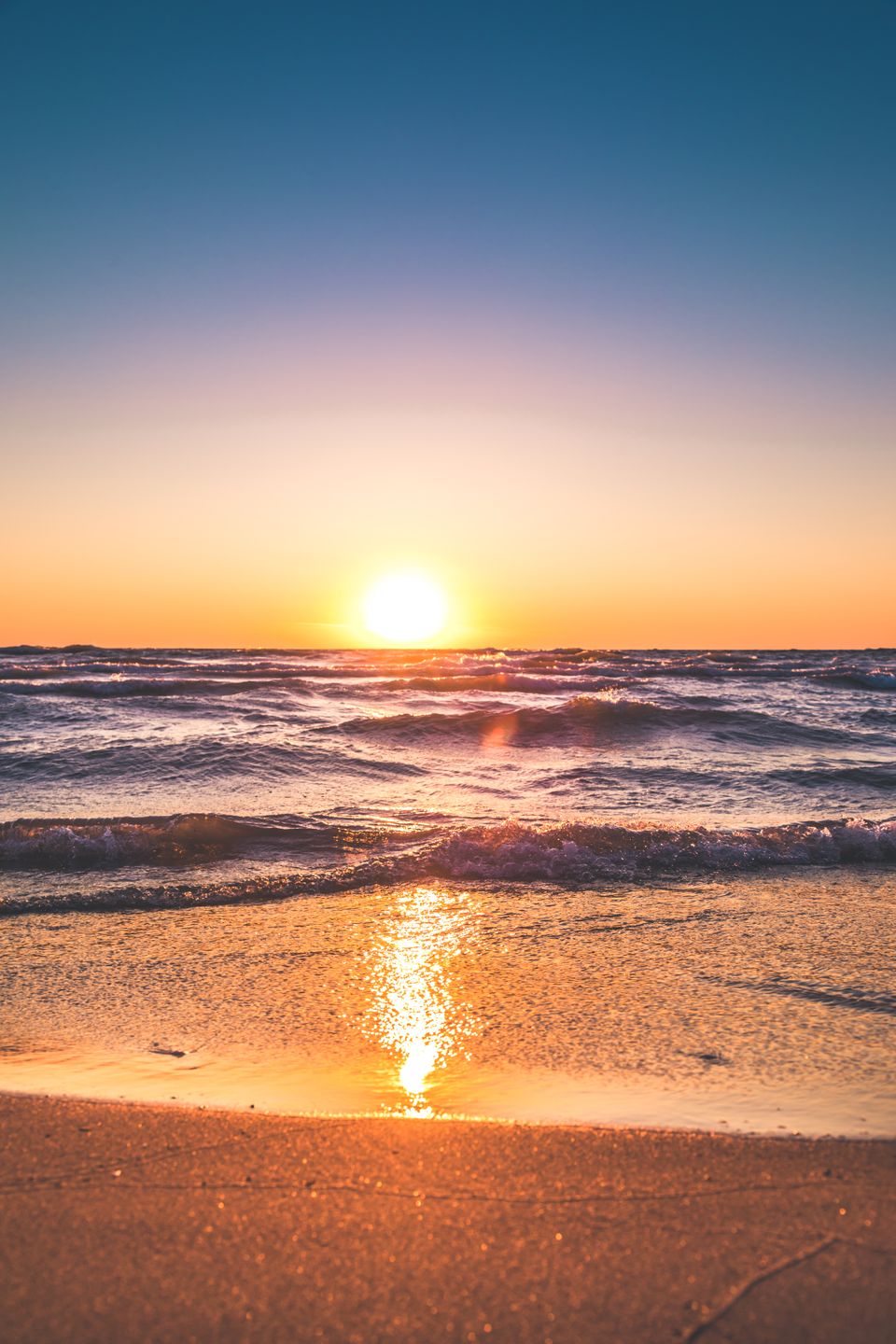
If you want the classic sun-dropping-into-the-water sunset, you have to go to Florida's Gulf coast, which faces west. Naples Pier, Siesta Key, Clearwater and the Panhandle beaches all put the setting sun straight over the sea, and each has a nightly sunset gathering. This is a completely different shot from Miami's — the sun in the frame, sinking into the Gulf, rather than the reflected city glow of the Atlantic side.
So the full Florida sunset palette needs both coasts: Miami for the neon-and-skyline blue hour, the Gulf for the sun-into-the-water classic. On a cross-state trip you can shoot both within a couple of days.
Working the blue hour
The single most important technique is to keep shooting after the sun has gone. The richest pink-purple in Miami comes in the 'blue hour' — the 20–30 minutes after sunset — when the sky deepens to violet and, on Ocean Drive, the neon comes on against it. Most people pack up when the sun disappears; the ones who stay get the best colour and the neon-against-violet frames that define the aesthetic.
So arrive before sunset, watch the sun go, and then wait: the ten to thirty minutes after are the payoff. Have your spot chosen and your camera ready, because the deepest colour comes and goes within that short, unrepeatable window.
Season, cloud and conditions
Not every night delivers. The best sunsets need the right cloud — high, scattered cloud to catch and scatter the light, but not a solid overcast that blocks it. Miami's warm, humid months can intensify the colour through added atmospheric particles, and the period around the daily summer storms sometimes leaves dramatic broken cloud at dusk. A completely clear sky gives a clean but less saturated sunset; a partly cloudy one after a shower can be spectacular.
You cannot fully control it, but you can improve your odds: check the cloud forecast, favour evenings with high broken cloud, and be out on enough evenings that you catch a great one. The pink-purple 'neon' sunset is a frequent Miami gift, not a guaranteed nightly one.
Practical sunset-chasing notes
Check the sunset time and the cloud forecast, arrive 30 minutes early to scout and set up, and plan to stay 30 minutes after the sun drops for the blue hour. A phone handles it well, but a steady surface or small tripod helps as the light fades. On Ocean Drive, position so the neon signs will glow against the darkening sky; on the bay or a causeway, frame the skyline against the colour.
And build a two-coast plan if you can: the Atlantic (Miami) blue hour and the Gulf sun-into-the-sea sunset are different, complementary shots. Between them you capture the full Florida sunset palette that the Vice City aesthetic draws on.
A note on the game reference (disclaimer)
BeachFinder is not affiliated with, endorsed by, or connected to Rockstar Games or Take-Two Interactive. Grand Theft Auto VI is a trademark of Take-Two Interactive Software, Inc. This is an independent travel guide to the real-world places that inspired the game's fictional Leonida setting.
Every location described here is a real, publicly accessible Florida place, and all game references rely only on publicly confirmed information (official trailers and Rockstar's own website). Game details appear solely as cultural context to help visitors plan a real trip; the practical facts — water temperatures, distances, seasons, prices, access — are real-world travel information.
Before you go
- Stand bay-side or on a causeway for the direct sunset over the city and skyline.
- Use the ocean side of Miami Beach for reflected glow on the sand and deco.
- Keep shooting into the blue hour (20–30 min after sunset) for the deepest colour.
- Go to the Gulf coast (Naples, Siesta Key) for a sun-into-the-water sunset.
- Favour evenings with high, scattered cloud; avoid solid overcast.
- Arrive 30 minutes early to scout; stay 30 minutes after the sun drops.
- Frame Ocean Drive neon against the darkening sky for the aesthetic shot.
FAQ
Why are Miami's sunsets so pink and purple?
Atmospheric scattering at dusk removes blue light and leaves reds, pinks and — in the blue hour after sunset — deep purples, intensified by high scattered cloud and Miami's warm, humid air. The richest colour comes just after the sun sets.
Where is the best place to watch the sunset in Miami?
Because Miami Beach faces east, the best direct sunset is bay-side or from a causeway looking west over the mainland and skyline. The ocean side gets a beautiful reflected glow on the sand and deco instead.
Does the sun set over the ocean in Miami?
No — Miami Beach faces east, so the sun sets behind it over the mainland. For a sun-into-the-water sunset you need Florida's west-facing Gulf coast (Naples, Siesta Key, Clearwater).
What is the blue hour and why does it matter for sunsets?
The blue hour is the 20–30 minutes after sunset when the sky deepens to violet. It is when Miami's richest pink-purple colour appears and the neon comes on against it — the best window, which most people miss by leaving too early.
Do you need clouds for a good Miami sunset?
Some help — high, scattered cloud catches and scatters the light into deep colour. A solid overcast blocks it, and a completely clear sky gives a cleaner but less saturated sunset. Partly cloudy after a shower can be spectacular.
When is sunset best for photos in Miami?
Arrive 30 minutes before sunset to scout, shoot through the sunset, and stay for the blue hour 20–30 minutes after — that after-sunset window has the deepest colour and, on Ocean Drive, the neon against the violet sky.
Use BeachFinder to check today's spot.
Use your location, search any city worldwide or explore the map to compare the 20 most relevant beaches and swimming spots around you.
Download BeachFinder
Find beach conditions, sea temperature, wind, UV, water quality, and nearby swimming spots before you go.
Stay near the real-world Miami Beach beach inspiration
Planning a Miami or Florida trip while reading GTA 6 beach clues? Use this map as a real-world base around Miami Beach. It is about hotels and rentals near the actual coast, not a claim that Rockstar copied one exact location.
Things to do around Miami
A few bookable activities near Miami after checking conditions for Miami Beach.