Fort Lauderdale beaches: the calmer Miami alternative, 40 minutes north
Fort Lauderdale offers the same warm Atlantic sand as Miami with fewer crowds and lower prices, 40 minutes north. Here is the beach, Las Olas, Hollywood's Broadwalk, and how it compares.

Fort Lauderdale sits about 40 minutes north of Miami and offers the same warm Atlantic water and wide sand with noticeably fewer crowds, lower prices and a more relaxed feel. Once famous as a rowdy spring-break town, it long ago reinvented itself as a polished, family-friendly beach city — the sensible alternative for anyone who wants Miami's coast without Miami's intensity.
This guide covers Fort Lauderdale Beach and its famous wave-wall promenade, the Las Olas dining scene, the nearby Hollywood Beach Broadwalk, and an honest comparison with Miami so you can decide which base suits your trip.
- Fort Lauderdale is about 40 minutes north of Miami with the same warm Atlantic water, fewer crowds and lower prices.
- The beachfront promenade with its signature white wave-wall runs along a wide, clean, family-friendly beach.
- Las Olas Boulevard is the dining-and-shopping spine, linking downtown to the beach.
- Nearby Hollywood Beach has a 2.5-mile brick Broadwalk — a pedestrian promenade with an old-Florida feel.
- Atlantic water sits around 26–29 °C in summer and rarely below 22 °C in winter — a year-round swim.
- It reinvented itself from a spring-break town into a polished, family-oriented beach city.
Quick answer: is Fort Lauderdale better than Miami Beach?
For calm, value and family ease, many travellers prefer it; for scene and nightlife, Miami still wins. Fort Lauderdale has essentially the same warm Atlantic water and wide sand as Miami Beach, but with thinner crowds, lower prices, easier parking and a more relaxed, less performative atmosphere. It is the choice when you want a good beach and an easy time rather than the South Beach spectacle.
So it is not 'better' in the abstract — it is a different trade-off. Fort Lauderdale for a calmer, cheaper, family-friendly beach base; Miami Beach for the nightlife, the art-deco scene and the energy.
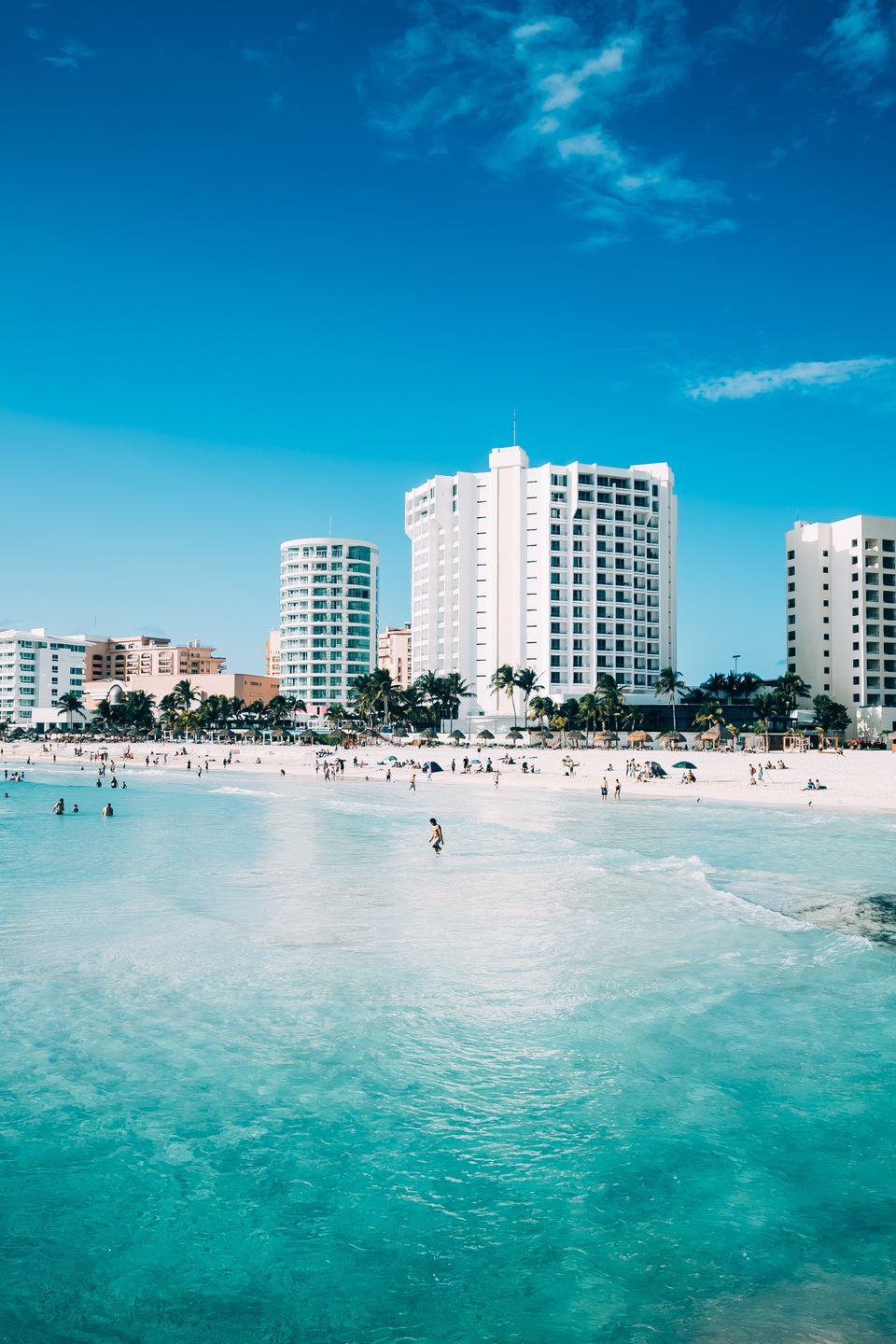
Fort Lauderdale Beach and the wave-wall promenade
The centrepiece is Fort Lauderdale Beach along A1A, a wide, clean stretch of sand fronted by a broad pedestrian promenade with its distinctive white, wave-shaped wall — a design landmark that gives the beachfront its identity and separates strolling crowds from the sand. The promenade is lined with cafés and hotels but is far less dense than Ocean Drive, so it feels open and walkable rather than packed.
The beach itself is family-grade: wide, gently sloping, with lifeguards and easy access. Water quality is generally good, the swimming is warm and easy year-round, and the whole strip is designed for an unhurried beach day rather than a scene.

Las Olas and the 'Venice of America'
Las Olas Boulevard is Fort Lauderdale's dining-and-shopping spine, running from the downtown arts district out toward the beach, lined with restaurants, galleries and bars — the place to eat and stroll after the sand. The city is also threaded with canals and is sometimes called the 'Venice of America,' with water-taxi services and boat tours that give a different, on-the-water view of the place.
This combination — beach, walkable dining street, and a canal-and-yacht culture — is what distinguishes Fort Lauderdale from a pure beach town. A day can easily run beach in the morning, water taxi and Las Olas in the afternoon and evening.
Hollywood Beach and its Broadwalk
Just south of Fort Lauderdale, Hollywood Beach has one of South Florida's most charming beachfronts: a 2.5-mile brick pedestrian Broadwalk (spelled that way deliberately) running along the sand, lined with low-key cafés, ice-cream shops and rental stands. It has an older, more nostalgic, more relaxed feel than the glossier strips — no high-rise wall of hotels, just a walkable, bikeable promenade and a wide beach.
It is a genuine alternative base or day-trip: the same warm Atlantic water, a lovely car-free promenade, and a family-and-retiree-friendly pace. For travellers who find both Miami and central Fort Lauderdale too built-up, Hollywood Beach is often the sweet spot.
- Hollywood Beach Broadwalk — a 2.5-mile brick pedestrian promenade with an old-Florida feel.
- Low-rise, walkable and bikeable, with cafés and rental stands lining the sand.
- A relaxed alternative base between Miami and Fort Lauderdale.
Water sports and the reef you can dive from shore
Fort Lauderdale has an advantage many Florida beaches lack: a coral reef system close to shore, part of the northern reach of the Florida Reef, which makes it a genuine diving and snorkelling destination as well as a swimming beach. There are shore-accessible reef and artificial-reef sites within swimming or short-boat distance, plus a well-established dive-charter scene, so you can pair a beach day with an actual reef dive without the long trip the Keys require.
Beyond diving, the beachfront supports the full range of easy water sports — paddleboard and kayak rentals, parasailing, and calm-water swimming — and the city's canal network adds boat tours and water taxis. It is a more active beach base than its relaxed reputation suggests, which is part of why families and water-sports visitors favour it.
- A nearshore coral reef makes Fort Lauderdale a real dive/snorkel spot, unlike most Atlantic beaches.
- Shore and short-boat reef sites, plus an established dive-charter scene.
- Paddleboard, kayak and parasail rentals along the beachfront; canal boat tours and water taxis.
Beyond the beach: Bonnet House, the Riverwalk and day trips
Fort Lauderdale rounds out a beach trip with easy non-beach options. The Bonnet House Museum and Gardens, a historic estate on 35 acres right behind the beach, offers a shaded break among subtropical gardens and resident monkeys. Downtown, the Riverwalk follows the New River past the arts-and-science district, and Las Olas links it to the sand. For a wildlife day, the Everglades' eastern edge is reachable inland, and the calmer Hollywood Beach Broadwalk is minutes south.
This mix — a good beach, a walkable dining street, canals, a nearshore reef and easy day trips — is what makes Fort Lauderdale work as a base rather than just a beach. A rained-out or flat afternoon has plenty of backup close at hand, which is exactly what a family base needs.
Water, season and getting there
The water matches Miami's: around 26–29 °C in summer, rarely below 22 °C in winter, so Fort Lauderdale swims all year. As on the whole Atlantic coast, the sun is the underrated hazard (summer UV routinely 9–11) and rip currents are the real danger — check the daily NWS beach forecast and swim near lifeguards. The rainy season (June–October) brings short afternoon storms; spring and late autumn are the most reliable weather.
Fort Lauderdale has its own international airport (FLL), often cheaper to fly into than Miami, and it is about 40 minutes up I-95 from South Beach — so it works either as a standalone base or as a calmer place to sleep while visiting Miami by day.
Which base suits your trip
Choose Fort Lauderdale (or Hollywood Beach) if you want a calmer, cheaper, family-friendly beach with easy parking and a relaxed pace, and are happy to drive 40 minutes for Miami's nightlife on the nights you want it. Choose Miami Beach if the scene, the art-deco strip and the nightlife are central to your trip and you will spend most evenings out.
Many savvy travellers split the difference: sleep in Fort Lauderdale or Hollywood for the value and calm, and day-trip into Miami for South Beach and the deco district. That combination gets you the good swim and the iconic scene without paying South Beach room rates.
Before you go
- Base here for a calmer, cheaper, family-friendly alternative to Miami Beach.
- Walk the wave-wall promenade along Fort Lauderdale Beach.
- Eat and stroll on Las Olas Boulevard; consider a water-taxi tour of the canals.
- Day-trip to Hollywood Beach for its 2.5-mile brick Broadwalk.
- Swim year-round (26–29 °C summer, ~22 °C winter) but mind UV and rip currents.
- Fly into Fort Lauderdale (FLL) — often cheaper than Miami (MIA).
- Sleep here and day-trip to Miami for nightlife to save on room rates.
FAQ
Is Fort Lauderdale beach better than Miami Beach?
For calm, value and family ease, many prefer Fort Lauderdale — same warm Atlantic water, fewer crowds, lower prices, easier parking. For nightlife and the art-deco scene, Miami Beach wins. It is a trade-off, not an absolute.
How far is Fort Lauderdale from Miami?
About 40 minutes up I-95 from South Beach, which is why many visitors sleep in Fort Lauderdale for the value and day-trip into Miami for nightlife.
What is the Hollywood Beach Broadwalk?
A 2.5-mile brick pedestrian promenade along the sand at Hollywood Beach, just south of Fort Lauderdale, lined with low-key cafés and rentals. It has a relaxed, old-Florida, family-friendly feel.
Is the water warm in Fort Lauderdale?
Yes — the same as Miami: around 26–29 °C in summer and rarely below 22 °C in winter, so it swims year-round.
Is Fort Lauderdale still a spring-break town?
No — it reinvented itself decades ago from a rowdy spring-break destination into a polished, family-oriented beach city. The spring-break reputation is long out of date.
Should I fly into Fort Lauderdale or Miami?
Fort Lauderdale (FLL) is often cheaper than Miami (MIA) and is well-placed for both the Fort Lauderdale/Hollywood beaches and day trips down to Miami, about 40 minutes south.
Use BeachFinder to check today's spot.
Use your location, search any city worldwide or explore the map to compare the 20 most relevant beaches and swimming spots around you.
Download BeachFinder
Find beach conditions, sea temperature, wind, UV, water quality, and nearby swimming spots before you go.