Clearwater and St. Pete: Gulf-coast water that looks Photoshopped (it isn't)
Clearwater and St. Pete Beach front the calm, clear Gulf over white sand near Tampa. Here are the top-ranked beaches, the undeveloped island parks, the sunsets and the season.

Clearwater Beach and St. Pete Beach, on the Gulf coast just west of Tampa, front some of the calmest, clearest, whitest-sand beaches in Florida — water so clear and blue it looks edited in photos, but is not. This is the Gulf at its most accessible and family-friendly: gentle water, wide white sand, and sunsets straight over the horizon, an hour from a major airport.
This guide covers the headline beaches (Clearwater and St. Pete), the wilder undeveloped island parks (Caladesi, Honeymoon Island, Fort De Soto) that most visitors miss, the sunset ritual at Pier 60, and the season reality that catches people out.
- Clearwater Beach and St. Pete Beach have calm, clear, warm Gulf water over white sand, just west of Tampa.
- Clearwater Beach regularly tops national 'best beach' rankings; Pier 60 hosts a nightly sunset festival.
- Caladesi Island and Honeymoon Island are undeveloped state-park beaches — the wilder alternative.
- Fort De Soto Park, south of St. Pete, has repeatedly ranked among America's top beaches.
- Gulf water is warm April–November (around 28–30 °C in summer) but cools into the low 20s in winter.
- It is about 45 minutes from Tampa International Airport — one of the most accessible Gulf beach areas.
Quick answer: why is the water so clear here?
Clearwater and St. Pete face the Gulf of Mexico, which along this stretch is calm, shallow and low in sediment, over fine white quartz sand — the same Appalachian-origin sand that makes the whole Gulf coast so bright. White sand reflects light up through the water, and with little surf to stir up sediment, the result is the clear, turquoise-to-emerald water that photographs look almost fake. It is not editing; it is the physics of white sand plus calm, clear water.
This also explains the calm: unlike the Atlantic side, the Gulf here has essentially no surf on a normal day, so the beaches are about wading, floating and clarity — ideal for families and nervous swimmers, less so for anyone wanting waves.
Clearwater Beach and Pier 60
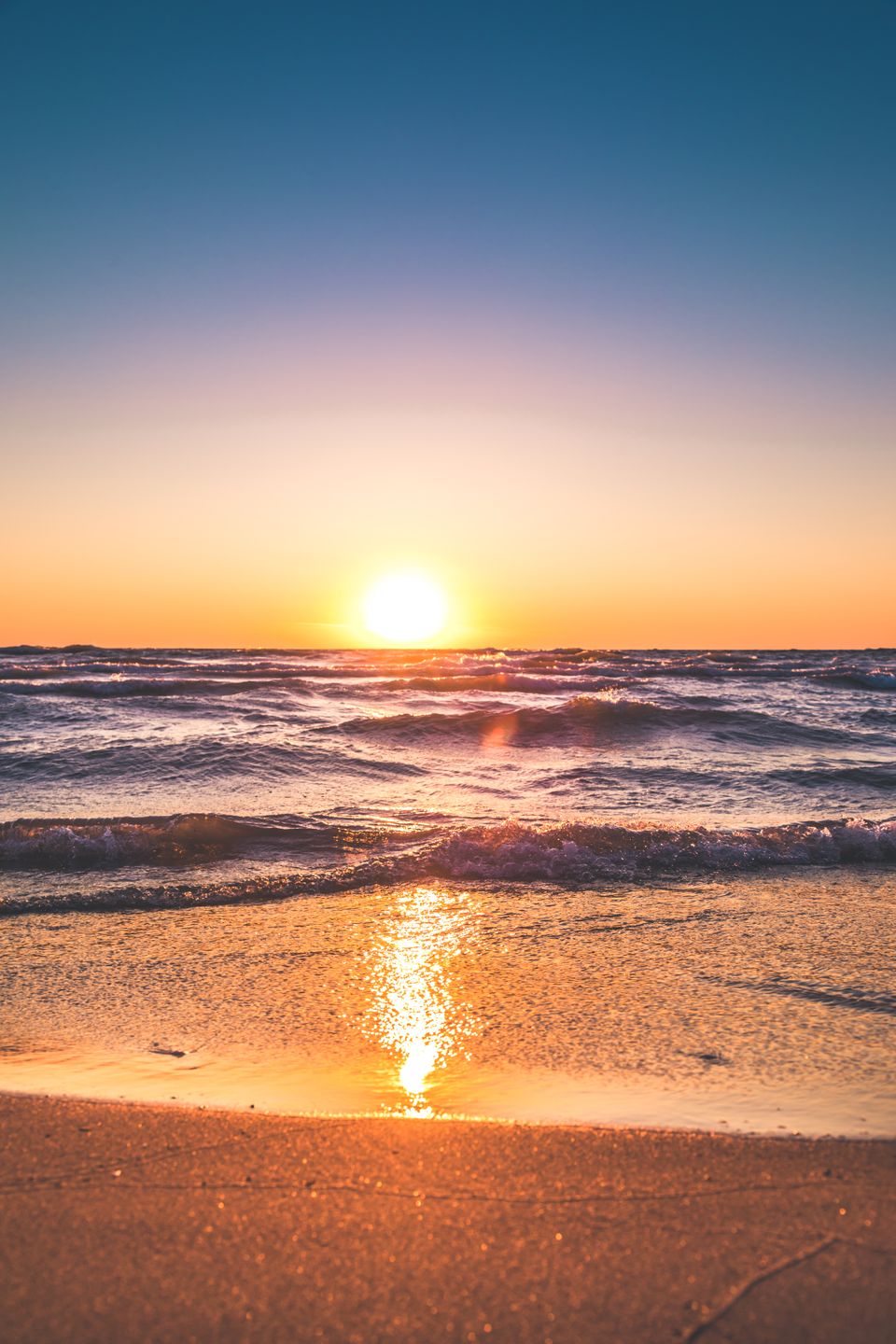
Clearwater Beach is the headline: a wide, white, family-friendly beach that regularly places at the top of national beach rankings, with a lively but not overwhelming beachfront. Its nightly ritual is the Pier 60 Sunset festival, where the pier fills with artisans and street performers as the sun drops straight into the Gulf — a daily, free event that turns the sunset into a gathering. The beach has full facilities, lifeguards and easy access, and the water is calm and warm in season.
It is the easy, do-everything option: come for a straightforward, high-quality Gulf beach day with the sunset as the finale.

The undeveloped islands most visitors miss
The area's best-kept advantage is its wild island parks. Caladesi Island State Park, reachable by ferry or by walking from adjacent Honeymoon Island, is a genuinely undeveloped barrier island that has topped 'best beach in America' lists — no buildings, just dunes, white sand and clear water. Honeymoon Island State Park is the drive-up counterpart, with natural beaches and osprey-filled pine forest. To the south, Fort De Soto Park, a county park near the mouth of Tampa Bay, has repeatedly ranked among the nation's top beaches, with a fort, long sandy spits and calm swimming.
These parks are the answer for anyone who finds Clearwater's beachfront too developed: the same clear Gulf water, but wild, quiet and dune-backed. A modest park fee gets you in, and the contrast with the built-up main beach is stark.
- Caladesi Island — undeveloped, ferry-access, a former 'best beach in America.'
- Honeymoon Island — drive-up natural state park with osprey-filled pine forest.
- Fort De Soto Park — top-ranked county park near Tampa Bay with a historic fort and long spits.
St. Pete Beach and the southern stretch
St. Pete Beach, south of Clearwater, is the other headline beach — a long, wide, white-sand strip fronted by resorts (including the landmark pink Don CeSar hotel, the 'Pink Palace,' open since 1928) with the same calm, clear Gulf water. It is a little more resort-oriented and a little less frenetic than Clearwater Beach, making it a strong base for a relaxed Gulf holiday.
The whole St. Pete/Clearwater area strings together beach after beach along the barrier islands, so you can sample several in a trip: Clearwater for the sunset scene, St. Pete Beach for the resort strip, and the island parks for the wild version — all within a short drive.
Season, red tide and getting there
Gulf water here is warm from roughly April to November — around 28–30 °C at the height of summer, some of the warmest sea water in the continental US — but it cools into the low 20s °C by winter, so this is a warm-season swimming destination. The one condition to check is red tide, the periodic Gulf algae bloom that can irritate lungs and litter beaches with dead fish; it does not happen every year and can affect one beach while another is clear, so check current status before you drive, especially in late summer and autumn.
Access is easy: Tampa International Airport is about 45 minutes away, making this one of the most reachable stretches of the Gulf coast. That accessibility, plus the water quality, is why the area is consistently popular.
Marine life: dolphins, manatees and the aquarium
The calm, clear Gulf here is rich with marine life, and dolphin-watching cruises are a staple — bottlenose dolphins are common in the shallow, warm water off Clearwater and St. Pete, and manatees appear in the calmer inlets, especially in cooler months. The standout family attraction is the Clearwater Marine Aquarium, a working marine-rescue and rehabilitation centre (not a theme park) that became famous as the home of Winter, the rescued dolphin with a prosthetic tail featured in the film Dolphin Tale.
This adds an easy, meaningful non-beach layer to a trip: a dolphin cruise from the marina, a visit to the rescue aquarium, and, on a calm day, snorkelling the clear Gulf for the fish the clarity reveals. For families in particular, the marine-life angle is a big part of what makes the Clearwater/St. Pete area more than just a pretty beach.
Clearwater/St. Pete vs the Panhandle
Both are clear-water Gulf destinations, with a few differences. Clearwater and St. Pete are more developed, more accessible (45 minutes from a major airport), warmer in summer, and packed with amenities and resorts. The Panhandle (Destin, 30A, Panama City Beach), further northwest, has arguably even whiter sand and clearer water, but is cooler, less accessible and more spread out.
The rule: choose Clearwater/St. Pete for accessibility, warmth and easy amenities near Tampa; choose the Panhandle for the very whitest sand and clearest water if you do not mind the extra travel and the cooler season. Both beat the Atlantic side for water clarity and calm.
Before you go
- Come April–November for warm Gulf water; winter drops into the low 20s °C.
- Do the Pier 60 Sunset festival at Clearwater Beach.
- Escape the crowds to Caladesi, Honeymoon Island or Fort De Soto for wild, clear-water beaches.
- Base at St. Pete Beach for a more resort-oriented, relaxed stay.
- Check red-tide status before a Gulf day, especially in late summer and autumn.
- Fly into Tampa (TPA) — about 45 minutes away, one of the most accessible Gulf areas.
- Bring a mask — the clear, calm water rewards snorkelling on flat days.
FAQ
Why is the water so clear at Clearwater Beach?
The Gulf here is calm, shallow and low in sediment over fine white quartz sand, which reflects light up through the water. With little surf to stir up sediment, the result is genuinely clear, turquoise water — not photo editing.
What is the best beach near Tampa?
Clearwater Beach and St. Pete Beach are the accessible headliners, but Caladesi Island, Honeymoon Island and Fort De Soto — all state or county park beaches — are the wilder, top-ranked alternatives worth the short trip.
Is the water warm at Clearwater and St. Pete?
In season, very — around 28–30 °C at the height of summer, some of the warmest sea water in the continental US. It cools into the low 20s °C in winter, so it is a warm-season swim.
What is red tide and should I worry about it?
Red tide is a periodic Gulf algae bloom that can irritate lungs and leave dead fish on the sand. It does not happen every year and can affect one beach while another is clear — check current status before a Gulf day, especially in late summer and autumn.
How do I get to Clearwater Beach?
It is about 45 minutes from Tampa International Airport (TPA), making it one of the most accessible stretches of Florida's Gulf coast.
Which is better, Clearwater or the Panhandle?
Clearwater/St. Pete is more accessible, warmer in summer and amenity-rich near Tampa; the Panhandle has arguably whiter sand and clearer water but is cooler and less accessible. Both beat the Atlantic side for clarity and calm.
Use BeachFinder to check today's spot.
Use your location, search any city worldwide or explore the map to compare the 20 most relevant beaches and swimming spots around you.
Download BeachFinder
Find beach conditions, sea temperature, wind, UV, water quality, and nearby swimming spots before you go.