South Beach, Miami: the complete swim, eat and park guide beyond the postcard
South Beach is free public Atlantic sand backed by the world's largest art-deco district. Here is where to swim, park, eat and go at the right hours — the practical guide behind the postcard.
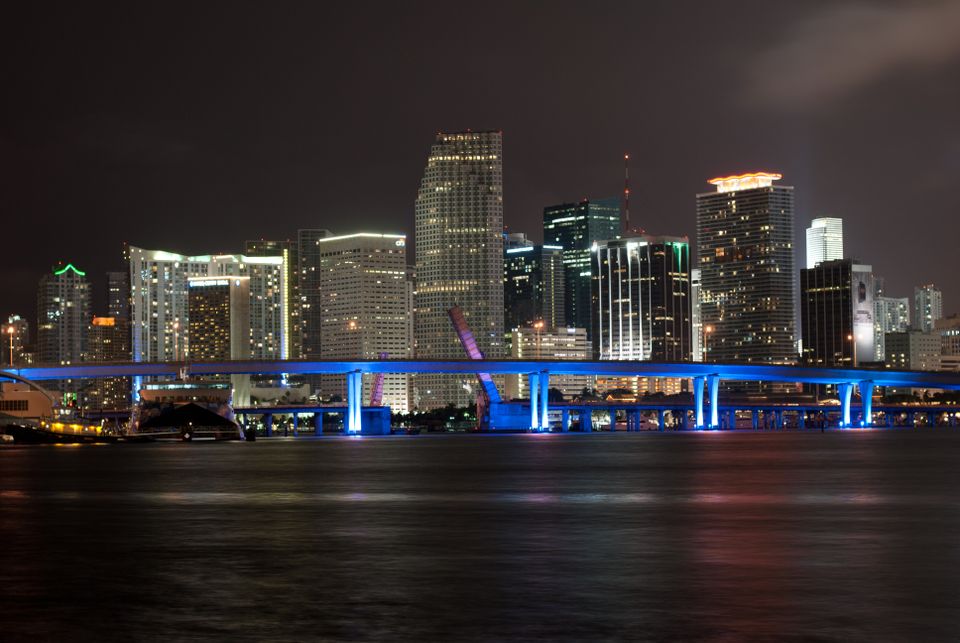
South Beach is the southern end of Miami Beach — a barrier island, not the mainland city — where wide, free public Atlantic sand meets the pastel art-deco hotels of Ocean Drive. The swimming is easy and warm year-round, the scene is the real draw, and the two things first-timers get wrong are the parking and the timing. This guide fixes both.
Here is the practical South Beach: where the free public sand actually is, how to park without paying resort rates, the water and UV reality by season, and where to eat and walk when you step off the sand. It is the working guide behind the postcard.
- The entire South Beach sand is public and free; only the loungers and umbrellas belong to hotels.
- Lummus Park, the strip of sand and palms along Ocean Drive from roughly 5th to 15th Street, is the core.
- Atlantic water here sits around 26–29 °C in summer and rarely below 22 °C in winter — a year-round swim.
- Parking is the pain point: use municipal garages or the free Miami Beach Trolley, not the meters on busy days.
- Summer UV routinely hits 9–11 ('very high' to 'extreme') — shade and reapplication matter more than the water.
- Go before 10:00 or after 17:00 to dodge the worst heat, crowds and parking.
Quick answer: is South Beach free, and is it good for swimming?
Yes on both counts, with a catch. The sand itself is entirely public and free — you can lay a towel anywhere on the open beach without paying — but the rows of loungers and umbrellas belong to the hotels and beach clubs and cost money. The swimming is genuinely good: warm Atlantic water, a wide gently sloping beach, and lifeguard towers along the strip. What you are paying for at South Beach is the scene and the location, not the water, which is free.
The single biggest first-timer mistake is assuming you must rent a lounger. Bring a towel, use the free public sand, and the whole beach costs nothing but parking.

Where the beach actually is: Lummus Park and the strip
The heart of South Beach is Lummus Park, the green strip of palms and sand running along Ocean Drive from about 5th to 15th Street, backed by the art-deco hotels. The sand is wide here — a long walk from the promenade to the water — and dotted with the pastel lifeguard towers that have become a Miami symbol in their own right. North of 15th the beach continues past Collins Avenue's taller hotels all the way up Miami Beach.
For a quieter patch, walk a few blocks north or south of the Ocean Drive core: the sand is identical and the density drops sharply the moment you leave the 8th-to-12th-Street epicentre. The far south end near South Pointe Park is calmer, with a pier and a view of the cruise ships leaving PortMiami.
- Lummus Park (5th–15th St) — the core strip, art-deco backdrop, pastel lifeguard towers.
- South Pointe Park — the calmer southern tip, a pier, and cruise-ship-watching.
- North of 15th — same sand, thinner crowds, taller Collins Avenue hotels.
Solving the parking problem
Parking is South Beach's real tax. Street meters exist but are scarce and time-limited, and circling for one in summer is misery. The reliable options are the municipal parking garages (several run north–south through the district, well-signed and far cheaper than valet), or skipping the car entirely: the free Miami Beach Trolley loops the area, and rideshare drops you at the sand without the parking gamble.
If you do drive, aim to arrive before 10:00 when garage space is easy, or accept a garage a few blocks inland and walk. Do not rely on finding a metered spot on Ocean Drive itself at peak times — it rarely happens.
Beyond the sand: eat, walk and go
South Beach is walkable and dense, so a beach day easily folds in the rest. Ocean Drive is the tourist-facing café strip; one block inland, Española Way is a charming pedestrian lane of restaurants with a quieter, Mediterranean feel; and a few blocks north, Lincoln Road is a pedestrian mall of shops and dining redesigned in the 1960s by architect Morris Lapidus. Any of these covers lunch and a stroll without moving the car.
The art-deco architecture is itself a free attraction — the largest 1930s art-deco concentration in the world runs right behind the beach, best walked at dusk when the neon comes on. Pair a morning swim with an evening deco walk and you have used South Beach for everything it is good at.
How South Beach became the postcard
South Beach's look is the product of a rescue and a reinvention. The art-deco hotels went up in the 1930s, fell into disrepair by the 1970s, and were nearly demolished before a preservation movement led by activist Barbara Baer Capitman got the district onto the National Register of Historic Places in 1979 — the first 20th-century district to earn that status. That saved the buildings; the 1980s television series Miami Vice then made their pastel-and-neon aesthetic globally famous, and a wave of restoration, fashion shoots and nightlife through the late 1980s and 1990s completed the transformation from decay to icon.
That history is why South Beach looks the way it does: it is not a themed development but a genuinely preserved 1930s resort that became a style icon. Knowing it turns the beachfront walk into a reading of nearly a century of Miami reinvention, and it is why the same aesthetic keeps getting borrowed by film, fashion and games decade after decade.
Season, sun and water reality
South Beach swims every month: summer water runs around 26–29 °C, winter rarely drops below 22 °C. The real hazard is the sun — Miami's summer UV index routinely reaches 9–11, which the WHO classes 'very high' to 'extreme,' so unprotected skin burns in under half an hour at midday. Shade, a hat and reapplied reef-conscious sunscreen matter more here than anything about the water.
The rainy season (roughly June–October) usually means a short, heavy afternoon storm rather than an all-day washout, so plan beach mornings and indoor afternoons. Hurricane risk peaks August–September; spring and late autumn are the most reliable weather windows.
South Beach vs the rest of Miami Beach
South Beach is the iconic, busy, scene-driven end. If you want the same free Atlantic sand with fewer people, Mid-Beach and North Beach (further up the island) are calmer and more residential, and Haulover Park at the north end is a wide, natural beach popular with locals (and home to a well-known clothing-optional section). For genuinely calm, family-grade water, the move is off Miami Beach entirely to Key Biscayne's Crandon Park and Bill Baggs.
The rule: South Beach for the scene and the deco; Mid/North Beach for the same sand in peace; Key Biscayne for the calmest swim. Many visitors do South Beach for an evening and swim elsewhere by day.
Before you go
- Bring a towel and use the free public sand — you do not need a paid lounger.
- Park in a municipal garage or take the free Miami Beach Trolley, not the Ocean Drive meters.
- Go before 10:00 or after 17:00 to dodge heat, crowds and parking.
- Treat UV as the main hazard: summer index 9–11 means shade and reapplication.
- Fold in Española Way or Lincoln Road for lunch, and the deco strip at dusk.
- Plan beach mornings in the June–October rainy season; storms hit in the afternoon.
- For a calmer swim, consider Mid/North Beach or Key Biscayne instead.
FAQ
Is South Beach free?
Yes — the entire South Beach sand is public and free to lay a towel on. Only the hotel loungers and umbrellas cost money. Your only real expense is parking.
Where should I park for South Beach?
Use one of the municipal parking garages (well-signed, far cheaper than valet) or skip the car and take the free Miami Beach Trolley or a rideshare. Street meters are scarce and hard to find at peak times.
Is the water warm at South Beach?
Yes — Atlantic water off South Beach is around 26–29 °C in summer and rarely below 22 °C in winter, so it swims year-round.
What is the best time to go to South Beach?
Before 10:00 or after 17:00, to avoid the worst heat, crowds and parking. Dusk is also when the art-deco neon comes on behind the beach.
Where is the actual beach in South Beach?
The core is Lummus Park, the strip of sand and palms along Ocean Drive from about 5th to 15th Street, backed by the art-deco hotels. The sand continues north and south from there.
Is South Beach good for families?
It is fine, but crowded and scene-heavy. For calmer, shallower family water, Key Biscayne (Crandon Park, Bill Baggs) or the quieter Mid/North Beach are better choices.
Use BeachFinder to check today's spot.
Use your location, search any city worldwide or explore the map to compare the 20 most relevant beaches and swimming spots around you.
Download BeachFinder
Find beach conditions, sea temperature, wind, UV, water quality, and nearby swimming spots before you go.
Things to do around Miami
A few bookable activities near Miami after checking conditions for Miami.
Hotels and rentals near Miami
Compare accommodation around this beach after checking current swimming conditions and local access. Prices and availability come from the accommodation partner.