
Wie man einen Strand für Yoga auswählt, der wirklich funktioniert
Ruhige, windstille Morgen, die richtige Oberfläche, Schatten und wo man sich einrichten kann. Ein praktischer Leitfaden zur Suche nach einem Strand-Yoga-Platz, der den frühen Alarm wert ist.
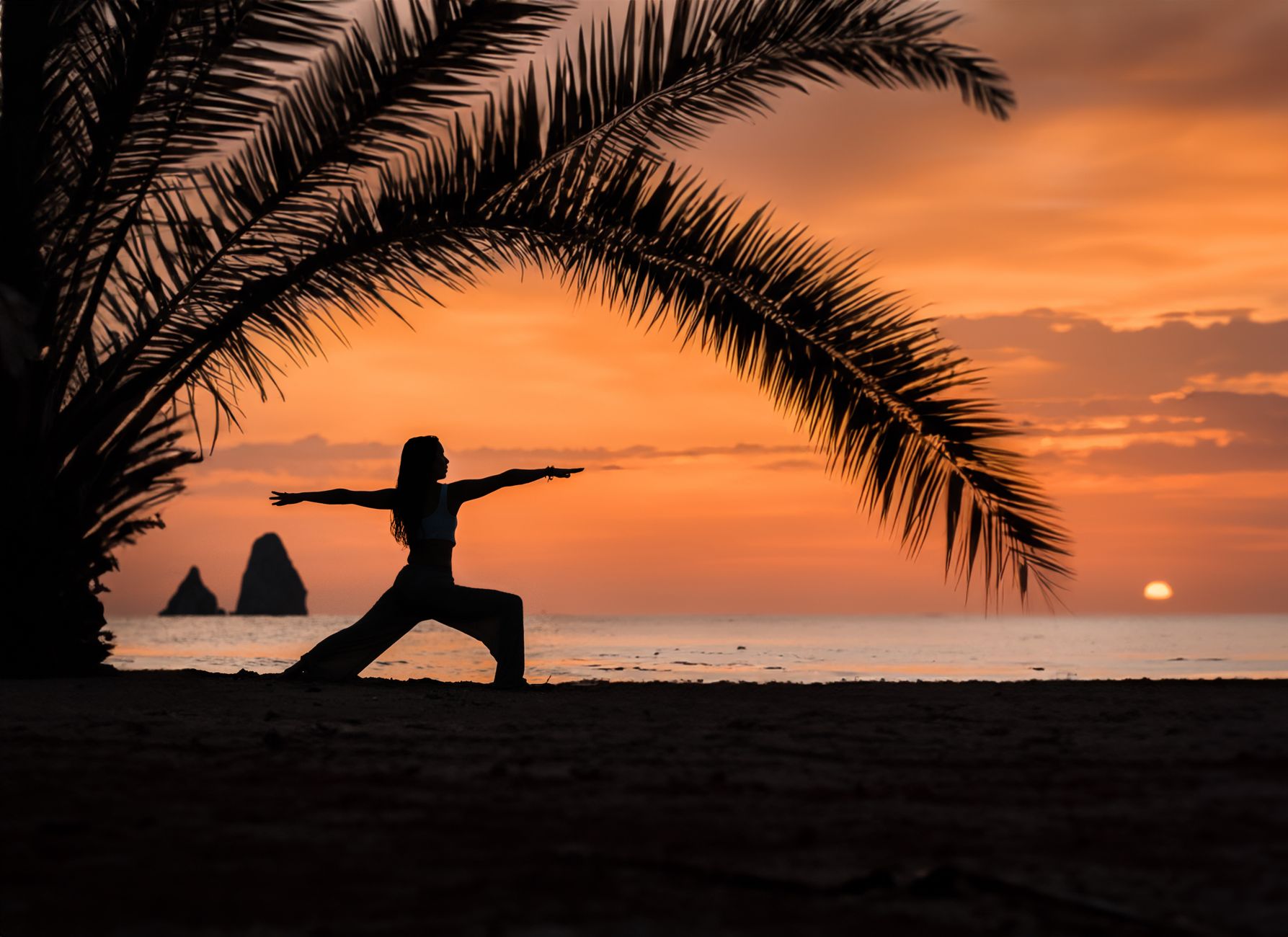
Eine Yoga-Session am Strand, die tatsächlich funktioniert, wird entschieden, bevor Sie das Haus verlassen. Der falsche Wind, die falsche Oberfläche oder der falsche Nachbar mit einem Lautsprecher verwandeln die Praxis in eine frustrierende Verhandlung. Der richtige Strand lässt die gleiche Sequenz erholsam erscheinen, weil die Bedingungen in den Hintergrund treten.
Dieser Leitfaden zeigt, was Sie vor dem Alarm überprüfen sollten: Tageszeit, Wind, Oberfläche, Schatten und wie man den Strand für eine geeignete Ecke liest. Nichts davon ist mystisch. Es ist die gleiche Logik, die Sie beim Auswählen einer ruhigen Laufstrecke anwenden würden, nur mit einer Matte und dem Meer anstelle eines Weges.
- Wind ist der größte Faktor: alles über zehn oder zwölf Kilometer pro Stunde ist unangenehm.
- Die erste Stunde nach Sonnenaufgang ist das zuverlässigste Zeitfenster für ruhige Luft, niedrige Menschenmengen und stabile Temperaturen.
- Hart gepackter Sand in der Nähe der Wasserlinie ist praktischer als trockener, tiefer Sand für jede stehende Pose.
- Grasstreifen hinter dem Strand sind oft nützlicher als der Sand selbst für längere Sequenzen.
Wind bestimmt, ob die Praxis möglich ist
Yoga am Strand mit auflandigem Wind über zwölf Kilometer pro Stunde hört auf, Yoga zu sein. Die Matte hebt sich bei jedem Übergang, Ihr Haar ist im Gesicht, Staub gelangt in die Augen, und jede Sequenz, die länger als ein paar Minuten dauert, wird zu einem Kampf mit Ihrer Ausrüstung. Die Vorhersage sagt Ihnen das meiste, was Sie wissen müssen.
Suchen Sie nach einem Morgen mit ruhigem oder sehr leichtem auflandigem Wind, idealerweise unter zehn Kilometern pro Stunde. Im Mittelmeer bedeutet das oft die erste Stunde nach Sonnenaufgang, bevor die thermische Brise beginnt. An atlantischen Küsten gilt dasselbe Zeitfenster, aber mit einer variableren Vorhersage, weshalb es wichtiger ist, am Morgen der Sitzung zu überprüfen als am Abend zuvor.
- Ruhige Bedingungen: leichter Wind, kein Dunst, das Meer bewegt sich kaum.
- Praktikable Bedingungen: leichter auflandiger Wind unter zehn Kilometern pro Stunde.
- Vermeiden: böiger ablandiger Wind, starker auflandiger Wind, Sandsturmwarnungen.
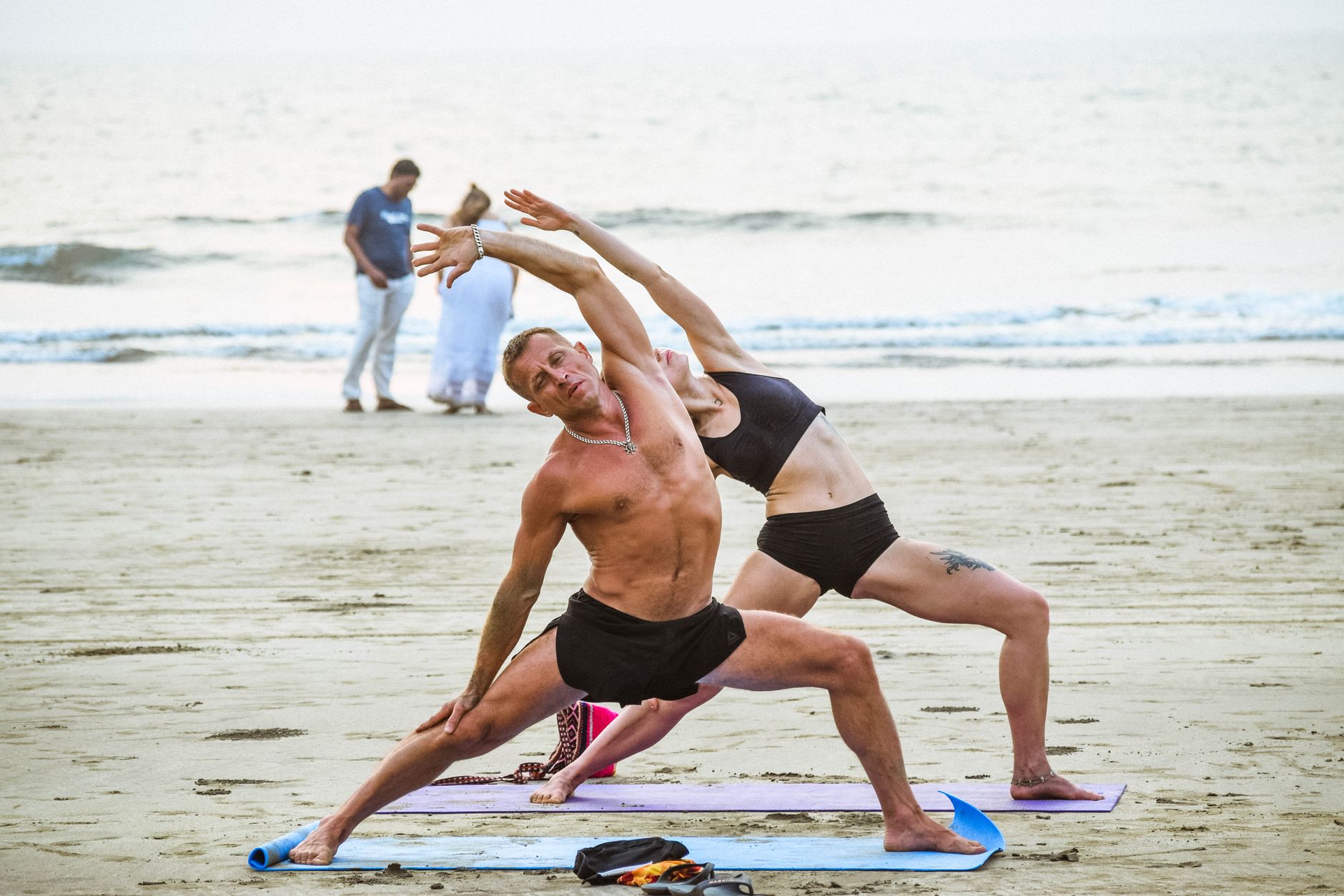
Oberfläche: harter Sand, Gras oder Felsen
Weicher, trockener Sand bricht unter jeder stehenden Pose zusammen. Ihre Krieger-Sequenzen verlieren an Stabilität, Ihr herabschauender Hund vergräbt Ihre Finger, und Ihre Knie verdrehen sich, während Sie versuchen, eine Basis zu finden. Hart gepackter Sand in der Nähe der Wasserlinie ist viel besser, besonders in der Stunde, nachdem die Flut sich zurückgezogen hat und die Oberfläche verdichtet ist.
Viele der besten urbanen Strand-Yoga-Plätze liegen überhaupt nicht im Sand. Der Grasstreifen oder der Gehweg hinter dem Strand ist fester, sauberer und einfacher einzurichten. Das Meer ist immer noch vor Ihnen, die Luft ist immer noch ruhig, und Ihre Sonnengrüße verwandeln sich nicht in einen Gleichgewichtstest, für den Sie sich nicht angemeldet haben.
Wo man sich am Strand einrichten kann
Die Ecke des Strandes ist genauso wichtig wie der Strand selbst. Vermeiden Sie die Linie direkt unter der Café-Terrasse, den Bereich in der Nähe des Parkplatzausgangs und den Streifen, der am nächsten zur Schwimmzone der Kinder liegt. Die am wenigsten gestörte Ecke ist normalerweise das weiteste Ende vom Hauptzugangsweg, wo casual Tagesbesucher nicht vorbeigehen.
Wählen Sie einen Platz mit sichtbarem Meereshorizont, wenn möglich. Die Horizontlinie ist ein nützlicher Anker für Balance-Posen und ein ehrlicher Grund, warum der Strand den frühen Alarm wert ist. Wenn der Wind zunimmt, kann die gleiche Ecke in der Nähe einer niedrigen Düne oder einer Wand hinter Ihnen die Matte schützen, ohne die Aussicht zu verlieren.
- Weit entfernt vom Hauptzugangsweg, nicht in der Nähe des Parkplatzausgangs.
- Mit einer Horizontlinie vor Ihnen, idealerweise mit einer niedrigen Düne dahinter für Schutz.
- Vermeiden Sie Plätze direkt unter Café-Musik, Lautsprechern von Strandclubs oder Kinderbereichen.
Tageszeit und Schatten
The sunrise hour is the most reliable for calm air, empty beaches and stable temperatures. In summer, the second-best window is the hour before sunset, when the wind has often dropped, the heat is gone and the visitor density is decreasing. Midday yoga in summer is usually a poor trade: high UV, harsh sand temperature, and the busiest crowd window.
Shade matters surprisingly often. A morning session does not need it, but a longer practice in the late afternoon benefits from a beach with trees behind it or a shaded grass strip. UV exposure during a one-hour standing sequence is real, especially during the strongest part of the day, and a beach without any shade option is a beach to leave by ten in summer. A small umbrella anchored deep into the sand is enough for a single mat, but on hot UV-9 days the smart move is the shaded grass behind the beach rather than the open sand in front.
Temperature also affects the practice itself. Cold sand at sunrise can feel sharp on bare feet for the first few minutes; warm sand at midday can be uncomfortable in any pose held for more than a few breaths. Aim for the band where the sand is room-temperature and the air is calm, which in most of the Mediterranean is the first hour or two after sunrise from late spring through early autumn.
Practical kit and choosing the right beach in advance
A heavier mat handles light wind better than a thin travel mat. A sarong or wide towel under the mat keeps sand out of the rolled corners. A small water bottle and a hat for the walk back finish the kit. None of this is special; it is the same minimum kit you take to a sand picnic. The only added piece worth thinking about is footwear that comes off cleanly, since walking back to the car with sandy feet inside trainers is the small friction that ends an otherwise good morning.
Choose the beach in advance, not on arrival. Pick a beach where the surface is workable, the wind window is realistic and the corner you want is visible from the map. Save it as a favourite, then check the conditions an hour before leaving rather than the night before; wind forecasts shift in the last few hours and most beach-yoga sessions live or die on whether the air is calm at the moment you unroll the mat.
Use BeachFinder to compare the photo, map, weather, UV, water temperature, wind, waves, currents, water quality where available, amenities, stays and activities before committing to the trip.
Vor der Fahrt
- Check the wind forecast for the morning, not the night before.
- Pick a beach with hard sand near the waterline or a grass strip behind it.
- Set up at the far end from the main access path and parking.
- Plan a sunrise window in summer; an early evening window works in spring and autumn.
- Bring a heavier mat and a sarong to handle light wind without a fight.
FAQ
Is sand really better than grass for beach yoga?
Not always. Soft dry sand is uncomfortable for standing poses and twists ankles in transitions. Hard packed sand near the waterline is fine, and a grass strip behind the beach is often the most practical surface. The view is what makes it beach yoga, not the sand itself.
What time of day is best?
The hour after sunrise is the most reliable across the year: calm wind, low crowds, stable temperatures. In spring and autumn the hour before sunset works too, with softer light and lower UV. Midday in summer rarely works because of wind, heat and crowds.
Can I practice on a windy beach if I really want to?
You can try, but the experience changes. A heavier mat, a sheltered corner near a dune or wall, and a shorter sequence focused on grounded poses can rescue a windy session. If gusts exceed fifteen kilometers per hour, move to the grass behind the beach or postpone.
Nutze BeachFinder, um den heutigen Spot zu prüfen.
Nutze deinen Standort, suche weltweit nach einer Stadt oder erkunde die Karte, um die 20 passendsten Badestellen in deiner Nähe zu vergleichen.
BeachFinder herunterladen
Prüfe vor der Abfahrt Strandbedingungen, Wassertemperatur, Wind, UV, Wasserqualität und nahe Badeplätze.
Diese Strandseiten verbinden den Guide mit echten Details: Wassertemperatur, Wind, UV, Wellen, Zugang und Fotos, wenn vorhanden.
Kondyli beach
GR
Petani Beach
GR
Myrtos Beach
GR
Episkopi beach
GR
Praia de Quarteira
PT
Playa de la Mata Negra
PT
Praia do Carvalho
PT
Plage Rive Gauche
FR
Plage de la Dalle
FR
Plage de Saint-Jean
FR
Grande Blue Beach
TR
Praia dos Alemães
PT
Praia da Barra
PT
Plage du Lividic
FR
Lagoa de Albufeira
PT