
How to choose a beach for yoga that actually works
Quiet, windless mornings, the right surface, shade and where to set up. A practical guide to finding a beach yoga spot worth the early alarm.
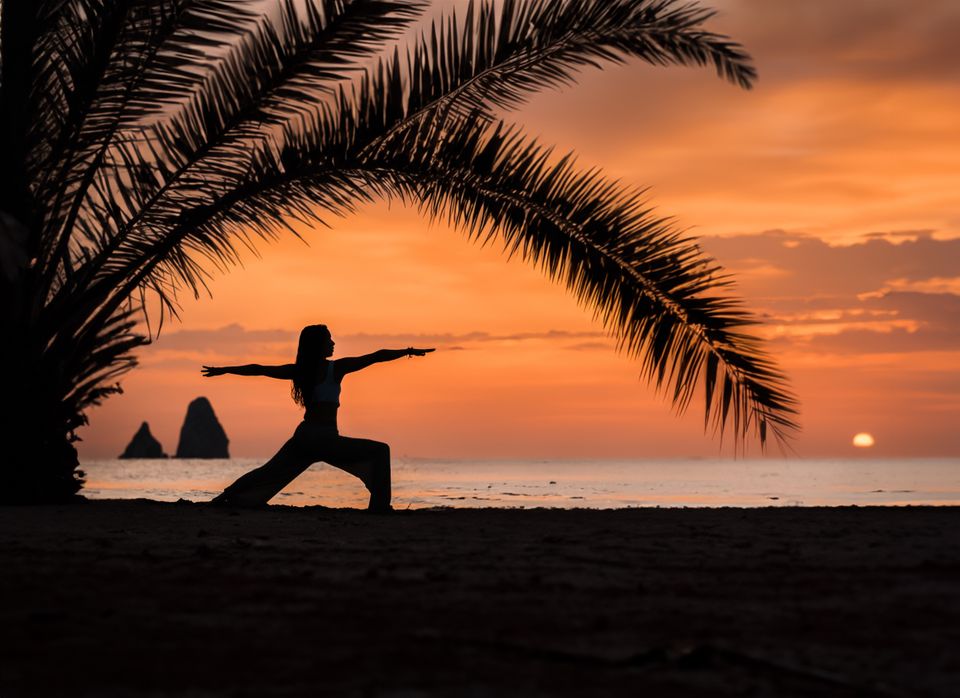
A beach yoga session that actually works is decided before you leave the house. The wrong wind, the wrong surface or the wrong neighbour with a speaker turns the practice into a frustrated negotiation. The right beach makes the same sequence feel restorative because the conditions disappear into the background.
This guide is what to check before the alarm: time of day, wind, surface, shade and how to read the beach for a workable corner. None of it is mystical. It is the same logic you would apply to picking a quiet running route, only with a mat and the sea instead of a path.
- Wind is the single biggest factor: anything above ten or twelve kilometers per hour is uncomfortable.
- The first hour after sunrise is the most reliable window for calm air, low crowds and stable temperatures.
- Hard packed sand near the waterline is more practical than dry, deep sand for any standing pose.
- Grass strips behind the beach are often more useful than the sand itself for longer sequences.
Wind defines whether the practice is possible
Yoga on the beach with onshore wind above twelve kilometers per hour stops being yoga. The mat lifts at every transition, your hair is in your face, dust gets into your eyes, and any sequence longer than a few minutes becomes a fight with your equipment. The forecast tells you most of what you need to know.
Look for a morning with calm or very light onshore wind, ideally below ten kilometers per hour. In the Mediterranean, that often means the first hour after sunrise before the thermal breeze starts. On Atlantic coasts, the same window applies but with a more variable forecast, which is why checking the morning of the session matters more than checking the night before.
- Calm conditions: light wind, no haze, sea barely moving.
- Workable conditions: light onshore wind under ten kilometers per hour.
- Avoid: gusty offshore wind, strong onshore wind, sandstorm warnings.
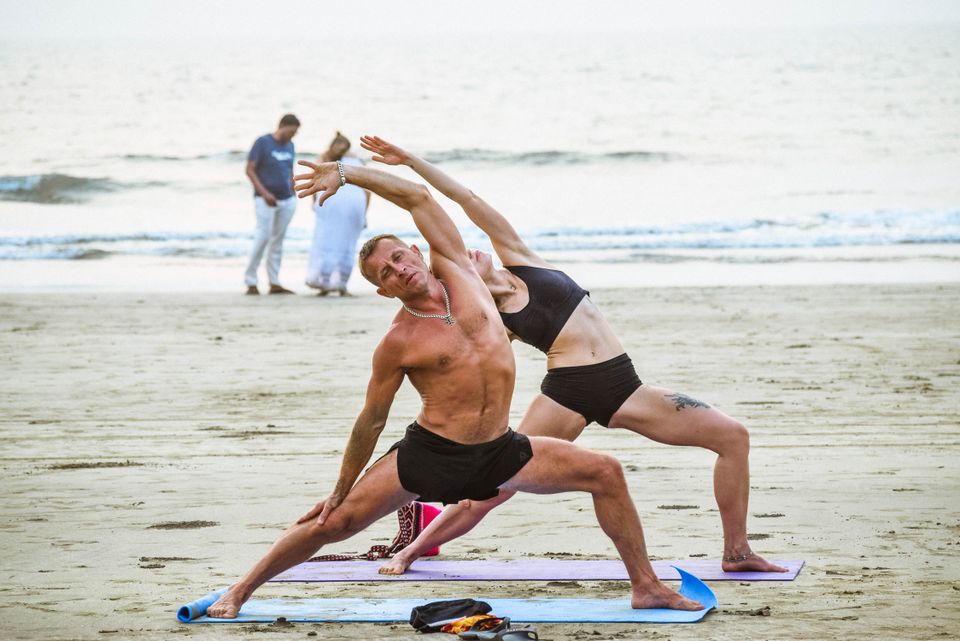
Surface: hard sand, grass or rocks
Soft, dry sand collapses under any standing pose. Your warrior sequences lose stability, your downward dog buries your fingers, and your knees twist trying to find a base. Hard, packed sand near the waterline is much better, especially in the hour after the tide has retreated and left the surface compacted.
Many of the best urban beach yoga spots are not on the sand at all. The grass strip or boardwalk behind the beach is firmer, cleaner and easier to set up on. The sea is still in front of you, the air is still calm, and your sun salutation does not turn into a balance test you did not sign up for.
Where to set up on the beach
The corner of the beach matters as much as the beach itself. Avoid the line directly under the cafe terrace, the area near the parking lot exit and the strip closest to the children's swimming zone. The least-disturbed corner is usually the far end from the main access path, where casual day visitors do not bother walking.
Pick a spot with a visible sea horizon if you can. The horizon line is a useful anchor for balance poses and an honest reason the beach is worth the early alarm. If wind picks up, the same corner near a low dune or a wall behind you can shelter the mat without losing the view.
- Far end from the main access path, not near the parking exit.
- With a horizon line in front, ideally a low dune behind for shelter.
- Avoid spots directly under cafe music, beach-club speakers or children's areas.
Time of day and shade
The sunrise hour is the most reliable for calm air, empty beaches and stable temperatures. In summer, the second-best window is the hour before sunset, when the wind has often dropped, the heat is gone and the visitor density is decreasing. Midday yoga in summer is usually a poor trade: high UV, harsh sand temperature, and the busiest crowd window.
Shade matters surprisingly often. A morning session does not need it, but a longer practice in the late afternoon benefits from a beach with trees behind it or a shaded grass strip. UV exposure during a one-hour standing sequence is real, especially during the strongest part of the day, and a beach without any shade option is a beach to leave by ten in summer. A small umbrella anchored deep into the sand is enough for a single mat, but on hot UV-9 days the smart move is the shaded grass behind the beach rather than the open sand in front.
Temperature also affects the practice itself. Cold sand at sunrise can feel sharp on bare feet for the first few minutes; warm sand at midday can be uncomfortable in any pose held for more than a few breaths. Aim for the band where the sand is room-temperature and the air is calm, which in most of the Mediterranean is the first hour or two after sunrise from late spring through early autumn.
Practical kit and choosing the right beach in advance
A heavier mat handles light wind better than a thin travel mat. A sarong or wide towel under the mat keeps sand out of the rolled corners. A small water bottle and a hat for the walk back finish the kit. None of this is special; it is the same minimum kit you take to a sand picnic. The only added piece worth thinking about is footwear that comes off cleanly, since walking back to the car with sandy feet inside trainers is the small friction that ends an otherwise good morning.
Choose the beach in advance, not on arrival. Pick a beach where the surface is workable, the wind window is realistic and the corner you want is visible from the map. Save it as a favourite, then check the conditions an hour before leaving rather than the night before; wind forecasts shift in the last few hours and most beach-yoga sessions live or die on whether the air is calm at the moment you unroll the mat.
Use BeachFinder to compare the photo, map, weather, UV, water temperature, wind, waves, currents, water quality where available, amenities, stays and activities before committing to the trip.
Before you go
- Check the wind forecast for the morning, not the night before.
- Pick a beach with hard sand near the waterline or a grass strip behind it.
- Set up at the far end from the main access path and parking.
- Plan a sunrise window in summer; an early evening window works in spring and autumn.
- Bring a heavier mat and a sarong to handle light wind without a fight.
FAQ
Is sand really better than grass for beach yoga?
Not always. Soft dry sand is uncomfortable for standing poses and twists ankles in transitions. Hard packed sand near the waterline is fine, and a grass strip behind the beach is often the most practical surface. The view is what makes it beach yoga, not the sand itself.
What time of day is best?
The hour after sunrise is the most reliable across the year: calm wind, low crowds, stable temperatures. In spring and autumn the hour before sunset works too, with softer light and lower UV. Midday in summer rarely works because of wind, heat and crowds.
Can I practice on a windy beach if I really want to?
You can try, but the experience changes. A heavier mat, a sheltered corner near a dune or wall, and a shorter sequence focused on grounded poses can rescue a windy session. If gusts exceed fifteen kilometers per hour, move to the grass behind the beach or postpone.
Use BeachFinder to check today's spot.
Use your location, search any city worldwide or explore the map to compare the 20 most relevant beaches and swimming spots around you.
Download BeachFinder
Find beach conditions, sea temperature, wind, UV, water quality, and nearby swimming spots before you go.
These beach pages connect the guide advice with real spot details: sea temperature, wind, UV index, waves, access and photos when available.
Kondyli beach
GR
Petani Beach
GR
Myrtos Beach
GR
Episkopi beach
GR
Praia de Quarteira
PT
Playa de la Mata Negra
PT
Praia do Carvalho
PT
Plage Rive Gauche
FR
Plage de la Dalle
FR
Plage de Saint-Jean
FR
Grande Blue Beach
TR
Praia dos Alemães
PT
Praia da Barra
PT
Plage du Lividic
FR
Lagoa de Albufeira
PT