Comment comparer les écoles de surf débutant selon la région
Taille du groupe, temps dans l'eau par heure, moniteurs qualifiés, matériel inclus et signaux d'alerte à repérer avant de réserver un cours de surf débutant.
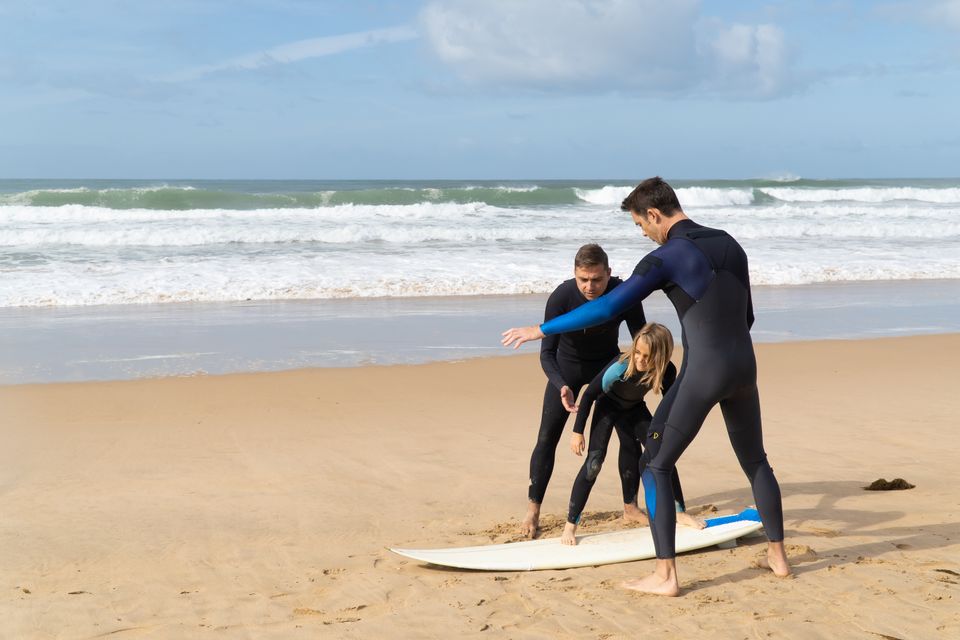
Les écoles de surf mettent rarement en avant ce qui compte vraiment. De belles planches, des camionnettes floquées et une photo de plage n'en disent pas long sur le fait que vous vous tiendrez debout ou non à la fin de la semaine. La comparaison utile ressemble davantage à un petit audit : qui enseigne, combien d'élèves sont dans l'eau en même temps, combien de temps vous passez sur une vague, et que se passe-t-il quand les conditions changent.
Les sessions débutant sont le moment où une région montre le meilleur ou le pire d'elle-même. Une bonne école à Hossegor ou à Newquay transforme un banc de sable clément en matinée productive. Une mauvaise école dans la même ville transforme la même plage en quatre-vingt-dix minutes debout dans l'écume à mi-cuisse. Traitez l'école comme faisant partie de la plage, pas comme une réservation séparée.
- La taille du groupe et le ratio élèves-moniteur déterminent votre vrai temps dans l'eau par heure.
- Les moniteurs qualifiés sont en général certifiés par une fédération (FFSurf en France, équivalent ISA ailleurs) et formés au sauvetage.
- Le matériel inclus doit couvrir la planche, la combinaison et idéalement l'assurance, avec un plan B clair les jours de mauvais surf.
- Les signaux d'alerte incluent des tarifs flous, l'absence d'assurance, aucune rotation entre moniteur et assistant, et une seule plage sans plan B.
Commencez par le ratio, pas par le prix
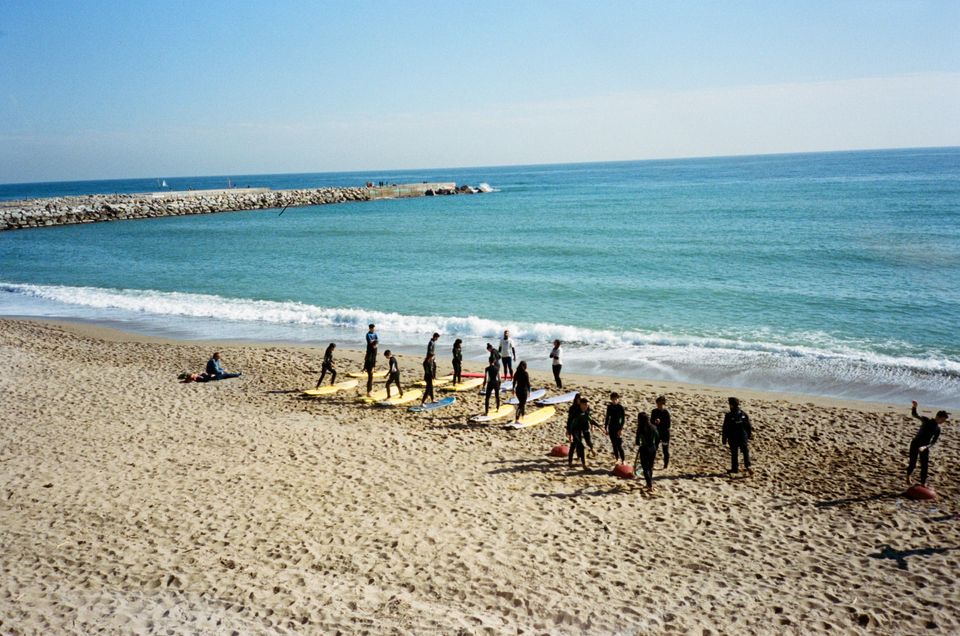
L'erreur la plus courante est de comparer les prix affichés en page d'accueil. Un cours collectif à 35 € avec douze élèves et un moniteur est rarement un meilleur rapport qualité-prix qu'une session à 55 € avec six élèves et deux moniteurs. Le premier vous fait attendre en file toute la matinée. Le second vous met sur plus de vagues et donne au moniteur l'occasion de vraiment corriger votre position.
Demandez directement à l'école : combien d'élèves sont dans l'eau en même temps, combien de moniteurs et d'assistants sont actifs, et que se passe-t-il quand un cours est complet. Une école qui hésite à répondre vous dit quelque chose d'important. Les bonnes écoles publient leurs ratios parce que cela fait partie de leur argument de vente.
- Ratio débutant raisonnable : un moniteur pour six à huit élèves, plus un assistant dans l'eau.
- Une deuxième personne sur la plage pour pousser les débutants dans la vague est un signal fort.
- Évitez les cours où le moniteur reste sur la plage pendant toute la première session.
Le temps dans l'eau compte plus que la durée totale de la session
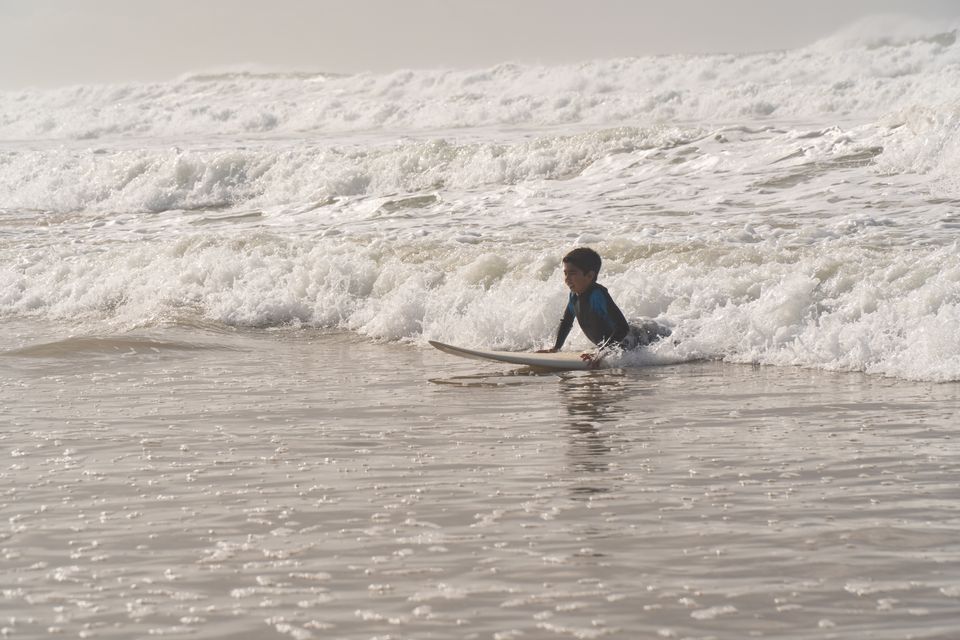
Un « cours de deux heures » peut vouloir dire quatre-vingt-dix minutes de surf utile ou trente minutes de changement, de briefing, de marche et d'attente. La progression d'un débutant est à peu près proportionnelle au nombre de vagues, la vraie question est donc combien de vagues vous prenez réellement dans cette fenêtre.
Les écoles avec un briefing au sol court, une rotation organisée et des moniteurs proches de la zone de déferlement livrent en général plus de vagues par heure. Certaines publient un objectif de nombre de vagues. D'autres vous le diront au téléphone si vous demandez. Une réponse vague signifie souvent que le cours est surtout de la chorégraphie de groupe.
Vérifiez la certification, l'assurance et la chaîne de sécurité
En France, les cours débutant doivent être encadrés par des moniteurs titulaires d'un diplôme fédéral (BPJEPS ou moniteur fédéral FFSurf). Au Royaume-Uni, cherchez un niveau ISA 1 ou 2 plus une qualification de maître-nageur de plage (RLSS ou SLSGB). Au Portugal, les écoles de surf doivent être enregistrées auprès de la fédération (FPS) et de la capitainerie. Aux États-Unis, les certifications ISA, NSSIA ou de maître-nageur du comté sont des signaux courants.
L'assurance n'a rien de glamour, mais c'est la différence entre une cheville foulée et un cauchemar administratif en vacances. Les écoles sérieuses incluent une responsabilité civile et une couverture accident dans leur prix, et elles vous diront quelle police s'applique si vous demandez.
- Cherchez les logos fédéraux sur la porte, pas seulement sur le site web.
- Demandez la couverture des maîtres-nageurs sur la plage d'enseignement, surtout hors juillet-août.
- Si l'école ne peut pas expliquer ce qui se passe en cas de blessure, c'est un signal d'alerte.
Ce qui devrait être inclus dans le prix
Un vrai forfait débutant inclut en général la planche, la combinaison, un leash, souvent un tee-shirt anti-UV et le moniteur. Certaines écoles ajoutent l'assurance et une session gratuite de rattrapage si les conditions ne sont pas sûres. Surveillez les suppléments pour les grandes planches, les combinaisons à capuche en saison froide ou l'accès aux douches à la base de l'école.
Les stages sur plusieurs jours devraient décrire ce qui se passe si la houle tombe à plat ou devient trop grosse. Les bonnes écoles déplaceront le cours vers une plage plus abritée du même secteur côtier, feront une session théorique ou rembourseront proprement la journée. Une politique « météo » vague est un avertissement.
- Confirmez si les combinaisons incluent capuche et chaussons pour les saisons froides.
- Vérifiez si l'assurance est incluse ou vendue séparément à un coût supplémentaire.
- Demandez quelle est la plage de secours quand le spot principal est trop gros ou trop bondé.
Les signaux d'alerte visibles avant de réserver
Certains signaux d'alerte sont visibles avant même de payer. Une école qui opère uniquement depuis une plage sans plan de repli dépend d'une seule prévision. Une école qui vous pousse vers des cours « privés » qui s'avèrent être des groupes de quatre déforme son produit. Une école qui refuse de partager les noms ou les qualifications de ses moniteurs cache quelque chose.
Utilisez BeachFinder pour vérifier à quoi ressemble vraiment la plage d'enseignement : banc de sable ou récif, exposée ou abritée, parking réaliste, surveillance en saison. Une école de surf ne peut pas rattraper une plage qui n'est pas le bon choix pour la journée, mais une bonne école vous aura déjà déplacé ailleurs.
Les avis sont utiles mais à lire avec scepticisme. Une école avec des centaines d'avis cinq étoiles et un groupe notable d'avis une étoile mentionnant des cours surchargés ou des remboursements refusés fait probablement tourner deux produits : celui du marketing et celui de la réalité. Cherchez des avis qui décrivent des moniteurs, des ratios et des rotations précis plutôt qu'un enthousiasme vague.
- Aucun nom ou photo de moniteur sur le site web.
- Taille de groupe qui change après la réservation.
- Aucune politique claire sur le mauvais temps, les remboursements ou le report.
- Une seule plage fixe sans alternative quand le surf est trop fort.
- Les avis mentionnent répétitivement du monde, des absences ou des ventes forcées.
Checklist avant de partir
- Confirmez par écrit le ratio élèves-moniteur avant de réserver.
- Demandez le temps dans l'eau par session et comment fonctionne la rotation.
- Vérifiez la certification fédérale et la couverture des maîtres-nageurs sur la plage d'enseignement.
- Vérifiez que combinaison, planche et assurance sont inclus pour la saison.
- Comparez la plage d'enseignement avec un spot de secours proche sur BeachFinder.
FAQ
Combien d'élèves par moniteur est raisonnable pour des débutants ?
Une norme courante pour les écoles certifiées par une fédération est un moniteur pour six à huit débutants, souvent avec une deuxième personne assistant dans l'eau. Au-delà de dix élèves par moniteur, cela signifie en général plus d'attente et moins de coaching, surtout pour les surfeurs débutants qui ont besoin d'aide pour entrer dans la vague.
Les cours de surf privés valent-ils le coût supplémentaire ?
Les cours privés valent le coup quand vous avez une faiblesse précise, quand les conditions sont bondées ou quand vous n'avez qu'une seule courte fenêtre pendant votre séjour. Pour une vraie première session, un petit groupe avec deux moniteurs suffit souvent et peut sembler moins intense. Confirmez exactement ce que signifie « privé » avant de payer le supplément.
Que se passe-t-il si le surf est trop gros le jour réservé ?
Les écoles sérieuses déplacent le cours vers une plage plus abritée du même secteur côtier, organisent une session théorie et sécurité en mer, ou reportent pour un jour plus calme. Les écoles qui annulent simplement sans proposer d'alternative ou de remboursement n'investissent pas dans la chaîne de sécurité. Lisez toujours la politique météo et remboursement avant de payer.
Utilise BeachFinder pour vérifier le spot du jour.
Géolocalise-toi, cherche une ville dans le monde ou explore la carte pour comparer les 20 spots les plus pertinents autour de toi.
Téléchargez BeachFinder
Consultez les conditions, la température de l'eau, le vent, les UV, la qualité de l'eau et les lieux de baignade proches avant de partir.
Ces pages gardent le lien entre le guide et les conditions terrain : température de l'eau, vent, UV, vagues, accès et photos quand disponibles.
Praia de Quarteira
PT
Playa de la Mata Negra
PT
Praia do Carvalho
PT
Plage Rive Gauche
FR
Plage de la Dalle
FR
Plage de Saint-Jean
FR
Praia dos Alemães
PT
Praia da Barra
PT
Plage du Lividic
FR
Lagoa de Albufeira
PT
Plage de Notre-Dame
FR
David
FR
Plage du Moulin Brûlé
FR
Praia dos Castelos
PT
Plage de La Folie Calette
FR