
Wheelchair-accessible beaches in Europe: what actually matters
Beach accessibility is more than a ramp. Here is what to verify before traveling: parking distance, beach mats, transfer wheelchairs, supervised swim and amenities.
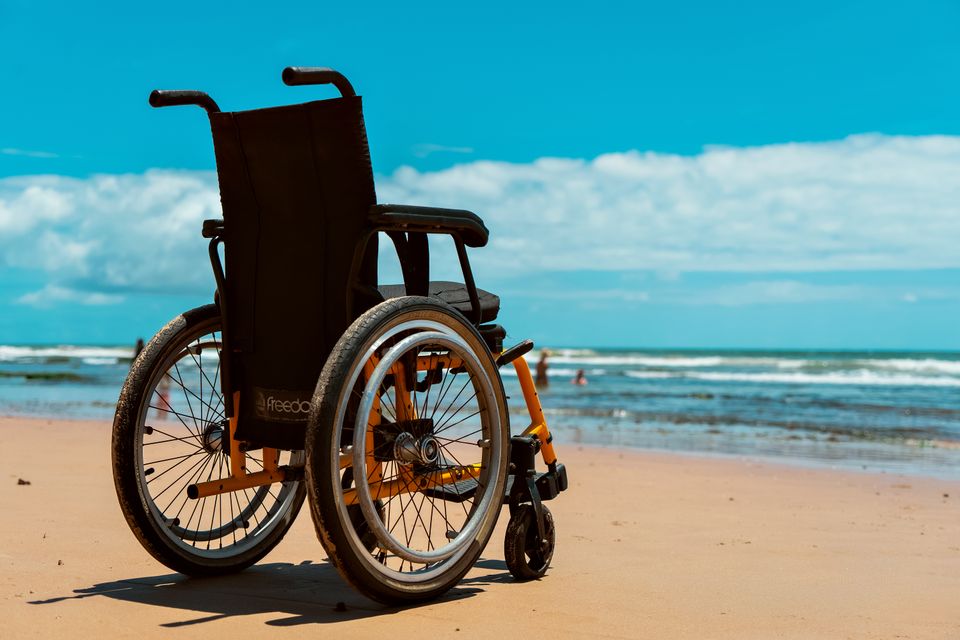
Accessible-beach pages on tourism websites tend to list a single feature, usually a ramp or a transfer wheelchair. That is not the whole story. A beach can have a ramp and still be impossible to use without companion help if parking is far, the boardwalk ends in soft sand or the supervised swim zone moves every season.
This guide is what to verify before booking. The four items that really decide the day are parking distance, the path to the water, transfer equipment availability and supervised swimming. Everything else, including the photo, is secondary.
- A ramp alone is not enough: the path from parking to water has to be continuous.
- Transfer wheelchairs (tiralo, hippocampe) need to be reserved in advance at most beaches.
- Supervised swim zones are usually the only place where a transfer chair can enter the water safely.
- Public parking distance is the single biggest predictor of how the day actually goes.
What 'accessible' really has to mean
An accessible beach in practice is one where a wheelchair user can leave the car, reach a shaded resting area, change, transfer if they want to swim, enter the water under supervision, and return without depending on bystanders. Anything missing in that chain breaks the visit.
The European Network for Accessible Tourism uses a similar framework: continuous accessible path, accessible toilets and showers, equipment for water entry, trained staff and clear information posted before arrival.
- Parking: marked accessible spaces close enough that the path is realistic.
- Path: continuous to the waterline, ideally a beach mat or boardwalk.
- Equipment: floating transfer chair, sometimes called tiralo or hippocampe.
- Supervision: a posted lifeguard period and a defined entry zone.

Where the right beaches are most common
France, Spain and Portugal publish lists of beaches certified for accessibility, often grouped by region. In France the 'Tourisme et Handicap' label is a useful filter; in Spain the regional tourism boards (Andalucia, Catalonia, Balearic Islands) maintain catalogs; Portugal's 'Praia Acessivel' program is a similar baseline.
These labels are starting points, not guarantees. A certified beach can still have summer-only equipment, restricted hours or maintenance issues. Call ahead for the specific date you intend to visit when the day matters.
Equipment to reserve in advance
Most beaches that announce a transfer chair only have one or two units. They are loaned during lifeguard hours and often need a same-day reservation. If you arrive without booking, you can be stuck waiting or unable to enter the water.
Different equipment names cover similar ideas: tiralo, hippocampe, mobi-chair, sand wheelchair, beach wheelchair. Most are fine on hard packed sand but limited on soft dunes, so pair the equipment with a beach mat where available.
Travel planning that actually helps
Travelers planning Europe trips with accessibility in mind succeed when they pre-select two or three candidate beaches per stop, confirm equipment by phone, and arrive within the first hour of supervised hours. They also build slack into the schedule because nothing about accessibility tolerates last-minute pivots well.
BeachFinder pairs accessibility flags with the live signals that change a day quickly: water quality flags, weather, wind on hot days. A beach with great access and a current closure is the same as no beach at all.
Before you go
- Confirm parking distance, not just whether parking exists.
- Reserve any beach wheelchair the day before, not the morning of.
- Verify supervised swim hours match your arrival window.
- Check toilets and showers, not just the path to the water.
- Save a backup beach in the same accessibility tier in case of closure.
FAQ
Is a beach with a ramp automatically accessible?
Not really. A ramp helps but the trip also depends on parking distance, the path past the ramp, transfer equipment, and whether the area where you can actually go in the water is supervised.
How do I find beach wheelchair availability before traveling?
Most certified beaches publish a phone number for the lifeguard station or the municipal tourism office. Call once to confirm the equipment, the booking process, and the supervised hours that match your visit.
Are accessible beaches the same in summer and off-season?
Often no. Equipment, beach mats and lifeguard supervision usually exist only during posted summer dates. Outside that window the same beach can become hard or impossible to use.
Use BeachFinder to check today's spot.
Use your location, search any city worldwide or explore the map to compare the 20 most relevant beaches and swimming spots around you.
Download BeachFinder
Find beach conditions, sea temperature, wind, UV, water quality, and nearby swimming spots before you go.
These beach pages connect the guide advice with real spot details: sea temperature, wind, UV index, waves, access and photos when available.
Praia de Quarteira
PT
Playa de la Mata Negra
PT
Praia do Carvalho
PT
Ondarreta
ES
Plage Rive Gauche
FR
Plage de la Dalle
FR
Plage de Saint-Jean
FR
La Luna-Royale Beach
ES
Playa del Regatón
ES
Praia dos Alemães
PT
Praia da Barra
PT
Platja gossos
ES
Playazo de Villaricos
ES
Playa Fluvial del Huerva
ES
Playa de Guadalmar
ES