What to do for jellyfish stings: a calm regional guide
First aid for jellyfish stings depends on the species and the sea. A practical guide for the Mediterranean, the Atlantic and tropical waters.
Most jellyfish stings are unpleasant rather than dangerous, but the right first aid is not the same in every sea. The same instinct that helps in tropical waters can make a Mediterranean sting hurt longer, and a few household reflexes that sound logical can damage the skin further.
BeachFinder pulls together photo, weather, wind direction and recent water condition signals so you can decide whether to enter the water at all when stings have been reported. If a sting still happens, the goal is simple: stop the stinging cells, control pain, watch for serious reactions and know when to call for help instead of waiting it out.
- Most stings in Europe and North America come from species whose stings are painful but not life-threatening, and respond to careful rinsing and heat.
- Vinegar helps with some tropical species but can make others worse, so the response should match the local sea, not a single internet rule.
- Fresh water, ice cubes directly on skin and rubbing the area can fire more stinging cells, even after the animal is gone.
- Severe reactions, large stings on children, stings around the face or breathing trouble are reasons to call emergency services, not to keep swimming.
Get out of the water and remove what you can see
The first step is the simplest one: leave the water calmly. Splashing and rubbing can break more nematocysts, the microscopic stinging cells stuck to the skin. Walk out, sit down and look at the area in good light before doing anything else.
If you can see tentacle fragments, remove them carefully without using bare hands. A plastic card, a pair of tweezers or even the edge of a towel works. The goal is to lift the tentacle off the skin without scraping in a way that crushes more cells. After that, rinse the area with seawater, never fresh water, because fresh water changes the salt balance and triggers more stings.
- Walk, do not run or rub. Friction can fire dormant stinging cells.
- Use a card or tweezers to lift visible tentacle, not your fingers.
- Rinse with seawater while you decide on the next step. Avoid fresh water in the first minutes.
Mediterranean and Atlantic Europe: heat usually helps
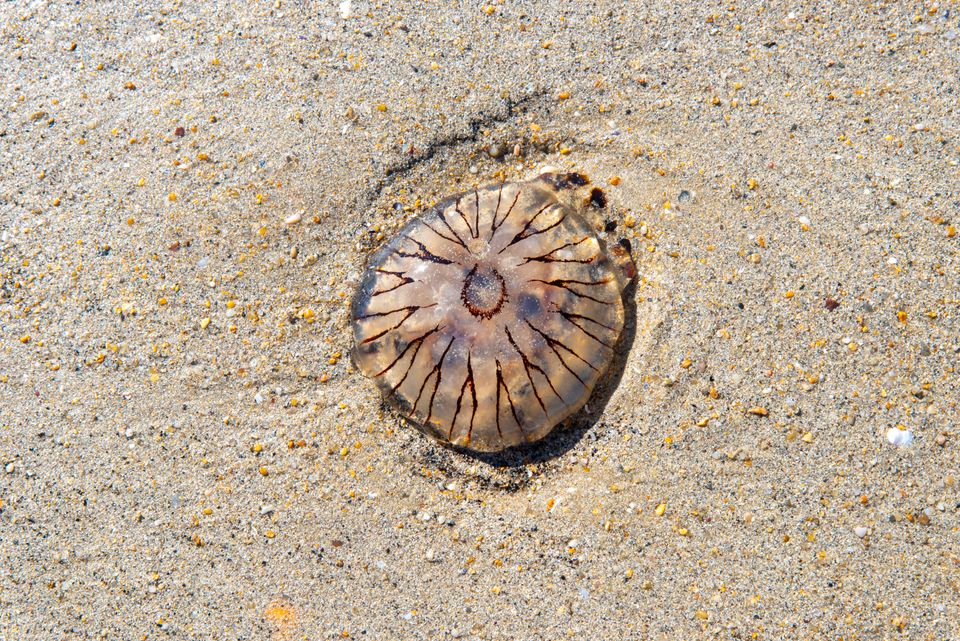
In the Mediterranean and the European Atlantic, the most common stinging species are mauve stinger (Pelagia noctiluca), compass jellyfish, barrel jellyfish and occasionally Portuguese man o war along Atlantic-facing coasts. The NHS guidance for these waters focuses on rinsing with seawater, removing visible tentacles and applying heat rather than ice, because heat helps deactivate the venom proteins.
Hot water around 40 to 45 C, applied via a clean container or shower for 20 to 40 minutes, is the most reliable pain control after the area is clean. If hot water is not available, a heat pack can help. Cold packs and ice cubes feel intuitive but can prolong the pain in these species, and direct ice on broken skin is its own problem.
Tropical waters: vinegar before everything else
In tropical and subtropical destinations such as northern Australia, parts of Southeast Asia, the Indian Ocean and parts of the Pacific, box jellyfish and Irukandji can produce serious envenomations. Local health authorities in Australia and the Pacific recommend pouring household vinegar over the sting for at least 30 seconds before doing anything else, because vinegar deactivates the unfired stinging cells of these species.
The reason it is not a global rule is that vinegar can worsen stings from some other species, particularly Portuguese man o war in the Atlantic. So the right answer depends on where you are. If you travel between very different seas, check the official local advice for the destination instead of carrying a single recipe in your head.
- Tropical Australia and similar waters: pour vinegar generously, wait, then remove tentacles.
- Atlantic and Mediterranean: heat after seawater rinse usually works better.
- When unsure, follow the official local emergency or health authority for that coast.
Things to avoid that sound like they should help
Several home remedies survive online despite being unhelpful or harmful. Urine is one of the most famous and one of the least useful: it does not reliably deactivate venom and adds bacteria and salt at the wrong concentration. Alcohol, ammonia and aftershave are similar. They feel active but can fire more cells.
Wrapping the area in tight bandages or pressure dressings is also outdated for jellyfish. The Divers Alert Network and modern first aid courses emphasize calm decontamination and pain control instead. Once the sting is clean and the pain is being managed, simple painkillers and a cool resting place often complete the response.
- Skip urine, alcohol and ammonia.
- Skip pressure bandages for jellyfish.
- Use simple painkillers and rest after the area is decontaminated.
When to call for help, not wait it out
Most jellyfish stings are uncomfortable for a few hours and a faint mark for a few days. But there are situations where the right reaction is not waiting on the towel. Difficulty breathing, swelling of the face or tongue, irregular heartbeat, severe abdominal pain, fainting, very large surface area, stings around the eyes or in the mouth and stings in young children all justify calling local emergency services or going to the nearest clinic.
Use BeachFinder to compare the photo, map, weather, UV, water temperature, wind, waves, currents, water quality where available, amenities, stays and activities before committing to the trip.
- Trouble breathing, swelling of the face or signs of allergic reaction: emergency call.
- Stings on the face or eyes: medical evaluation, even if pain is mild.
- Symptoms beyond the local skin: chest pain, cramps or vomiting are not normal.
Before you go
- Leave the water calmly and look at the area in good light.
- Lift visible tentacle with a card or tweezers, not bare fingers.
- Rinse with seawater, not fresh water, in the first minutes.
- Apply heat for European stings, vinegar for tropical Australian-style waters.
- Watch for breathing trouble, facial swelling or stings in children, and call for help if anything looks beyond a normal sting.
FAQ
Is vinegar always the right answer for jellyfish stings?
No. Vinegar is the recommended first response for tropical box jellyfish and similar species in places like northern Australia, but it can make Atlantic Portuguese man o war stings worse. In the Mediterranean and most of Europe, hot water after a seawater rinse is usually a better default. Match the response to the local sea.
Can I keep swimming after a small sting?
It depends. A small mauve stinger sting on a healthy adult often calms within an hour, but going back into water with active blooms increases the risk of repeat stings. If lifeguards have flagged the beach, take the warning as a planning signal and use the day for a coastal walk, a calmer beach or a backup spot.
When should I see a doctor after a jellyfish sting?
See a doctor or call emergency services if there is swelling of the face or tongue, breathing trouble, fainting, irregular heartbeat, severe pain that does not improve, large body coverage, stings on the eyes or mouth, or any sting on a small child. Travel insurance and clinic information are easier to find before you need them.
Use BeachFinder to check today's spot.
Use your location, search any city worldwide or explore the map to compare the 20 most relevant beaches and swimming spots around you.
Download BeachFinder
Find beach conditions, sea temperature, wind, UV, water quality, and nearby swimming spots before you go.
These beach pages connect the guide advice with real spot details: sea temperature, wind, UV index, waves, access and photos when available.
Praia de Quarteira
PT
Playa de la Mata Negra
PT
Praia do Carvalho
PT
Ondarreta
ES
Plage Rive Gauche
FR
Plage de la Dalle
FR
Plage de Saint-Jean
FR
Playa del Regatón
ES
Praia dos Alemães
PT
Praia da Barra
PT
Platja gossos
ES
Playazo de Villaricos
ES
Playa Fluvial del Huerva
ES
Playa de Guadalmar
ES
la Caleta
ES