
How to find quiet beaches that are actually good for napping
A practical guide to choosing low-noise, low-crowd beaches for an actual nap: orientation, parking distance, weekday vs weekend timing and the season window.
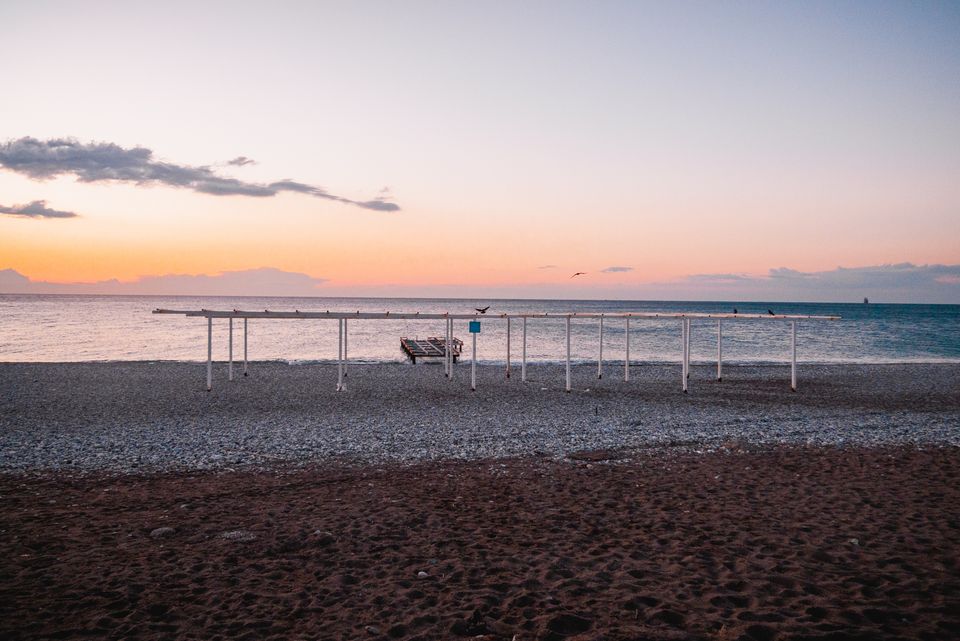
A quiet beach is not a beach with no people. It is a beach where the sound of the water is louder than the people. That is the only useful definition for someone who wants to actually fall asleep on the sand for an hour, read without earbuds, or recover from a hot drive without negotiating with a speaker behind their head.
Most beaches called peaceful in marketing are simply photographed early. The same cove can be a calm reading spot at nine in the morning and a busy snack-bar terrace by half past one. Use this guide to read the signals that actually predict noise: orientation, parking distance, wind, the day of the week and where you sit in the season window.
- Orientation and shape decide noise more than fame: enclosed bays trap sound while long open beaches dilute it.
- Parking distance is the single best filter: every extra ten minutes of walking removes the loudest visitors first.
- A weekday beach behaves like a different beach than the same spot on Saturday afternoon.
- The first or last week of the swim season is usually quieter than the middle, even at famous spots.
Orientation and shape decide most of the noise
Sound carries differently on different beaches. A small enclosed cove with cliffs on three sides will trap and amplify a single radio. A long, open beach with steady onshore wind will dilute the same radio into the background after twenty meters. The map tells you most of this before you leave.
Look at the satellite view: how wide is the strip of sand, is the beach surrounded by parking and apartments, are there cafes opening directly onto it, is there a promenade running along the back, are there cliffs that block sound from escaping. A beach that opens onto a large open landscape behind it is almost always quieter than the same length of sand wedged against a building line.
- Wider, longer beaches dilute crowd noise and let you sit far from the cluster.
- Beaches without a back-of-beach cafe terrace tend to be quieter, even when they are busy.
- Avoid coves directly under a road or restaurant terrace if napping is the goal.
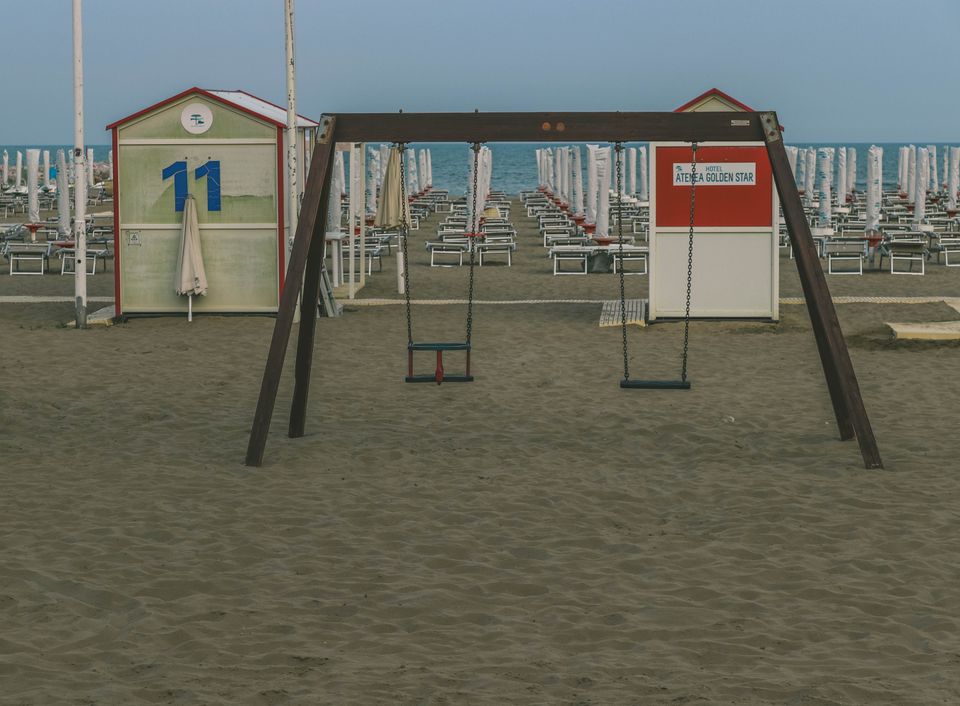
Parking distance is the best quiet filter
The mathematics of beach access is simple: every extra five minutes of walking with bags filters out the loudest type of visitor first. People who came specifically to set up a long, social afternoon usually want short carry distances, and they cluster within two minutes of the parking lot. The visitors who walk fifteen minutes from a small lot are statistically quieter, fewer in number and have already self-selected for the kind of trip you want.
This is why parking-rich beaches near restaurants are loud even on weekdays, and why a slightly less photogenic beach a fifteen-minute walk from a small dirt lot can be the right choice for a real nap.
Weekday and weekend are not the same beach
A beach that is calm on a Tuesday at eleven can be unrecognizable on a Saturday at three. Locals know this intuitively, but travelers underestimate it because they see the photo, not the schedule. If your trip allows it, planning a quiet beach for Tuesday through Thursday is one of the highest-value choices you can make.
If you can only go on a weekend, shift the window. Arriving by eight or nine, leaving before noon, or coming after six in the evening avoids the central part of the day when family groups, day-trippers and music are concentrated. The water is the same temperature; the soundscape is not.
- Tuesday through Thursday, mid-morning, are the quietest realistic windows in summer.
- Saturday and Sunday afternoons are the loudest at almost every accessible beach in Europe.
- Sunday morning before the family lunch wave is often the second-quietest weekend window.
The season window changes everything
A beach in late June behaves very differently from the same beach in mid-August. The first two weeks of the swimming season and the last two weeks before schools resume are usually quieter, the water is often acceptable, and the parking pressure is half. If your goal is rest rather than peak warmth, that off-peak band is where the math works in your favor.
The reverse is also true: school-holiday weekends in July and August can turn even hidden coves into busy spots because everyone is hunting the same hidden coves at the same time. A second-tier beach during a peak weekend often beats a first-tier beach during the same weekend.
- Late June and early September are usually quieter at equal weather quality.
- The 14 July and 15 August weekends are the loudest in France; equivalent dates apply in Italy, Spain and Greece.
- Off-season shoulder weeks reward early arrivals less because the crowd never really arrives.
Use the map to score noise before driving
Before you commit to the drive, run a fast checklist on the map: how many parking spots are visible, is there a cafe directly behind the beach, is there a road right above it, is the beach a small cove or a long open shore, are there several access points or just one. A beach with one narrow access path, no cafe immediately behind it and a small lot is usually the quiet option even when its photos look identical to the noisy neighbour.
The corner of the beach you choose matters as much as the beach itself. The far end from the main access path is almost always quieter than the centre, even on the busiest days, because most visitors do not walk further than they have to. A two-minute extra walk along the sand can move you from the social part of the beach to the reading part of the same beach, with no extra driving.
Use BeachFinder to compare the photo, map, weather, UV, water temperature, wind, waves, currents, water quality where available, amenities, stays and activities before committing to the trip.
Before you go
- Open the satellite map and check the beach width, cafes behind it and parking size.
- Plan a Tuesday-to-Thursday visit when possible, otherwise an early-morning weekend window.
- Choose the beach with the longer walk from parking when napping matters.
- Avoid the famous holiday weekends and aim for the first or last week of the season.
- Save one quieter backup spot in case the first one has gained a beach bar this year.
FAQ
What kind of beach is actually good for sleeping on?
A long open beach with onshore wind, no cafe directly behind it and a fifteen-minute walk from the parking is almost always quieter than a famous cove with a small lot and a back-of-beach restaurant. The wind dilutes voices and the walk filters out the loudest visitors before they get there.
Are hidden coves quieter than long beaches?
Sometimes, but they are also amplifiers. A small cove with cliffs around it traps every sound. If you hit it on a quiet Tuesday it can be perfect; on a busy Saturday the same cove can be the loudest beach in the area. Read the day, not just the place.
Why does the season matter so much for noise?
Beach noise scales with crowd density, and crowd density scales with school holidays and weekend timing. A famous beach in mid-September can be quieter than a hidden cove on a 15 August Saturday. Pair the destination with the date, not just the photo.
Use BeachFinder to check today's spot.
Use your location, search any city worldwide or explore the map to compare the 20 most relevant beaches and swimming spots around you.
Download BeachFinder
Find beach conditions, sea temperature, wind, UV, water quality, and nearby swimming spots before you go.
These beach pages connect the guide advice with real spot details: sea temperature, wind, UV index, waves, access and photos when available.
Beach Baia Blu
IT
Plage Gazagnaire
IT
Ondarreta
ES
Plage Rive Gauche
FR
Hakuna Matata Beach
IT
Plage de la Dalle
FR
Sunset Beach Club Palinuro
IT
La Luna-Royale Beach
ES
Plage de Saint-Jean
FR
Playa del Regatón
ES
Platja gossos
ES
Playazo de Villaricos
ES
Playa Fluvial del Huerva
ES
Playa de Guadalmar
ES
la Caleta
ES