
Mediterranean city beaches you can reach by metro, train or bus
Beaches reachable by public transport from Nice, Barcelona, Naples, Athens, Marseille and Tel Aviv, with line numbers, walk distance and what each spot is actually good for.
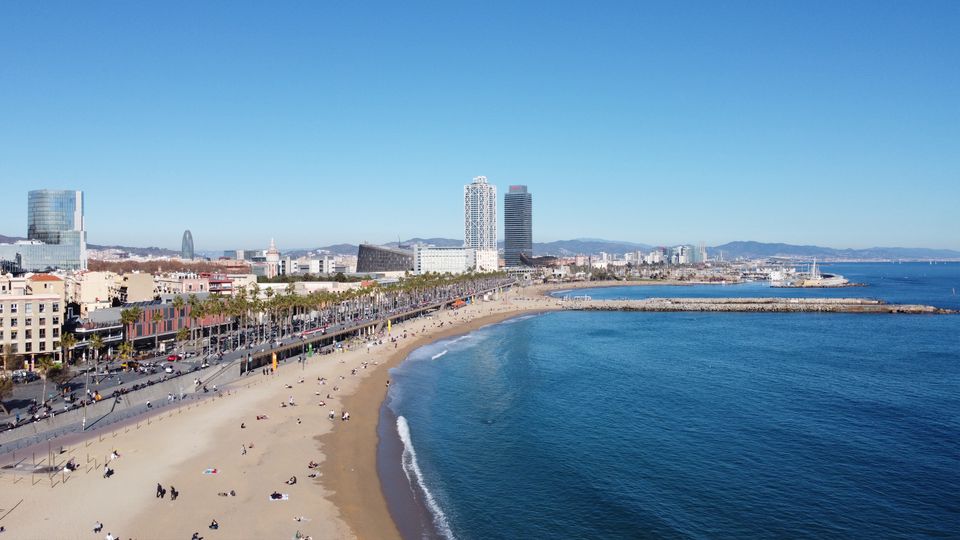
Renting a car in a Mediterranean city for a single beach afternoon is often the worst decision of the trip. Parking is expensive, traffic on the coastal road is unpredictable, and the time you save on the highway you lose looking for a spot. In Nice, Barcelona, Naples, Athens, Marseille or Tel Aviv, the metro, tram, regional train or city bus will usually drop you closer to the sand than any rental car you could find.
This guide covers what is realistic by public transport. Not the prettiest beach in the region, but the beach you can actually reach with a transit ticket and one short walk. Use it the way locals use the network: pick the line, then pick the beach at the end of it, then check the conditions before leaving.
- Most Mediterranean cities have at least one swimmable beach within a thirty-minute transit ride.
- Tram and metro connections to the coast are usually faster than driving on summer weekends.
- Regional trains add another tier of beaches that are still cheap day-trips without a car.
- Always check the line schedule for the return: the morning is easy, the evening can be the friction.
Nice: the tram and Lignes d'Azur reach almost everything
The Promenade des Anglais and the central beaches in Nice are walkable from Place Massena and the train station. For variety, the Lignes d'Azur bus network reaches Villefranche-sur-Mer, Cap Ferrat and the small coves between them within twenty to forty minutes, and the regional TER train continues east to Beaulieu, Eze-sur-Mer and Cap d'Ail. None of these require a car.
Nice is unusual because the regional train follows the cliff almost the entire way to the Italian border. If a particular cove is too crowded, the next station gives you another shot ten minutes later. Buy a return ticket, pick a station and let the line decide the beach.
- Central Nice beaches: walkable from Massena or the Promenade tram stop.
- Villefranche-sur-Mer: bus 100 or TER train, sandy bay, easy entry.
- Eze-sur-Mer: TER station, small pebble beach, dramatic views.
- Cap d'Ail: TER station, longer beach, easier for families.

Barcelona: metro and rodalies cover the full coastline
From central Barcelona, the L4 metro line to Barceloneta or Ciutadella-Vila Olimpica gets you to the city beaches in under fifteen minutes from Plaza Catalunya. For something quieter, the R1 rodalies regional train heads north along the Maresme coast to Premia de Mar, Vilassar, Mataro and Caldes d'Estrac, with stations a few minutes' walk from real swimming beaches.
Heading south, the R2 line reaches Castelldefels, Gava and Sitges, where the beaches are wider and the crowd is more local than tourist. The trip to Sitges takes around forty minutes and is one of the best half-day escapes the city offers, with a return train every fifteen to twenty minutes through the evening.
Naples: trains and ferries beat the bus on hot days
Naples has the toughest public-transport-to-beach mix on this list because the city beaches are limited and the best swimming is on the islands or the southern Sorrento coast. The Cumana train line goes west to Bagnoli and Pozzuoli, where the beaches are mixed but reachable; the Circumvesuviana line heads south to Sorrento, with stops at Castellammare and Vico Equense for swims.
The fastest way to a real beach day from Naples is the hydrofoil from Beverello to Procida or Ischia, which is technically a ferry, not a transit ticket, but is part of the same logic: leave the car behind, take the boat, swim, return in the evening. Schedules tighten in late afternoon, so the return trip is the part you check first.
- Cumana to Pozzuoli: city escape, mixed beaches, easy return.
- Circumvesuviana to Vico Equense: real swimming, scenic ride.
- Hydrofoil to Procida: small island, calmer than Capri, full beach day.
Athens: tram and metro to the Athenian Riviera
From the Athens tram, the southern coast is genuinely accessible. Lines run from central Athens to Glyfada, Voula and Vouliagmeni in roughly forty to sixty minutes, with stops near several organized beaches and the rocky coves around Kavouri. The metro to Faliro plus a short bus or walk also opens up Edem and Asteria.
The OASA bus network covers the gaps the tram does not reach, including beaches further south toward Cape Sounion. The travel time stretches to ninety minutes for Sounion, but the beach pages with conditions help you decide whether the longer ride is worth it on the day.
- Tram to Glyfada: clean beaches, restaurants, easy return.
- Tram to Vouliagmeni: deeper water, cleaner sand, family friendly.
- Bus to Sounion area: longer trip, classic temple, fewer crowds.
Marseille and Tel Aviv: trams and metros to real beaches
Marseille's RTM bus 19 from the Vieux-Port runs along the Corniche to the Catalans and the Prado beaches, dropping you a few minutes from the sand. For the Calanques, the seasonal navette and the bus 21 toward Luminy followed by a hike replace any car-driven plan. None of this requires a rental, and on summer weekends the bus is consistently faster than driving once you factor in the parking search at the trail-head.
Tel Aviv is even simpler: most central beaches are within a fifteen-minute walk of the city. The Dan and Egged buses, plus the new light rail, extend the reach to Bat Yam in the south and Herzliya in the north. The beach decision in Tel Aviv is rarely about access; it is about which strip suits you that day, and which of them has shade or a sheltered corner when the afternoon wind picks up along the coast.
Build the day around the line, not the destination
The most reliable way to use Mediterranean public transport for a beach trip is to flip the usual order. Pick the line first, look at the stops along it, then choose the beach. A morning that starts with a metro map, a tram timetable or a regional rail schedule almost always produces a smoother day than a morning that starts with a beach name and tries to reverse-engineer the route.
This approach also makes a backup plan automatic. If the first stop is too crowded, the next station on the same line is usually a few minutes away and gives you another beach without re-doing the planning. With a day pass in hand, the cost of switching is zero, and the schedule of the network does the trip for you.
Use BeachFinder to compare the photo, map, weather, UV, water temperature, wind, waves, currents, water quality where available, amenities, stays and activities before committing to the trip.
Before you go
- Look up the local transport operator before booking the day, not after.
- Check the return schedule for the evening, not only the morning.
- Pick the line first, then the beach: it speeds up the whole decision.
- Buy a day pass when possible: it makes a backup beach realistic without extra friction.
- Confirm conditions before leaving the city; transit beaches are cheap, but wasted time still hurts.
FAQ
Is it really faster to take the metro than to drive?
On summer weekends in Nice, Barcelona, Athens and Tel Aviv, almost always yes. Coastal traffic and parking searches eat the time you would save on the highway. Naples is the exception because the best beaches are far enough that the boat or train is mandatory anyway.
Are public-transport beaches as clean as the famous ones?
Many are. Barcelona, Marseille and Tel Aviv have public health services that test city beaches frequently, and the published bathing-water dashboards are usually transparent. Always check the latest flag rather than relying on the photo.
What if the bus stops running before evening?
The risk is real on smaller routes. The fix is to look up the last departure of the line you came on before you start sunbathing, and to set an alarm if the schedule is tight. A return taxi from a bus terminus is cheaper than a missed last service.
Use BeachFinder to check today's spot.
Use your location, search any city worldwide or explore the map to compare the 20 most relevant beaches and swimming spots around you.
Download BeachFinder
Find beach conditions, sea temperature, wind, UV, water quality, and nearby swimming spots before you go.
These beach pages connect the guide advice with real spot details: sea temperature, wind, UV index, waves, access and photos when available.
Kondyli beach
GR
Petani Beach
GR
Myrtos Beach
GR
La Luna-Royale Beach
ES
Episkopi beach
GR
Ondarreta
ES
Plage Rive Gauche
FR
Plage de la Dalle
FR
Plage de Saint-Jean
FR
Plage du Métro
Tarnos - ES
Grande Blue Beach
TR
Playa del Regatón
ES
Platja gossos
ES
Playazo de Villaricos
ES
Playa Fluvial del Huerva
ES