
Photography at the beach during golden hour
Why golden hour matters at the beach, how cliffs and orientation change the window, and gear basics for clean coastal photos.
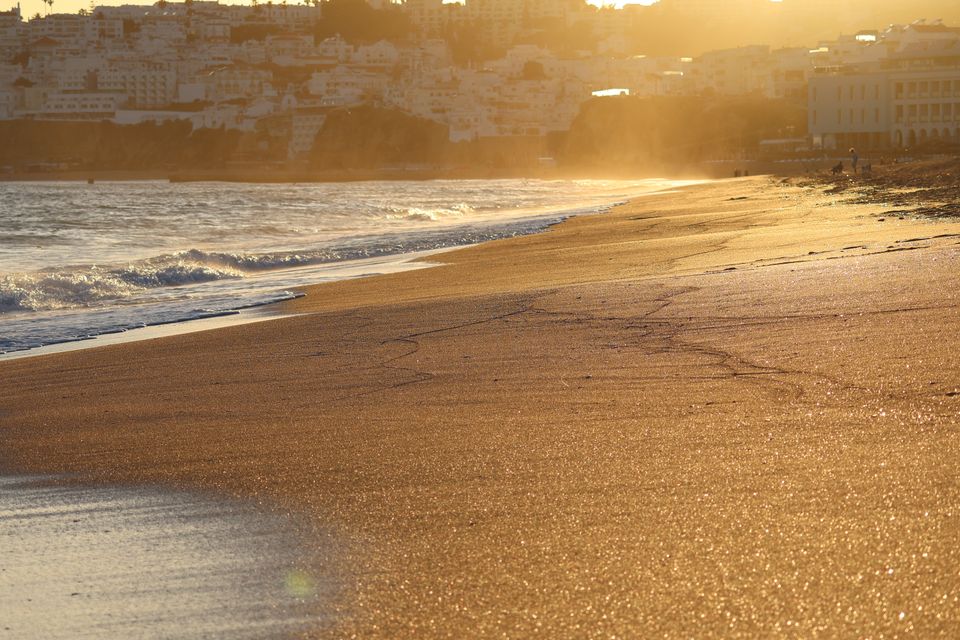
Golden hour is shorthand for the soft, warm, low-angle light that happens during the hour after sunrise and the hour before sunset. At the beach, that hour does more than make pictures pretty. It changes which parts of the scene are usable, where the contrast lives and how much detail you keep in the highlights and the shadows. A photo at noon on a bright sandy beach is fighting harsh contrast. A photo at golden hour is working with the light, not against it.
But golden hour at the beach is not always sixty minutes. A south-facing bay with high cliffs loses the sun half an hour before the official sunset because the cliffs block the low light. An east-facing beach has a gorgeous sunrise window and a shorter, harsher sunset. The orientation of the coast and the height of the surrounding terrain decide whether you have an hour of good light or fifteen minutes.
- Golden hour gives soft warm light, manageable contrast and dimensional shadows on sand and water.
- Coast orientation decides whether the beach is a sunrise beach, a sunset beach or both.
- Cliffs and headlands shorten the window by blocking low-angle sun earlier than the official time.
- Basic gear (a camera with manual control, a wide and a longer lens, a polarizer) is enough for most beach photography.
Why golden hour does what it does
Sunlight at noon comes from above, almost vertically. It flattens textures, blows out highlights on sand and water, and crushes shadows under everyone's feet. At golden hour the sun is low on the horizon. Light passes through more of the atmosphere, scatters the blue, and arrives warm and slightly diffused. Shadows lengthen, textures emerge in the sand and the water, and faces get a flattering glow.
On a beach this matters more than in the city. Sand and water are highly reflective surfaces. Midday they over-saturate the sensor and force you to underexpose, which deepens the sky and kills the shadows. Golden hour spreads exposure across a more usable range, which is why even a phone photo from the same beach an hour earlier or later looks completely different.
- Lower sun angle means longer shadows and stronger texture.
- Warmer color temperature naturally lifts skin tones and sand color.
- Less contrast means more of the scene is exposed within usable range.
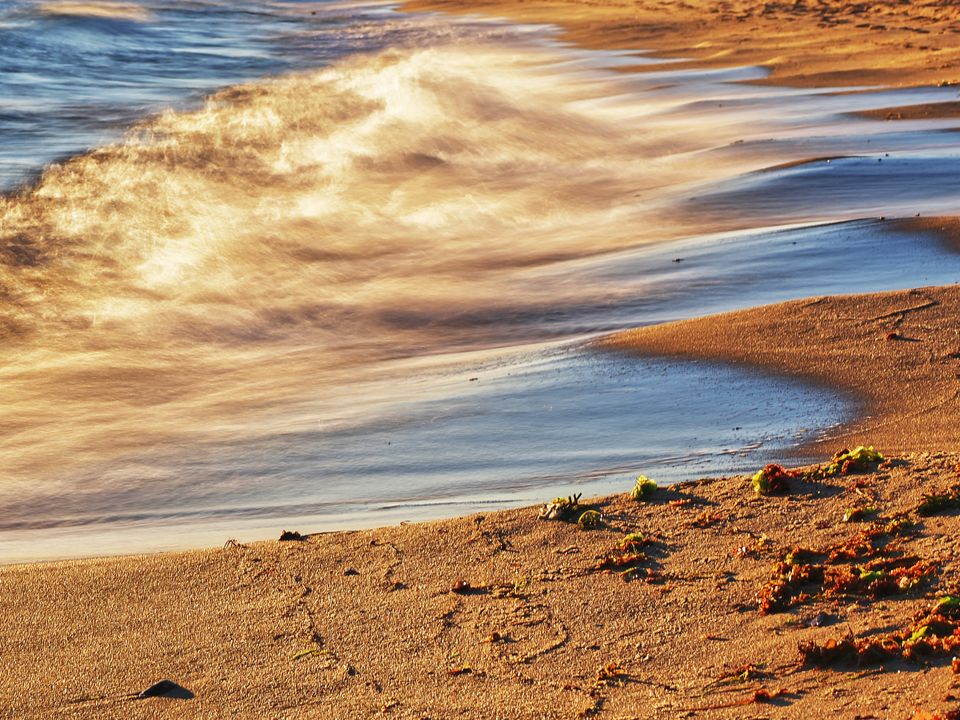
Coast orientation decides the window
An east-facing beach (most US Atlantic coast, parts of Italy's Adriatic, eastern Australia) gets the sunrise straight on. The sky behind the beach turns orange, the sun climbs over the water and the foreground stays in soft front light for an hour. The same beach loses sunset earlier because the sun is dropping behind land.
A west-facing beach (most US Pacific coast, Portugal, French Atlantic, Cornwall) is the classic sunset beach. The sun drops into the ocean, the sky changes from gold to pink, and the wet sand reflects the colors for ten to fifteen minutes after the sun is gone. North- or south-facing beaches need more thought because they get side light at both sunrise and sunset, which can be excellent for surf and silhouettes but is rarely the postcard-orange version.
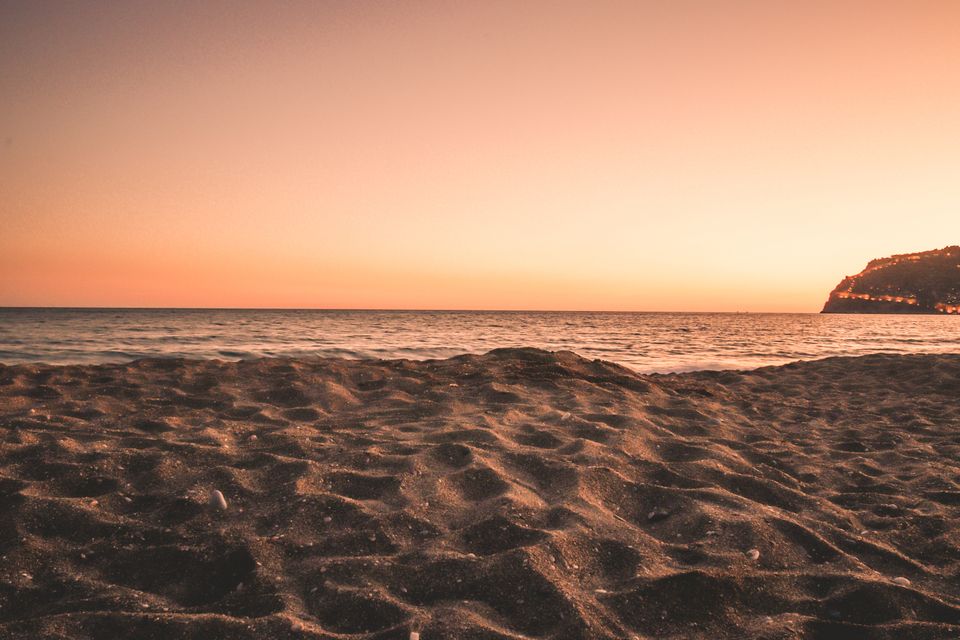
Cliffs and headlands change the math
Sunset on a beach can end before the official time. If a 60 meter cliff sits to the west of your beach, the sun will hide behind it long before it actually sets. Practical example: at Cap Ferret on the Atlantic, the sun is gone behind the dunes well before the printed sunset on a smartphone app. The wet sand still glows, but the strong direct light is over.
Walk the beach earlier in the day to scout where the light will land in the evening. Plan to be in position fifteen minutes before the practical sunset on that beach, not the official one. BeachFinder shows the orientation of the coast, the cliff height and surrounding terrain, which makes pre-trip planning easier.
- Cliffs to the west shorten sunset; cliffs to the east shorten sunrise.
- A long sandy beach with no cliffs gives the longest usable golden hour.
- Coves and bays often face two directions at once, so part of the bay loses the sun earlier than the other.
Gear basics that actually matter
You do not need a kit truck for beach photography. A modern mirrorless camera, a wide-angle zoom (16-35 or 14-30 equivalent) and a longer zoom (70-200 equivalent) covers nearly everything: wide landscapes, foreground details, distant surf and portraits. A phone in pro mode handles the same scenes when light is good, with limits in low contrast and at long zoom.
Two accessories pay for themselves. A circular polarizer cuts glare on water, deepens the blue of the sky and brings detail back to wet rocks. A small travel tripod helps with low-light sunrise or after-sunset shots when shutter speed drops below what handheld can hold steady. Sensors and lenses do not love sand or salt spray, so a microfiber cloth and a sealed camera bag are not optional.
- Wide lens for landscape, medium telephoto for surf and portraits.
- Polarizer for water, a tripod for low-light, a microfiber for the inevitable spray.
- A second battery for cold conditions, which drain charge faster than warm ones.
Composition and timing on the beach
Three composition habits help most beach photos. Use a strong foreground (driftwood, a tide pool, footprints in wet sand) to anchor the wide shot. Place the horizon either on the upper third or the lower third of the frame, rarely in the middle. Watch the wave or the cloud move and shoot when the shape is best, not just when you press the button.
Sunrise, sunset and the fifteen minutes after sunset (called blue hour) all have their own character. Sunrise tends to be quieter and cleaner. Sunset is more dramatic but more crowded. Blue hour, after the sun is gone, gives the deepest blues and is the only time you can comfortably shoot a long-exposure water blur on the beach.
Before you go
- Check the coast orientation: west for sunset, east for sunrise.
- Scout the beach for cliffs or headlands that shorten the window.
- Be in position fifteen minutes before practical sunset, not official sunset.
- Carry a polarizer, a microfiber cloth and a second battery.
- Compose with foreground; place the horizon on the upper or lower third.
FAQ
How long is golden hour at the beach?
Roughly 45 to 75 minutes around sunrise and again around sunset, longer in summer at high latitudes and shorter in tropical zones. At the beach the practical window is often shorter because cliffs, dunes and inland terrain block the lowest part of the light. Plan for 30 to 45 minutes of usable light unless the beach is fully open to the horizon.
Is sunrise or sunset better for beach photography?
Sunrise tends to be quieter, cleaner and less crowded, with calmer wind on most coasts. Sunset is more dramatic and warmer in color but often busier and windier. The technical answer depends on coast orientation: a west-facing beach is built for sunset, an east-facing beach is built for sunrise. Plan around the geography rather than the personal preference.
Do I really need a polarizer at the beach?
If you shoot wet rocks, water surface, sky or cliff faces in bright light, yes. A circular polarizer cuts reflections off water, deepens blue sky and recovers detail in wet surfaces. The trade-off is that it loses about a stop of light, so it is less useful in dim conditions. For golden hour and midday beach shooting, it is one of the few accessories that genuinely changes the result.
Use BeachFinder to check today's spot.
Use your location, search any city worldwide or explore the map to compare the 20 most relevant beaches and swimming spots around you.
Download BeachFinder
Find beach conditions, sea temperature, wind, UV, water quality, and nearby swimming spots before you go.
These beach pages connect the guide advice with real spot details: sea temperature, wind, UV index, waves, access and photos when available.
Praia de Quarteira
PT
Playa de la Mata Negra
PT
Praia do Carvalho
PT
Plage Rive Gauche
FR
Plage de la Dalle
FR
Plage de Saint-Jean
FR
Praia dos Alemães
PT
Praia da Barra
PT
Plage du Lividic
FR
Lagoa de Albufeira
PT
Plage de Notre-Dame
FR
David
FR
Plage du Moulin Brûlé
FR
Praia dos Castelos
PT
Plage de La Folie Calette
FR