
How to find pet-friendly beaches in Europe
Where dogs are allowed, where they are forbidden in summer, leash rules and common-sense etiquette for European coastlines.
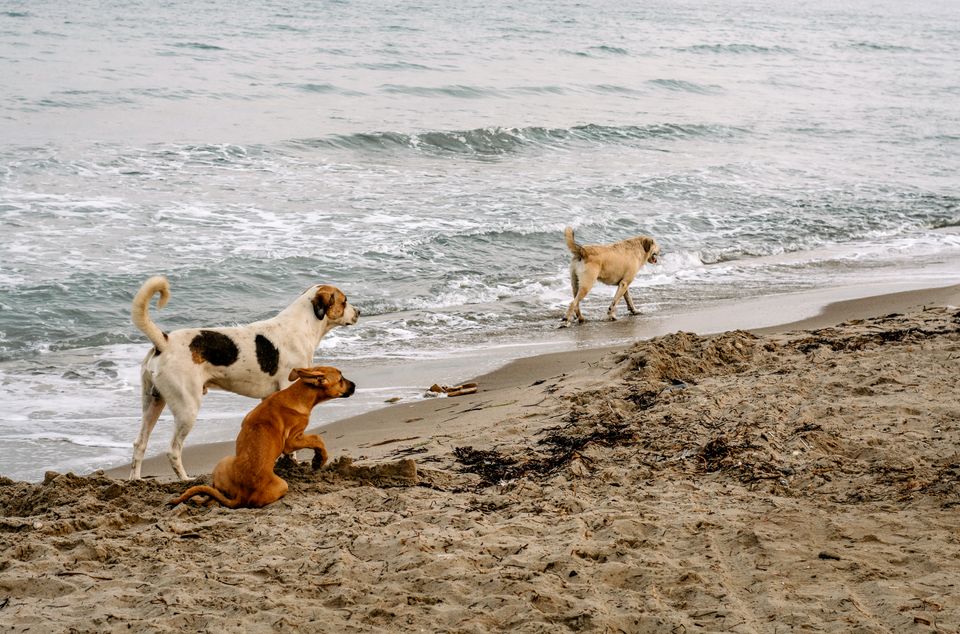
Across most of Europe, dog access on beaches is governed by municipal regulations that change with the calendar. The same beach may welcome dogs in October and post a 150-euro fine for the same dog in August. The summer high-season window, often June 15 to September 15, is when most family beaches close to dogs and when most owners get fined for assuming yesterday's rules still apply. The rules also vary by town, not by region, so a thirty-minute drive can mean the difference between a legal walk and a fine.
BeachFinder cannot replace the local town hall sign at the entrance, but it can help you start with beaches where dog access is more likely: secondary spots, off-season visits, dog-specific stretches and long beaches with multiple zones. Combine that with a quick check of the local commune or comune website and you avoid the most common mistakes. Tourism office sites usually publish a yearly dog-policy page, and a screenshot saved to your phone is more reliable than relying on a sign you may not see until you have already parked the car.
- Most European municipalities ban dogs from main bathing beaches between June 15 and September 15: assume the ban exists unless a sign confirms otherwise.
- Dog-specific beaches and unsupervised wild stretches are the realistic summer options, often shorter walks from the car than the main beach.
- Leashes are usually mandatory in town, on promenades and on most authorized beaches, including off-season visits.
- Pick up after your dog and bring water: enforcement is rare but rules tighten every year and one bad summer changes a coastal town's whole policy.
Understand the high-season ban
In France, Italy, Spain and Portugal, the most common pattern is that the central tourist beach bans dogs during the high season. In some places this is national maritime law, in many places it is a local mayor's ruling, and in a few places it is enforced by signs and seasonal patrols. The dates roughly match school holidays: late June to mid-September in most countries. Some towns extend the window to mid-June and late September, and Mediterranean tourist hotspots can keep restrictions running into early October.
Off-season, the same beach may allow leashed dogs. In autumn, winter and spring, dog walking is one of the main reasons to visit coastal towns at all. This is also the moment when off-leash beaches reappear, especially before the morning lifeguard shift and after sunset. Owners who travel year-round often plan their coastal trips around the shoulder seasons exactly because the access calendar is so much more permissive between October and May.
- France: most communal beaches ban dogs in summer, exceptions are listed on town hall signs and tourism office sites.
- Spain: each comunidad sets its own rule; popular beaches near Barcelona, Costa Brava and Costa del Sol generally ban dogs in summer.
- Italy and Portugal: central bathing beaches commonly ban dogs in summer, with dedicated playa para perros or spiaggia per cani options nearby.

Search for dog-specific beaches first
Many European coastal towns have created designated dog beaches, often a few hundred meters of sand outside the main bathing area. They tend to lack umbrellas and snack bars, but they offer legal off-leash access in summer, sometimes with water bowls, fenced agility play and waste stations. They are usually the easiest summer option for owners who want a real beach session without driving out of town.
Look for keywords: plage canine, plage chiens autorisés, playa para perros, spiaggia per cani, hondenstrand. Tourism offices publish lists, and France Tourism pages now mark dog-friendly stretches in their seaside guides. The dedicated stretches are often signposted from the parking lot but invisible from the main beach, so the first visit usually means walking ten minutes along a coastal path before reaching the actual dog zone.
Leash rules survive even on dog beaches
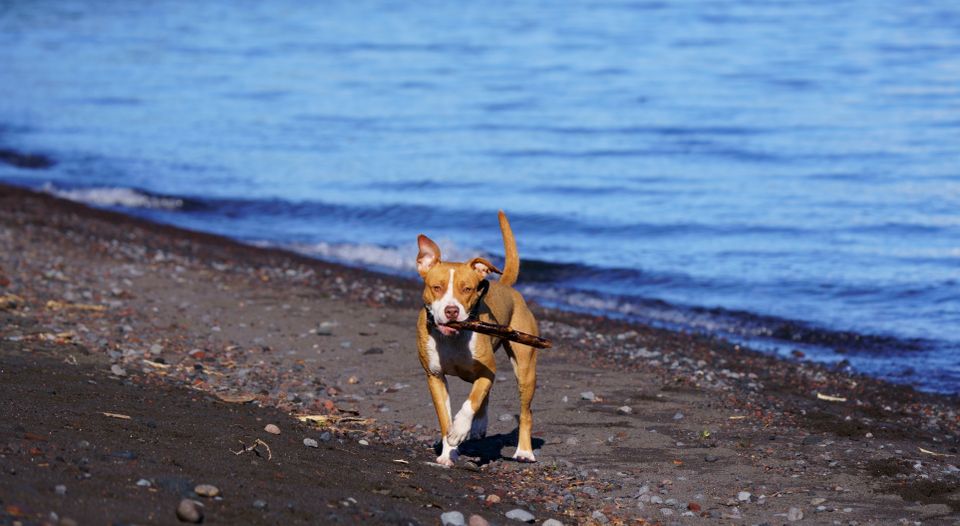
Even on authorized stretches, dogs are usually leashed when arriving and leaving. In most coastal towns, leashes are mandatory on promenades, port walks, restaurants, parking lots and any pedestrian zone leading to the beach. The off-leash zone is often only a marked sand area.
Dangerous-breed rules also apply: certain dogs (categories 1 and 2 in France, similar lists in Spain and Italy) require muzzles in public spaces. If you travel with a dog of a regulated breed, check the destination's specific rules before booking the trip.
- Keep a leash on every dog walking through town to the beach, even short distances.
- Carry waste bags and a refillable water bowl: bins are not always provided.
- Check muzzle rules for category 1 and 2 dogs, including for transport in public buses or trains.
Pick the visit window like a swim window
Even on legal dog beaches, sand temperature, UV and water temperature still matter. Sand can reach surface temperatures that burn paw pads on a hot afternoon. Strong UV and high air temperature stress dogs faster than humans, and sea water is not a hydration source. Veterinarians regularly see beach-related issues during European summers: paw burns, sea-water vomiting, heatstroke and salt-related skin irritation.
Treat the beach window like a sun window: early morning, late afternoon, shade if possible, fresh drinking water in a bottle. Many dog owners prefer winter or shoulder-season visits for exactly this reason. Brittany, the Cotentin and the Atlantic coast in October or April offer the easiest combination: low UV, mild temperature, fewer crowds and the most relaxed leash enforcement.
- Test sand surface temperature with the back of your hand: if it burns you, it burns the dog.
- Pack drinking water and a portable bowl: salt water makes dogs sick.
- Avoid midday visits in summer except for the briefest swim and exit.
Etiquette is what keeps the beaches open
The reason European dog access keeps tightening is not theoretical. It is a small share of owners not picking up waste, dogs running into bathers and dogs left tied to umbrellas in the sun. Every closed beach started with one bad summer.
Use BeachFinder to compare the photo, map, weather, UV, water temperature, wind, waves, currents, water quality where available, amenities, stays and activities before committing to the trip.
- Pick up everything, every time: this single habit explains most policy decisions.
- Recall your dog before it reaches other beachgoers, regardless of intent.
- Avoid leaving a dog tied up in the sun while you swim.
Before you go
- Check the local town hall or comune dog-policy page before driving.
- Identify a dog-specific beach as your first option in summer.
- Confirm leash and breed rules in transit and on the beach itself.
- Plan a morning or late-afternoon visit with shade and water.
- Pack waste bags and a portable water bowl every time.
FAQ
Are European beaches dog-friendly in summer?
Most main bathing beaches are not. Between mid-June and mid-September, communes across France, Spain, Italy and Portugal commonly ban dogs from supervised beaches. Plan around a dedicated dog beach, an off-the-beaten-path stretch or an off-season visit if you want reliable access.
Do I need a leash on European dog beaches?
Almost always on the way there. On the beach itself, some authorized zones permit off-leash play within marked limits, others require a leash at all times. Dangerous-breed and muzzle rules apply across the whole journey, including public transport, beach access and town promenades.
Can my dog drink seawater while swimming?
No. Salt water dehydrates dogs and can cause serious illness when swallowed in volume. Always pack fresh water and a bowl and offer breaks regularly, particularly during high UV and warm afternoons.
Use BeachFinder to check today's spot.
Use your location, search any city worldwide or explore the map to compare the 20 most relevant beaches and swimming spots around you.
Download BeachFinder
Find beach conditions, sea temperature, wind, UV, water quality, and nearby swimming spots before you go.
These beach pages connect the guide advice with real spot details: sea temperature, wind, UV index, waves, access and photos when available.
Praia de Quarteira
PT
Playa de la Mata Negra
PT
Praia do Carvalho
PT
Ondarreta
ES
Plage Rive Gauche
FR
Plage de la Dalle
FR
La Luna-Royale Beach
ES
Plage de Saint-Jean
FR
Playa del Regatón
ES
Praia dos Alemães
PT
Praia da Barra
PT
Platja gossos
ES
Playazo de Villaricos
ES
Playa Fluvial del Huerva
ES
Playa de Guadalmar
ES