
How to read tide tables before going to the beach
Tide tables look intimidating, but only three numbers actually matter for a beach day. Here is how to read them and decide your time window.
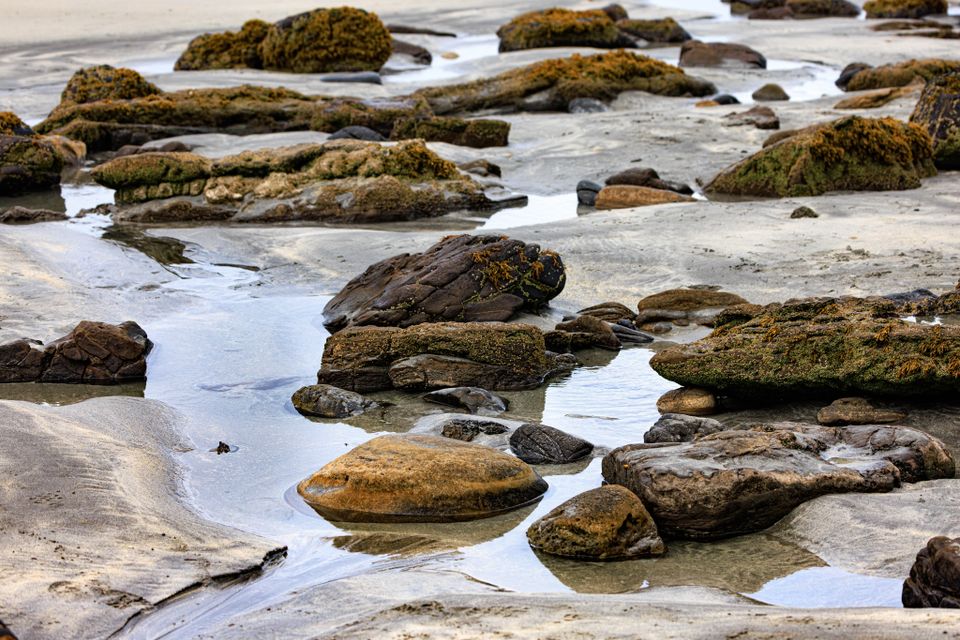
On most beach days, tides only matter for the planning window: when does the water reach the rocks, when is the sandbar exposed, when does parking become awkward because the road floods on high tide. You do not need to read a tide table like a sailor; you need to extract three things and move on.
Once you know how to read the high-tide time, the low-tide time and the tide range for the day, the rest of your decision (swim window, snorkel time, walk to a tidal pool) follows almost automatically.
- Tide tables move predictably; the day's pattern is locked in before you wake up.
- Spring tides (around full and new moon) have the largest range and the biggest beach changes.
- Low-tide times are good for tidal pools, sandbar walks and shore exploration.
- High-tide times are better for swimming on shallow, gently sloping beaches.
Three numbers per day
A tide table for a given coast lists, for each day, two high tides and two low tides with their times and the height in meters. Forget the rest. The three numbers you want are the next high-tide time, the next low-tide time, and the tide range (how far the water moves between them).
Tide range tells you whether the beach changes a lot or a little that day. A 2 meter range turns a small bay into a different place; a 0.6 meter range barely changes the picture. The same beach in the same week can swing between both, so the date matters.
- Next high tide: when the water is highest and the swimming window is widest.
- Next low tide: when the seabed is exposed for walking, snorkeling pools, photos.
- Range: high minus low, in meters, signaling how dramatic the change will be.
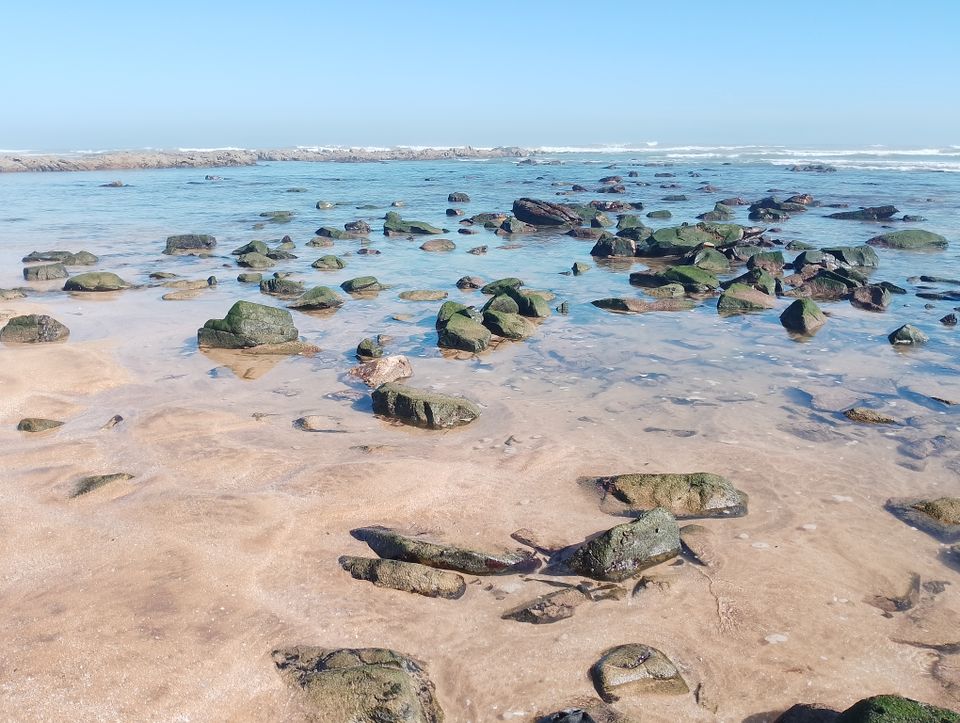
What changes on a high-range day
On spring tides (around full moon and new moon) the range can roughly double the average. Sandbars that did not exist at high tide become walkable; coves that fill up at high tide become walls of water hiding most of the beach. Family beaches that work fine at low tide can become dangerous if the only exit is a narrow path that cuts off as the tide rises.
If you are visiting an unfamiliar coast on a spring tide, plan around the tide more aggressively. Pick a beach with a continuous access road that stays open at all heights, and avoid long walks along narrow paths that the tide will eat.
Match the activity to the tide
Some activities are clearly better at one end of the cycle. Snorkeling around tidal pools and exploring rocky platforms are low-tide activities. Family swimming on a gently sloped beach is often easier near high tide because the water is closer to where you set up. Surfing depends on the spot but most coves prefer a particular tide window that locals know.
BeachFinder shows next high tide, next low tide, tide trend and current strength next to weather and wind so the activity decision is one glance, not three apps.
- Tidal pools and shore walking: aim for an hour around low tide.
- Family swimming on a gentle beach: closer to high tide is easier.
- Surfing: ask the spot, not the table; surf forecasts list the right tide.
Coastlines where tides matter most
The Atlantic coasts of France, the UK, Ireland and the Channel show the largest tides in Europe; the Mediterranean is mostly tide-free for planning purposes. Pacific coasts, parts of Asia and West Africa also have significant tidal ranges. If your beach is on the Med, you can almost ignore tides; if it is on the Manche, tides drive the day.
The same logic applies inside countries. A spot in Brittany behaves very differently than a spot in Provence on the same day, even with the same weather.
Before you go
- Pick a tide table that matches the exact coast (port name) you will visit.
- Note next high tide, next low tide and the day's range before leaving.
- Adjust the activity to the tide window, not the other way around.
- On spring tides, plan the exit path before the entry.
- Pair tide info with wind, swell and water quality for the full picture.
FAQ
Why is the tide different from one beach to another?
Tide times and ranges depend on the local coast geometry. Two beaches a few kilometers apart can have noticeably different times and ranges, especially in estuaries.
How early do I need to leave a beach before high tide?
If your exit depends on a path that floods, leave the beach before the rising tide reaches the path, not at it. On spring tides, that often means leaving an hour or more earlier than the table says.
Do tides matter in the Mediterranean?
Almost never for planning. Mediterranean tides are typically tens of centimeters, so they barely move the beach picture during the day.
Use BeachFinder to check today's spot.
Use your location, search any city worldwide or explore the map to compare the 20 most relevant beaches and swimming spots around you.
Download BeachFinder
Find beach conditions, sea temperature, wind, UV, water quality, and nearby swimming spots before you go.
These beach pages connect the guide advice with real spot details: sea temperature, wind, UV index, waves, access and photos when available.
Praia de Quarteira
PT
Playa de la Mata Negra
PT
Praia do Carvalho
PT
Plage Rive Gauche
FR
Plage de la Dalle
FR
Plage de Saint-Jean
FR
Praia dos Alemães
PT
Praia da Barra
PT
Plage du Lividic
FR
Lagoa de Albufeira
PT
Plage de Notre-Dame
FR
David
FR
Plage du Moulin Brûlé
FR
Praia dos Castelos
PT
Plage de La Folie Calette
FR