How to choose the right wetsuit thickness
Water temperature ranges by mm, when 3/2 vs 4/3 vs 5/4 matters, and when to add hood, gloves and booties.
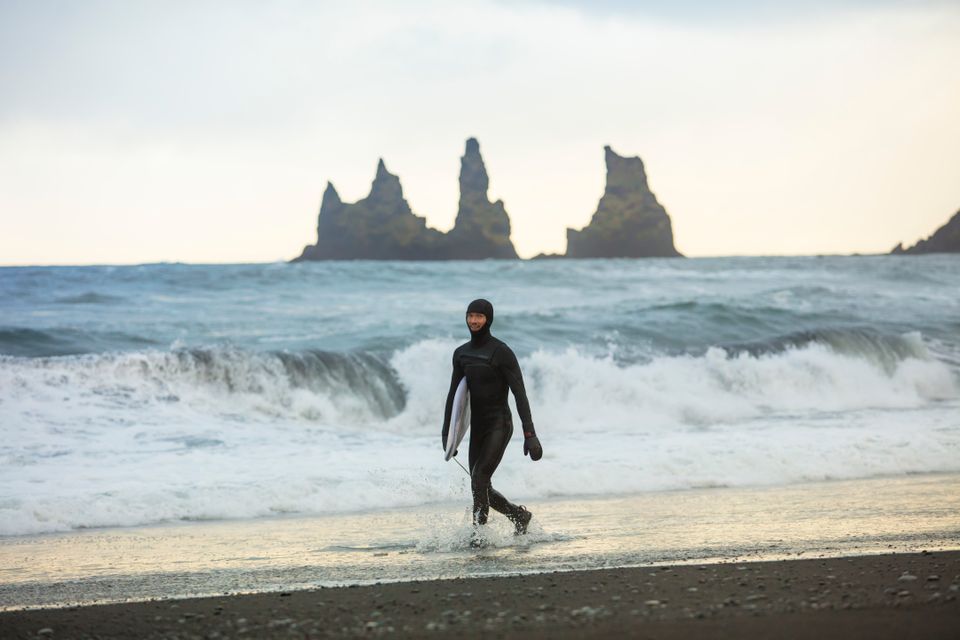
Wetsuit thickness is one of those decisions that looks complicated until you understand what the numbers mean. The first number is the thickness in millimeters around the torso. The second number is the thickness around the arms and legs. A 4/3 wetsuit is 4 mm on the body and 3 mm on the limbs. The body needs more insulation because that is where you lose the most heat. The limbs need flexibility because that is where you paddle and turn.
Choosing the right thickness is mostly about water temperature, secondarily about session length and air conditions. A 4/3 in 13 degree water can be perfect for an hour and uncomfortable for three. The same wetsuit in 18 degree water can boil you in twenty minutes. The chart below is a starting point. Test before commiting to a long session in unfamiliar water.
- Water temperature is the primary signal; air temperature only matters for warm-up and exit.
- 3/2 covers 17 to 22 C, 4/3 covers 12 to 17 C, 5/4 covers 8 to 12 C, with overlaps depending on tolerance.
- Hood becomes a comfort investment below 12 C and a safety one below 9 C; booties protect feet on rocks year-round.
- Fit matters as much as thickness; a loose 4/3 is colder than a snug 3/2.
The thickness chart, by water temperature
The most useful starting point is a water-temperature chart. Brands publish slightly different ranges, but most overlap within 1 to 2 degrees. The body of consumer surf wetsuits roughly splits into five bands: 2/2, 3/2, 4/3, 5/4 and 6/5/4 with hood. For most European and US coasts, the 3/2 and 4/3 bands cover the majority of the year.
Beyond the chart, your personal tolerance, surfing intensity and session length all matter. A surfer who paddles non-stop generates more body heat than someone who sits in the lineup. A two-hour session in 14 C water is not the same as a forty-minute session in the same water. Start from the chart, then adjust by experience.
- 22+ C: rashguard or 2 mm shorty (Mediterranean summer, Caribbean, southern California summer).
- 17 to 22 C: 3/2 full suit (most of European summer, California spring/autumn).
- 12 to 17 C: 4/3 full suit (European autumn / spring, Pacific Northwest summer).
- 8 to 12 C: 5/4 full suit, often with hood (European winter / early spring, north Atlantic).
- Below 8 C: 6/5/4 hooded suit, plus 5 mm booties and 3 to 5 mm gloves (Iceland, Scotland, Maine).
When 3/2 and 4/3 actually overlap
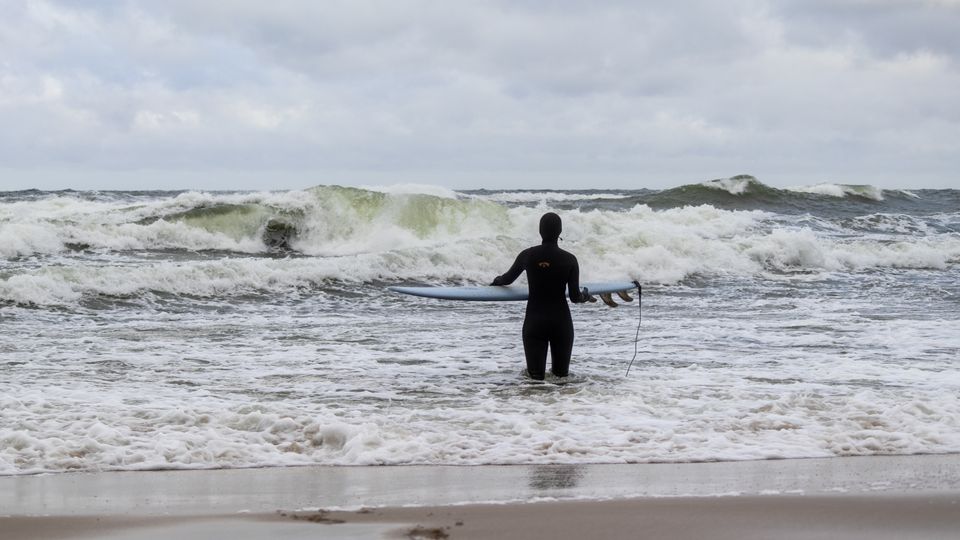
The 16 to 18 C zone is where 3/2 and 4/3 wetsuits compete. A high-end 3/2 with sealed seams and warm interior lining can outperform a budget 4/3 with old technology. A budget 3/2 with stitched seams will leak and feel colder than a quality 4/3.
Practical rule: in 16 to 18 C water, choose a 3/2 if you mostly surf shorter sessions or warmer-blooded sessions, and a 4/3 if you stay out for two hours, surf at dawn before air warms up or live with windy conditions. The 4/3 is also a better all-rounder if you can only own one wetsuit for a temperate coast.
When to add hood, gloves and booties
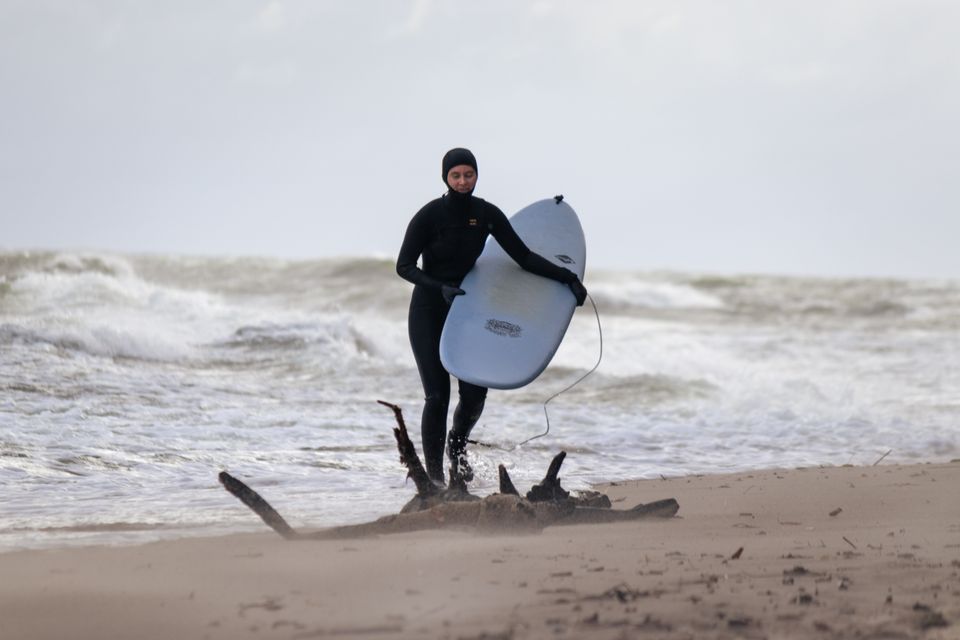
Most cold-water surfers know that the head, hands and feet drive comfort more than the torso. A 4/3 in 11 C water with a hood and booties can be warmer than a 5/4 without. Below 12 C, a hood becomes a comfort investment. Below 9 C, it becomes part of the safety chain because cold-water shock is real.
Booties are the easy upgrade. They protect feet from sharp rocks year-round, even in warm water on reef breaks. In cold seasons, they prevent the sole-of-foot freeze that ends sessions early. Gloves come last for most people, but below 8 C they are non-negotiable for sessions over thirty minutes.
- Hood: optional from 12 C, recommended below 10 C, mandatory below 8 C.
- Booties: 3 mm split-toe or round-toe for most temperate winters, 5 mm for sub-8 C.
- Gloves: 3 mm for 8 to 12 C, 5 mm or lobster claws below 8 C.
Fit beats thickness most of the time
A wetsuit warms by trapping a thin layer of water against your skin. If the suit is loose, that layer constantly flushes with cold ocean water and you freeze. If the suit is too tight, you cannot paddle and your shoulders cramp. The right fit is snug everywhere, especially at the neck, wrists, ankles and lower back.
Try the suit before buying when possible. A good wetsuit feels almost too tight on land but loosens slightly in the water. Watch the lower back and the inside of the thighs: pockets there will fill with water and add cold to the session. Brand sizing varies a lot, so the chart on the box is a guideline, not a guarantee.
- No bunching at the neck or shoulders.
- No gap at the lower back when crouching.
- Wrists and ankles snug enough to slow flushing.
- Some chest compression is normal; chest gaping is not.
Reading water temperature like a forecast
Most surf and ocean apps publish a sea surface temperature value. Treat it like a swell forecast: useful but not perfect. Bay waters, river mouths and shallow beaches can be 1 to 2 C colder or warmer than the open ocean. Upwelling around capes (Cap Ferret, Pointe de la Torche, Cape Cod) drops temperatures sharply when offshore wind blows.
BeachFinder shows water temperature alongside wind, swell and UV so you can read the full picture. If a beach is exposed to recent upwelling, expect a colder session than the regional average. If the air is warm but the water is cold, your wetsuit choice should still be made on the water, not the air.
Before you go
- Check water temperature, not air temperature, before choosing thickness.
- Round up to the warmer suit when on a borderline temperature.
- Add booties year-round on rocky or reef bottoms.
- Add hood below 10 C and gloves below 8 C for sessions over thirty minutes.
- Test fit on land: snug everywhere, no bunching, no gaping.
FAQ
Can I surf in a 3/2 in 14 degree water?
You can, but only for short sessions and probably with booties. A 3/2 is rated to roughly 17 to 22 C. At 14 C it will keep you alive but you will be cold, your paddling will tire faster and the session will end sooner than you expected. A 4/3 is the better choice. If you only have a 3/2, plan a thirty to forty minute session, not two hours.
Do I really need a hood?
Below 10 C water, yes if you stay in the water for over thirty minutes. The head loses a disproportionate amount of heat and a cold scalp shortens session length faster than cold limbs. Hooded vests are a good compromise: extra core warmth without committing to a full hooded suit. Below 8 C a built-in hood becomes the safer choice.
How long does a wetsuit last?
Two to four seasons of regular use is typical for a quality wetsuit, more if rinsed in fresh water after every session and dried out of direct sunlight. Stitches, knee panels and the lower back wear first. When the neoprene starts losing flexibility or seams begin leaking, the suit no longer insulates properly. A worn-out 4/3 is colder than a new 3/2.
Use BeachFinder to check today's spot.
Use your location, search any city worldwide or explore the map to compare the 20 most relevant beaches and swimming spots around you.
Download BeachFinder
Find beach conditions, sea temperature, wind, UV, water quality, and nearby swimming spots before you go.
These beach pages connect the guide advice with real spot details: sea temperature, wind, UV index, waves, access and photos when available.
Praia de Quarteira
PT
Playa de la Mata Negra
PT
Praia do Carvalho
PT
Plage Rive Gauche
FR
Plage de la Dalle
FR
Plage de Saint-Jean
FR
Praia dos Alemães
PT
Praia da Barra
PT
Plage du Lividic
FR
Lagoa de Albufeira
PT
Plage de Notre-Dame
FR
David
FR
Plage du Moulin Brûlé
FR
Praia dos Castelos
PT
Plage de La Folie Calette
FR