How to choose free-diving beaches with good visibility
Visibility factors for free divers: currents, river runoff, swell, seasons, depth profiles and where not to free dive.
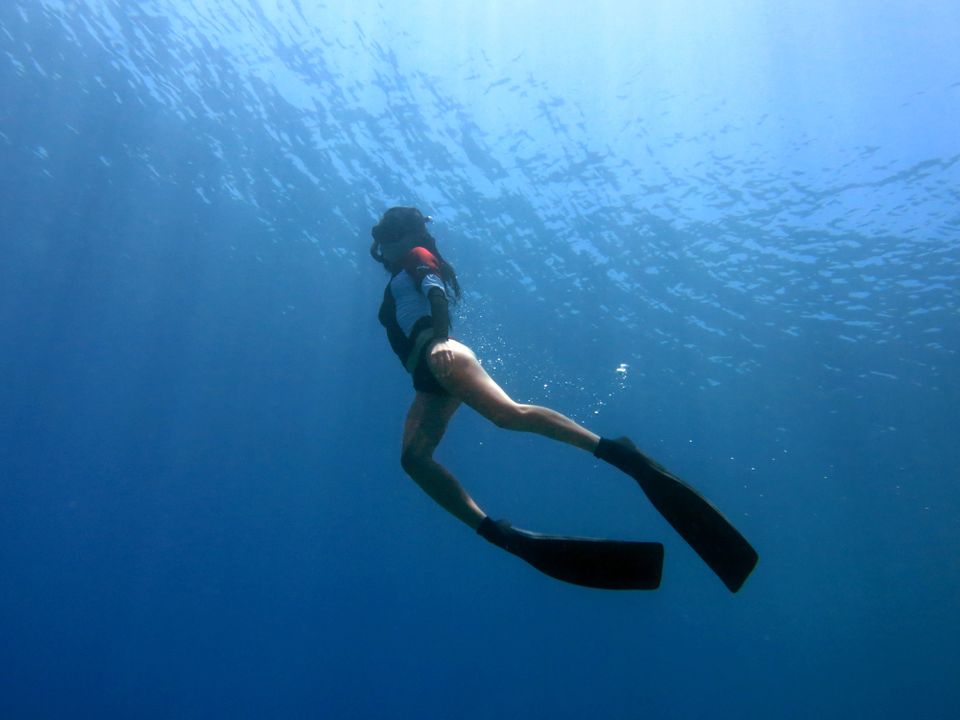
Visibility is the variable that defines a free dive. A perfect deep cove with 30 meters of visibility is one of the most striking environments in nature. The same cove three days later, after rain or swell, can drop to 3 meters and become not only disappointing but unsafe. Free divers cannot rely on a single 'good spot' the way scuba divers sometimes can with sites and tank refills. The site selection is itself part of the dive.
Visibility depends on currents, river runoff, recent swell, plankton blooms, seasonal patterns and bottom type. Some beaches are clear nearly year-round. Others swing wildly. This guide explains how to read those factors before choosing a beach, what depth profiles to look for, when seasons help and where free diving is genuinely a bad idea even on a clear day.
- Visibility is driven by currents, river outflow, recent swell, plankton blooms and bottom type.
- Sheltered rocky bays and offshore islands usually outperform exposed beach breaks for free diving.
- Mediterranean summer often gives 20 to 30 meters of visibility; Atlantic Europe rarely exceeds 15.
- Some beaches are unsafe regardless of visibility: heavy boat traffic, strong currents, no surface support.
What actually drives visibility
Visibility is the depth at which a diver can clearly see a reference object underwater. It is governed by particle suspension: sediment from the bottom, plankton, and sometimes pollutants. Calm, deep, clear water with low plankton has high visibility. Shallow water over silty or sandy bottom, after heavy swell or near a river mouth, has low visibility.
Currents matter both ways. A clean offshore current sweeping in clear oceanic water can lift a beach from 8 meters to 25 in a day. A nearshore current dragging silt or river outflow does the opposite. Watching the same bay over a week tells you more about its visibility pattern than reading a tourism brochure.
- Recent swell stirs up sand on shallow beaches and drops visibility for 24 to 72 hours.
- Heavy rain raises river runoff which can color a coastline brown for several days.
- Plankton blooms (often spring) limit visibility seasonally, even in tropical waters.
Geography that helps visibility
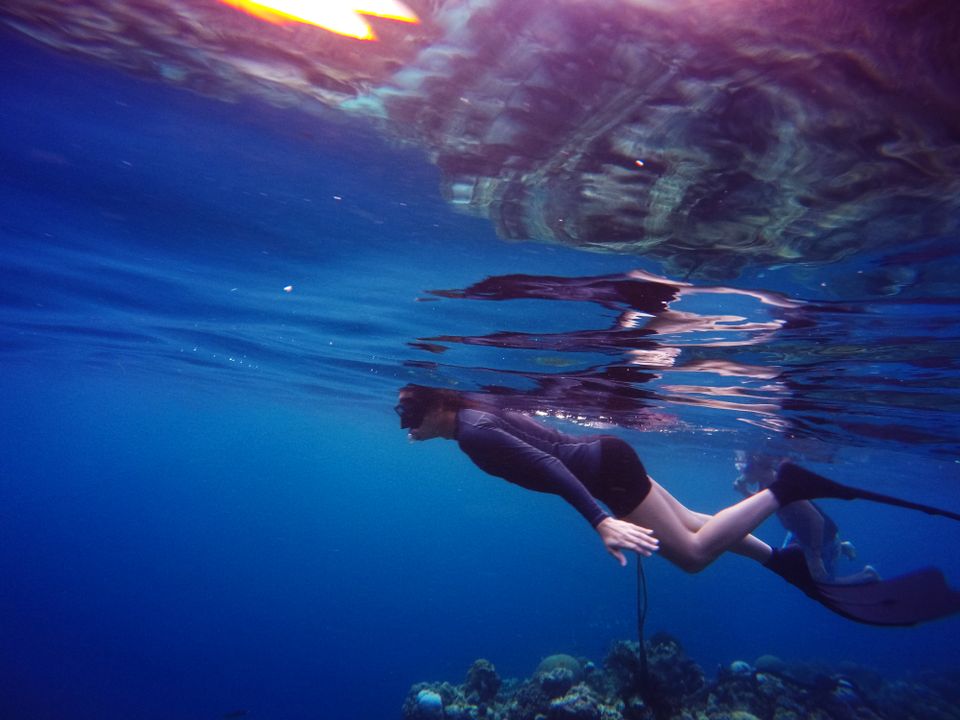
Sheltered rocky coves usually outperform open sandy beaches for free diving visibility. Rocks do not stir up like sand. Coves protect from swell. Headlands deflect long-shore currents. Offshore islands often sit in cleaner oceanic water than the mainland coast right next to them.
Mediterranean summer is famously good: Sardinia, Corsica, Croatia, Greece, the Balearic islands and parts of Sicily can deliver 25 to 30 meters of visibility for weeks at a time. Atlantic Europe is usually capped around 10 to 15 meters because the water is colder, richer in plankton and frequently stirred by swell. Tropical destinations (Caribbean, Indonesia, Egypt's Red Sea) are in their own league but come with their own seasonal patterns.
Reading the seasons
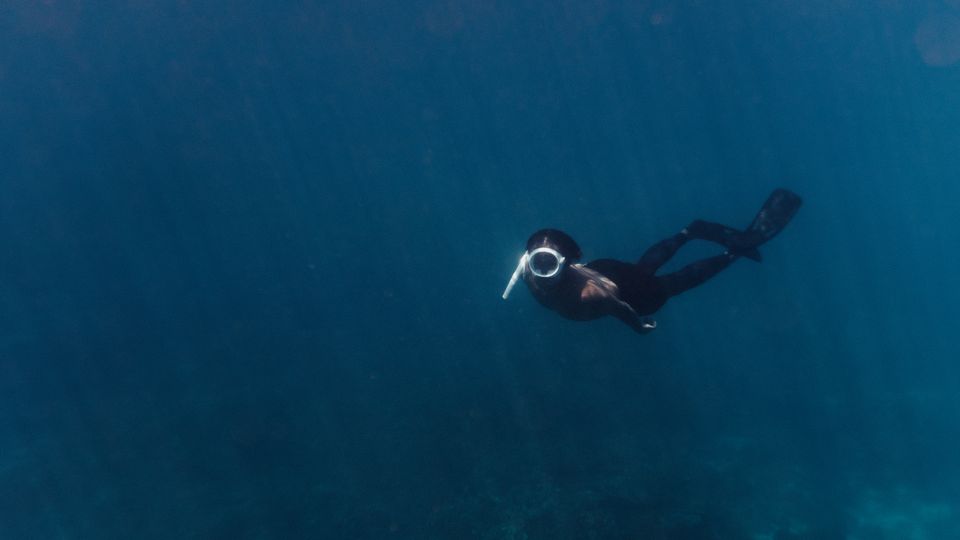
Mediterranean summer (June to September) is the visibility peak for European free divers, with calm sea, warm temperature, lower plankton and stable winds. Atlantic Europe peaks slightly later (August to early October) because the seasonal plankton bloom of spring is over and the autumn storms have not started. Tropical destinations have wet and dry seasons that affect runoff: the Caribbean is at its best in dry season (December to April), Indonesia varies by island.
Watch for plankton blooms in spring. They are biologically beneficial but optically destructive: even calm sea will look greenish and feel hazy underwater for a few weeks. Local clubs and dive schools usually know when blooms are starting and ending in their area.
- Mediterranean: peak June to September.
- Atlantic Europe: peak August to early October.
- Caribbean: peak December to April (dry season).
- Avoid spring plankton blooms and the days right after major storms.
Depth profile and bottom type
Free divers train to specific depths. The bottom under your line should drop cleanly so you can train safely without stopping early or worrying about hitting bottom mid-dive. A sheltered cove with 25 to 35 meters of bottom right off shore is ideal for line training. A 5 meter sandy lagoon, beautiful as it is, is not.
Bottom type matters too. Rocky and rocky-with-Posidonia bottoms (typical Mediterranean) maintain visibility better than sandy bottoms when stirred by waves. Coral and reef bottoms are stunning but require more navigation awareness. Avoid free diving over heavy seaweed, dense kelp or wreck sites without proper preparation and surface support.
- Look for sites where the bottom drops cleanly to your training depth.
- Rocky and Posidonia bottoms hold visibility better than fine sand.
- Avoid heavy kelp, wrecks and complex bottoms without site-specific preparation.
Where not to free dive
Some beaches are unsafe regardless of visibility. Beaches in heavy boat traffic zones (marinas, ferry routes, busy tourist coves) are dangerous because surface visibility for boats can hide a free diver coming up. Beaches with strong nearshore currents, rip currents or unpredictable surge can carry divers offshore or onto rocks.
Free diving alone is the single most preventable safety mistake. AIDA International, the main free-diving federation, considers solo free diving an unacceptable risk and trains all certifications around buddy systems and surface support. A clear cove with no buddy is a worse choice than a slightly hazier cove with a trained buddy and a surface marker buoy.
- Avoid marinas, ferry channels and high-traffic tourist coves.
- Avoid sites with strong currents or known rip patterns.
- Never free dive alone, regardless of visibility or depth.
- Use a surface marker buoy when free diving in any open-water site.
Building a free-dive trip plan
A solid free-dive trip plan stacks the odds. Pick a region known for stable summer visibility (Mediterranean islands, Red Sea, Caribbean dry season). Confirm a sheltered cove or island site. Avoid days right after storms or heavy rain. Travel with at least one trained buddy or join a local club. Book a session with a registered free-diving school for the first day to confirm conditions and orientation.
BeachFinder helps with the meta-questions: what beach orientation and amenities are nearby, where are the parking and access, what are the wind and swell patterns. The exact dive plan still belongs in the hands of certified divers and local schools, who know the day-to-day visibility and current patterns better than any tourist app.
Before you go
- Pick a sheltered cove or offshore island over an exposed beach.
- Avoid sites in heavy boat traffic and known current hotspots.
- Plan around seasonal visibility peaks; avoid spring plankton blooms.
- Confirm bottom depth and type before deciding on a training depth.
- Never free dive without a trained buddy and a surface marker buoy.
FAQ
What visibility is good for free diving?
Anything above 10 meters is workable. 15 to 20 meters is comfortable for most depth training. 25 meters and above is exceptional and is what Mediterranean summer or Caribbean dry season can deliver. Below 5 meters, visibility is rarely safe enough to free dive deep on a line. The exact threshold depends on the discipline (depth, dynamic, no-fins) and the buddy system in place.
Can I free dive after heavy rain?
It is rarely the best choice near a coastline with rivers, runoff or shallow harbors. Heavy rain often colors the water for 24 to 72 hours and reduces visibility sharply. If the chosen cove is far from any river outflow, on a rocky coast that does not stir easily, conditions can recover quickly. Otherwise, give the coast a couple of days to settle and check with a local school before heading out.
Is free diving alone safe in shallow water?
No. The main risk in free diving is shallow-water blackout, which happens at the end of a dive often near the surface. A trained buddy on the surface is the difference between a recovered diver and a fatal incident. AIDA International, the main international free-diving federation, considers solo free diving an unacceptable risk regardless of depth. Always dive with a buddy and a surface marker buoy.
Use BeachFinder to check today's spot.
Use your location, search any city worldwide or explore the map to compare the 20 most relevant beaches and swimming spots around you.
Download BeachFinder
Find beach conditions, sea temperature, wind, UV, water quality, and nearby swimming spots before you go.
These beach pages connect the guide advice with real spot details: sea temperature, wind, UV index, waves, access and photos when available.
Ondarreta
ES
Plage Rive Gauche
FR
Plage de la Dalle
FR
Plage de Saint-Jean
FR
Playa del Regatón
ES
Platja gossos
ES
Playazo de Villaricos
ES
Playa Fluvial del Huerva
ES
Playa de Guadalmar
ES
la Caleta
ES
Praia das Furnas
ES
Praia de Rochas Brancas
ES
Platja de la Platera
ES
Platja dels Tres Micos
ES
Playa de Permenande
ES